I will admit I didn’t play the first Grime game, so I don’t know if/how that hurts my credibility. However, in the last month, I have beaten through and gotten the platinum trophy in both of the fantastic GBA and DS Castlevania Collections, and I’ve still got a hankering for games in the genre. So, I was eager to try Grime II out early and see how it compares.
I will admit I don’t understand the story completely. I’m some sort of…fungal creature? I think. Just traveling through a very fungal/floral/rocky world of all sorts of created beings made by unknown beings. This might be where knowledge of the first Grime would’ve helped, but I am a little lost.
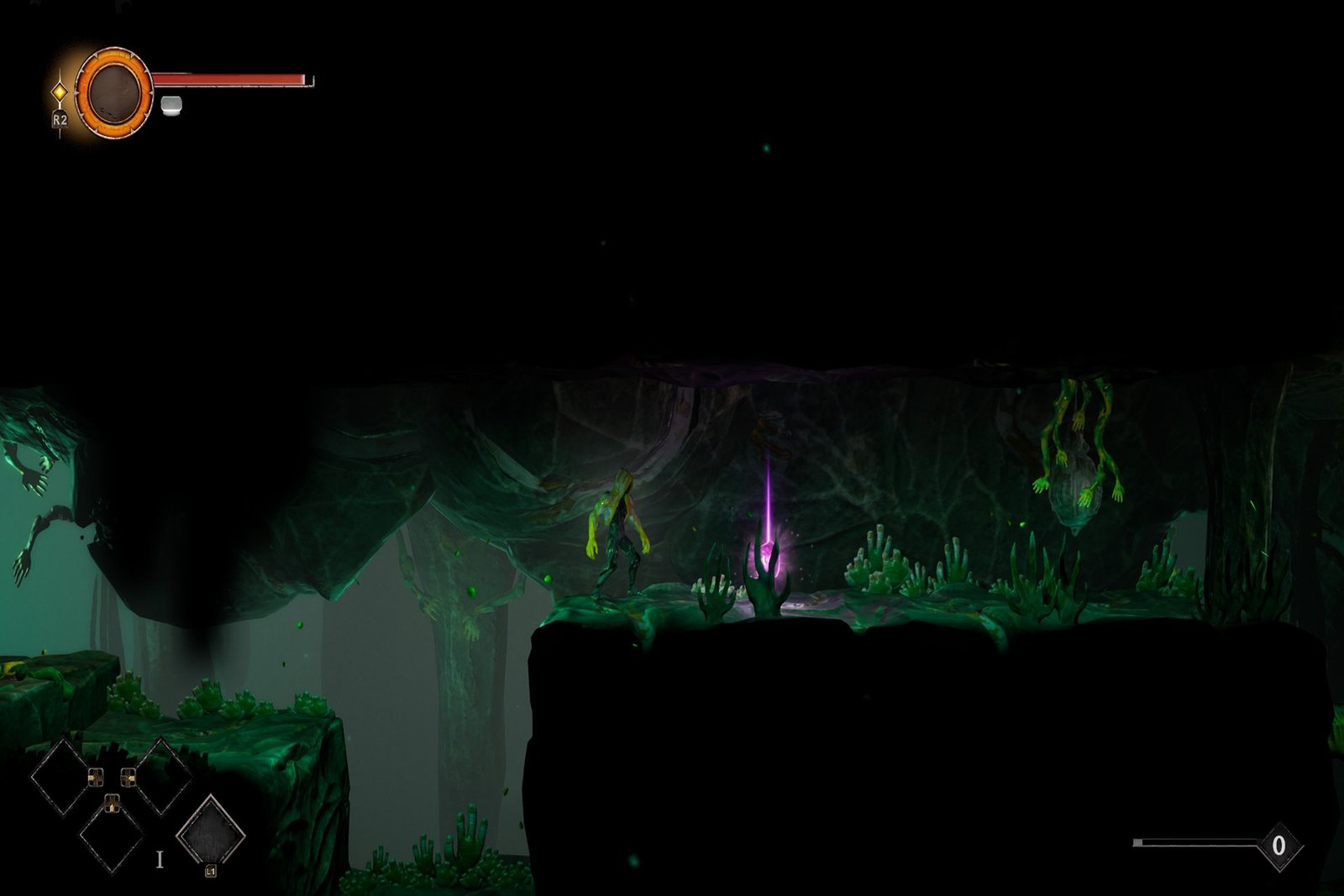
That aside, Grime 2 is a beautiful game. While some amount of the game is in tight, cavernous locations, the environmental design is still amazing. The game opens up between regions, and then you get the full breadth of the scale, where your character suddenly seems like a tiny part of a huge world.
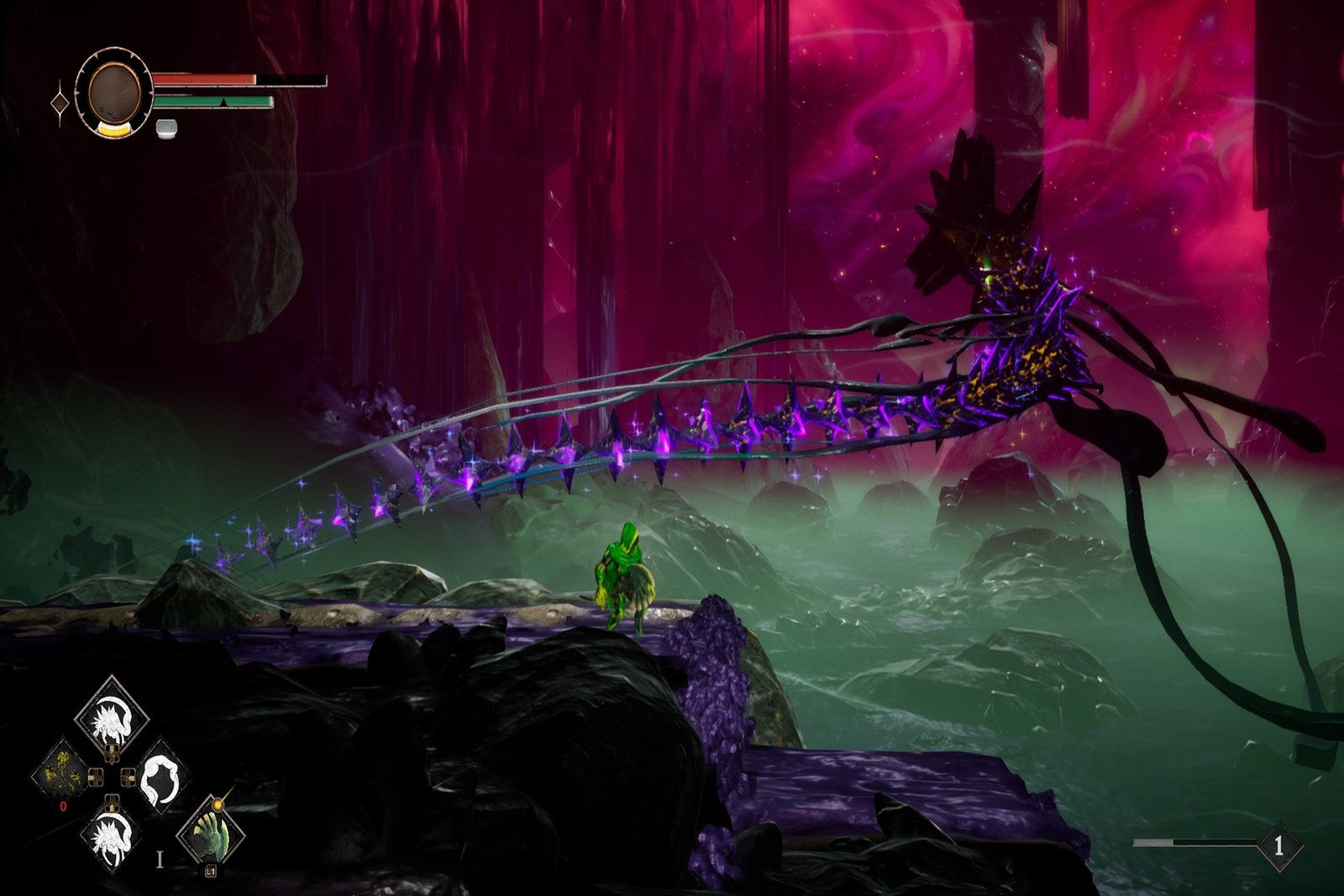
The first thing that stands out to me about the gameplay is the clear Souls-like inspiration. It doesn’t have the heaviness of something like Blasphemous, but there is a parry. Fortunately, winning bigger fights doesn’t appear to hinge on using it, as long as you dodge well. However, certain path-blocking enemies require you to parry them to proceed.
Likewise, there isn’t a stamina mechanic, so nothing is stopping you from mashing to attack like in Castlevania games. There is something called Force that behaves somewhat similarly. When attacking with a full Force gauge, you do increased damage for a few hits and then must let it refill automatically by not dodging/attacking.
Bosses are no joke, and you can get worked over very quickly. I’d liken that to a Souls game, but you have the 2.5D aspect where (at least for the first two) the bosses are coming out from the background. Fighting something that isn’t technically on the same plane as you is neat, even if I do get absolutely demolished.
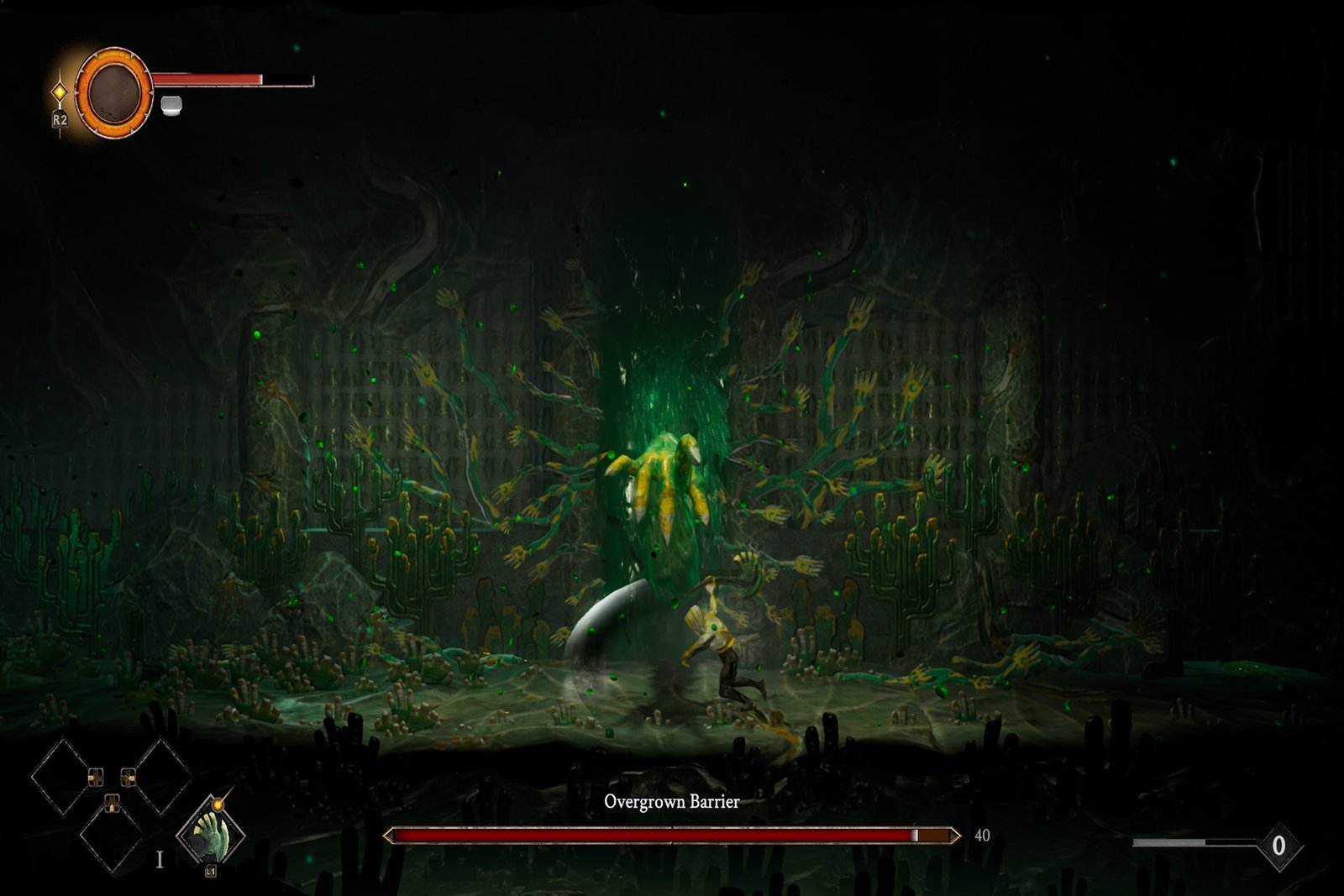
You get one single heal use from the start (that can be increased/enhanced later), which you can regain through defeating enemies. During bosses, once you use it, you have to get the boss gauge down to a certain point to earn the next use. This makes boss fights harder, but the heal gives back a good amount to keep you going.
The leveling mechanic is also very Souls-esque, as earning XP goes into a pool that gives you points to allocate into expected and unique attributes: Health, Strength, Dexterity, Diverging, and Pliability. The latter four apply to weapon scaling, which is very Dark Souls.
XP does seem to be in line with Castlevania, as the simpler enemies don’t give much. You’re not going to be grinding out levels in the early game unless you are very patient, but it doesn’t have some of the same death punishment, as you do keep your XP upon dying.
For the most part, equipment/weapons are found or bought. A few things might come from bosses, but you’re not going to find some neat drop off of a random enemy. I liked this because a highlight of Castlevania is going down a new path you just found and finding your next terrific piece of gear.
All armor is cosmetic, and there is even a slot when equipping new pieces to apply transmogs and give you the look of a piece of gear while letting you keep a better piece equipped. A merchant you find later will even trade you certain items for armor dye, just to let you further customize yourself.
Besides the weapons that the game trickles out, additional skills/attacks are earned largely through absorbing specific enemies. The first few times you absorb one of them, you get a one-time use of their skill, called a Mold. However, if you absorb them a set number of times (has to be new enemies, can’t grind one), you get it permanently.
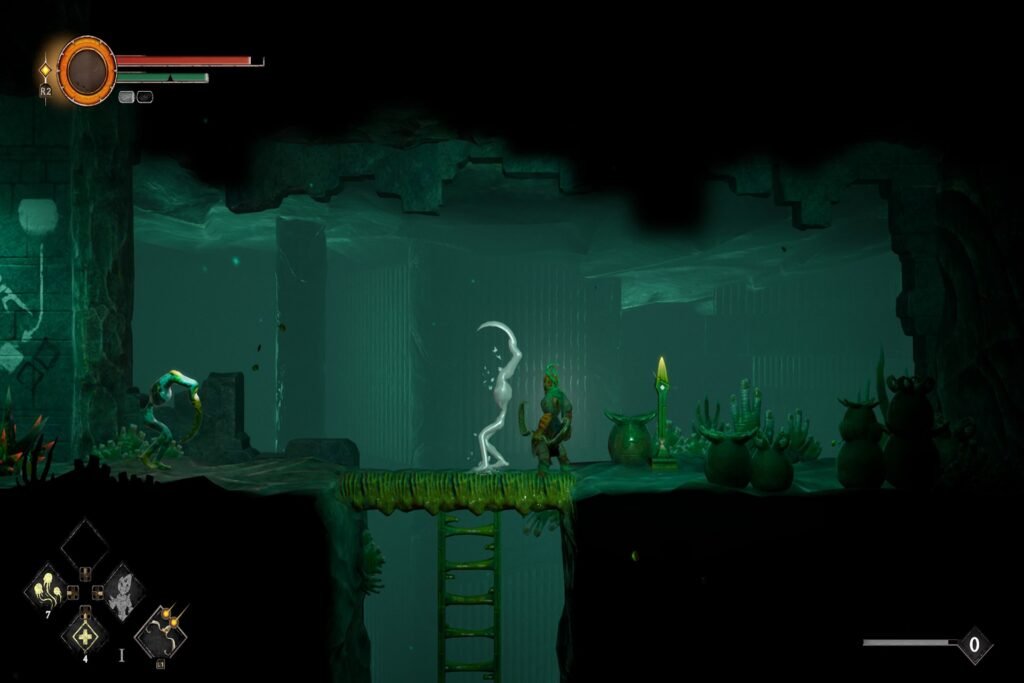
That doesn’t mean you can just use these non-stop, though. You have a separate gauge for when you can use these that is filled through attacking. There are Item Molds that you can find/buy that operate with charges that you have to recharge at Surrogate checkpoints (like Dark Souls Bonfires).
Earning new abilities through killing enemies is a key feature of a couple of Castlevania games, Aria of Sorrow and Dawn of Sorrow. The big difference is that in those, it is all up to RNG (which regularly sucked), so just having to kill an enemy the right way to get progress on a new skill is a nice mechanic that keeps things from getting frustrating.
All this said, Grime 2 doesn’t have to be difficult. The game lets you either choose a lessened difficulty off the bat, or you can adjust damage dealt (up to 200%) and received (down to 25%). However, it affects trophy hunting as there is one trophy for beating the game on Standard difficulty, and this voids it, causing you to do a second full playthrough.
Grime 2 gets everything right across the board. Exploration? Completely nails finding a secret gap to dodge through or spotting something in a ceiling you missed the first time around. Combat? Just hard enough without feeling hopeless, just sometimes down to figuring out timing. As far as Metroidvanias go, Grime 2 is a shining example.