Unlike novels and cinema, gaming is a very unique medium in terms of evolution. Novels evolve and change based on the linguistic, social, political and economic factors of a given society, or even the world at large, similarly cinema shapes and reshapes itself in much the similar way.
I recently watched 1953’s Roman Holiday on the suggestion of one of my friends, and whaddaya know, it wasn’t too different of an experience at a technical level compared to what we have nowadays, aside from the use of color obviously. Sure the themes and the way the actors speak is different, emblematic of its time, but at a technical level? Not much of a difference.
Heck, pick up a classic novel, and you can hardly tell its age outside of maybe the prose, because the themes, the emotions, and the ideas condensed into it are universal, felt by anyone from then and now, an emotional bond between the reader and writer spanning decades and centuries.
Compared to both of these, gaming is far different. It is a medium that represents the modern age and is symbolic of our inextricable link with technology. Games change based on the technology of their times, and the artistry of the medium depends on the artistic control that the developers exercise over the technology of their time.
Do you think Final Fantasy would have the iconic sound it does today if Nobuo Uematsu wasn’t wringing out the feeling of experiencing an orchestra from the digitized bleeps and bloops of the original’s MIDI music? The prelude theme is arguably the strongest testament to that statement. A simple, looping tune that perpetually rises and falls, an apt metaphor for the series itself, that has now become the most enduring track that has represented Final Fantasy for almost 40 years it has existed.
Resident Evil has been a household name in gaming for 3 decades now, with 10 mainline games across the entire series. As Capcom celebrates the series’ 30th anniversary, I feel it is an important title to discuss both for the point I’m currently making and what I’m going to discuss in a bit.
Before the remakes, anytime the name Resident Evil was mentioned, our minds immediately harkened back to its iconic fixed camera angles and challenging yet rewarding to master tank controls.
Yet, according to director and series creator Shinji Mikami, Resident Evil 1 was originally meant to be a first-person shooter. It was due to the technical limitations of the PlayStation 1 that the team decided to go for the fixed camera angles, which not only defined Resident Evil, but also most horror and action games of the PlayStation 2 era, and still continues to define a large sub-section of indie survival horror games such as Tormented Souls, Hollowbody, Heartworm, etc.
The point behind all of this is that gaming’s link to technology has always been ultimately tied to the way it’s utilized by the developers, humans with actual artistic intent behind their decisions.
It’s why the industry has no shortage of auteurs such as the aforementioned Shinji Mikami and Nobuo Uematsu, but also others such as Hideo Kojima, Hideki Kamiya, Warren Specter, and Tim Cain. Personalities behind a large swathe of games, a face that we can attach to a certain genre or style of game.
As we all know, generative AI has been a tumor that has infected numerous creative spaces, ranging from writing, drawing, and even game development.
Last year, Sandfall Interactive’s Clair Obscur garnered a fair bit of controversy over using AI for certain placeholder assets that got accidentally left over in the final game. The same happened for Crimson Desert last week until Pearl Abyss came out with a statement that those assets would be removed.
Something most gamers have collectively made clear recently is that there’s no space for generative AI in gaming. It’s a technology that actively takes away the human element from game design and instead infects it with the soulless, plagiarism-laden parasite that is generative AI.
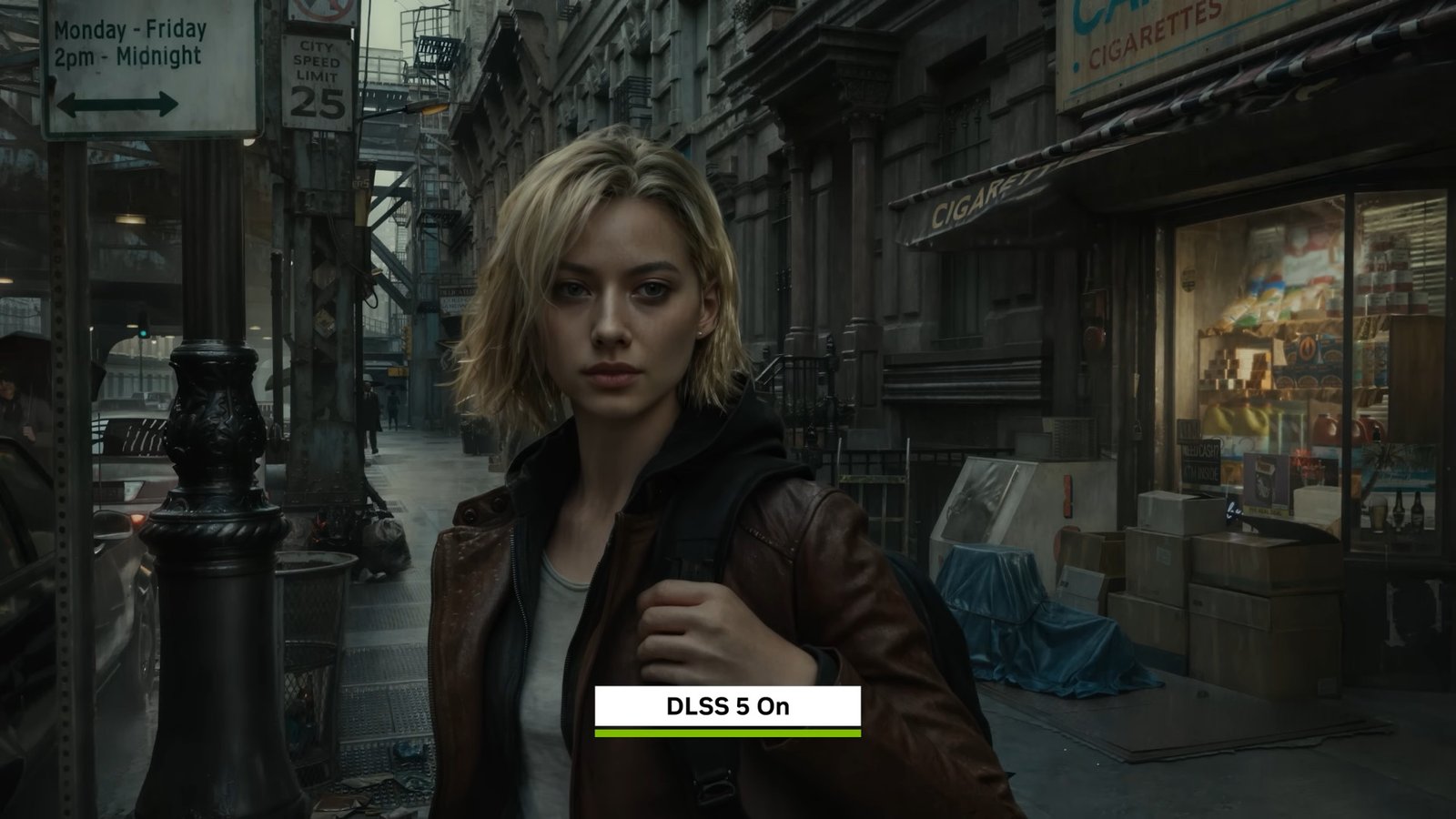
Despite all the push to incorporate AI in games, however, none have come so far as what Nvidia has done recently with the announcement of DLSS 5.
NVIDIA’s DLSS has always been an interesting feature in PC gaming, trading general image quality for a more stable performance while allowing players to play games at 2K and 4K resolutions with better framerates. It’s a feature that has made 4k gaming in particular much more accessible to the average player, and it’s an option I myself use quite frequently for my games.
However, DLSS 5 is a predatory feature that goes against everything that makes gaming such a special and artistic medium. Robbing both developers and players of the intended artistic vision of a work, to instead incorporate a soulless, hideous-looking AI filter on our games.
Worse yet, one of the examples used to show off this “feature” was Resident Evil Requiem, a harsh betrayal from Capcom to not only their players, but also the developers who worked painstakingly to bring this world to life.
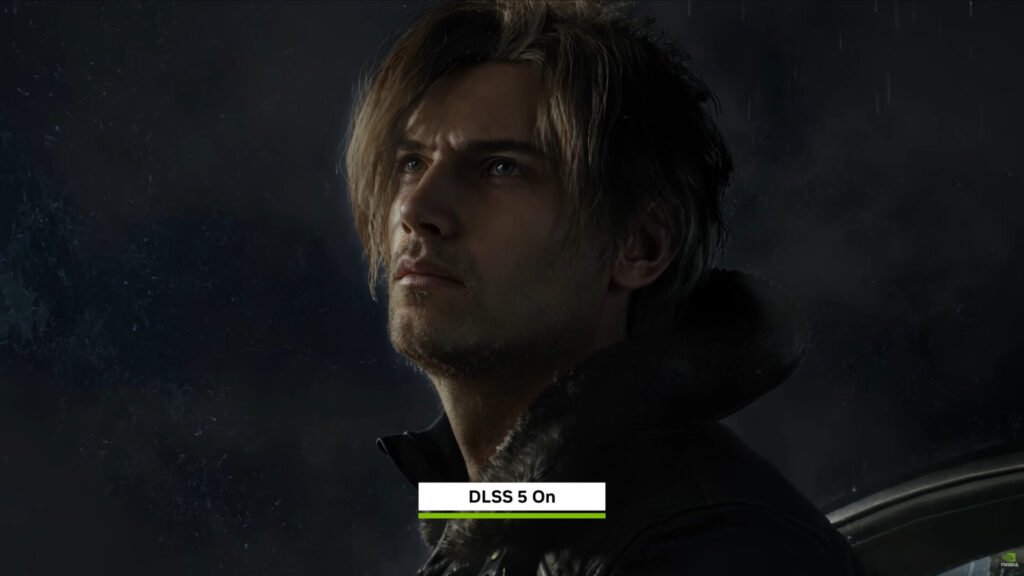
The tone-deaf statement given by Nvidia CEO Jensen Huang didn’t help either, where he obliviously stated that the detractors of DLSS 5 were completely wrong about it.
“DLSS 5 fuses the controllability of geometry and textures and everything about the game with generative AI. It’s not post-processing, it’s not post-processing at the frame level, it’s generative control at the geometry level.“
Essentially, “It’s not a car crash, it’s actually a plane crash taking place in slow motion.”
Thankfully, the pushback against DLSS 5 has been loud, with the CEO of Newblood Interactive, Dave Oshry, recently delivering a scathing indictment against Nvidia while speaking to PC Gamer.
“We as developers and players need to push back against this bullshit just like we did with NFTs and crypto games and try in vain to do with predatory micro transactions, loot boxes, and battle passes.”
He urges players to do the only thing that we can do, which is to vote with our wallets and boycott it as hard as we can. “Cripple their sales, tank their stock price, stop collaborating with them as developers. Then maybe they’ll think about going back and giving us what we want.”
Gamers and developers alike have made one thing clear: DLSS 5 is a disgrace to everything that makes games an art form, and its incessant push in the industry serves no one except the moneymakers at the top. It’s anti-art, anti-human, and ultimately an affront to everything that represents our universal desire for creative and emotional expression.