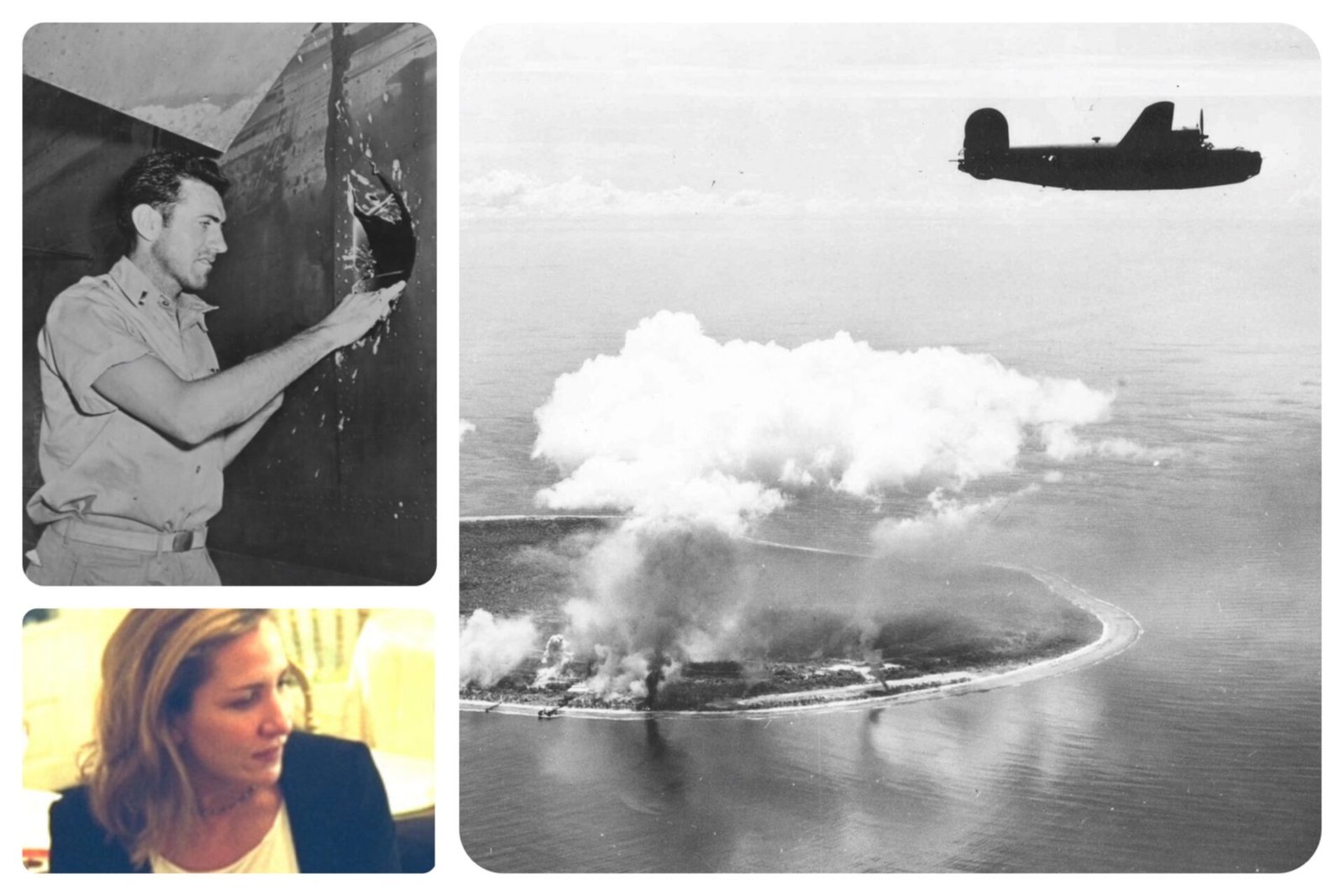
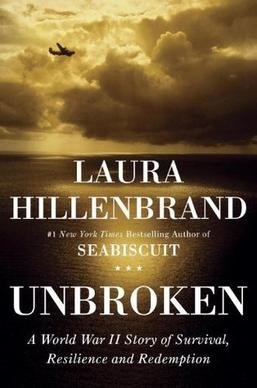
The story of Louis Zamperini, the Olympic miler who became a Japanese POW in World War II, has now been popularised with the silver screen adaptation. Sadly, for a few decades Louis Zamperini’s story was almost forgotten until Laura Hillenbrand picked up his story again.
Hillenbrand had just finished the chronicle of Seabiscuit, the underdog racehorse that has now become a household name. Zamperini even joked to Hillenbrand, saying that this would be an easier project for her, given that the subject matter of the book was still alive.
Despite Louis’s guidance, Unbroken is a meticulously researched project with its own unique challenges. Seabiscuit may be isolated to a part of the United States alone, but Louis’s story spans across continents. Hillenbrand succeeded in constructing a chronicle which not only honours Zamperini, but also questions the nature of war.
The Fast but Long Life of Louis Zamperini
Louis Zamperini had always been a tough kid to raise. Constantly in trouble at school and with the authorities, he only began to turn things around when his brother suggested he take up track running. He was not especially fast at first, but his stubborn determination soon pushed him past everyone else. He became so good, in fact, that he was selected for the Berlin Olympics, where he even caught Hitler’s attention.
But war was just around the corner, and it put an end to Louie’s hopes of winning Olympic gold. Drafted as a bombardier in America’s war against Japan, he and his crew, including his pilot Russell Allen Phillips, or “Phil,” survived dangerous combat missions and earned recognition for their service. Their luck ran out when they were sent on a rescue mission in a rundown B-24.
The plane crashed into the ocean. Louie, Phil, and another crew member survived on inflatable rafts, with little food and no certainty of rescue. When the Japanese finally picked them up, their ordeal only deepened. Life as POWs was brutal, and for Louie it became even worse when he came under the authority of camp sergeant Mutsuhiro Watanabe, better known as “the Bird.”
Endurance Beyond the Impossible
At first glance, Louie can seem like a familiar American success story: a troubled kid who found discipline through sport and rose to Olympic level through talent and sheer determination. But Unbroken makes clear that none of this came easily. Louie’s resilience was never effortless, and Hillenbrand suggests that the same stubborn grit that made him an athlete also helped keep him alive through war, shipwreck, and captivity.
Louie survived forty-six days adrift on a raft, living on rainwater and whatever he and the others could pull from the ocean, all while facing starvation, sharks, and even attacks from a Japanese fighter plane. Hillenbrand also places that ordeal within a broader wartime machinery of senseless loss. One of the book’s most striking details is how many deaths occurred outside direct combat: nearly 36,000 men in the Army Air Forces died in non-battle situations, many of them in crashes.
But Louie’s greatest act of survival came after the war. Enduring the raft and the prison camps was one thing; living with the aftershocks was another. Back home, he was tormented by nightmares of Mutsuhiro Watanabe, and the war continued to inhabit his sleep, his marriage, and his sense of self. Alcohol only deepened the isolation. In Hillenbrand’s account, survival is not a single triumph but a long, uneven struggle, one that for Louie only began to change when he found religion and a way to live beyond bitterness.
Postcards from the Japanese Theatre
Louis Zamperini’s story is not just a biography. This is where Hillenbrand’s research shined, as she gave us a glimpse of what life was like during the war: how lost lives became numbers, the shortages and inflation, the daily uncertainty on just about… everything. Despite all this, life still continued for most, but there is a constant heavy air clouding the temperament.
And then there are the moments in between. The quietness of the sea, broken only by the conversations between Louie and Phil. Their desperation to keep their sanity with nothing to do meant that they had to scramble through their memories: past recipes, past loves, their thoughts about love. In their isolation, the mind went far, memories long forgotten came back in that cadence at the sea:
“…his mind was freed of an encumbrance that civilization had imposed on it. In his head, he could roam anywhere, and he found that his mind was quick and clear, his imagination unfettered and supple. He could stay with a thought for hours, turning it about. He had always enjoyed excellent recall, but on the raft, his memory became infinitely more nimble, reaching back further, offering detail that had once escaped him.”
It was also bold not to dress down the Japanese atrocities imbued on Allied soldiers. History is indelible. Though I won’t be questioning the Japanese identity and its transformation since World War II, it is surprising to see what atrocities were performed during the war. Japan has since become a pacific nation with weak military power, but if you had lived long enough, like my grandmother had, you’d have mental scars from the occupation.
The book also does not shy away from the struggles GIs faced when they returned home. For many, it was anything but a happy return. The memories of combat would not release them, and civilian life often felt unreachable. Many took their own lives, many drank themselves to death, and many more never fully adjusted. Louie was only one example, struggling to find stable work and preserve his marriage. Hillenbrand reinforces this with grim statistics:
“Nearly forty years after the war, more than 85 percent of former Pacific POWs in one study suffered from post-traumatic stress disorder (PTSD), characterized in part by flashbacks, anxiety, and nightmares. And in a 1987 study, eight in ten former Pacific POWs had “psychiatric impairment,” six in ten had anxiety disorders, more than one in four had PTSD, and nearly one in five was depressed. For some, there was only one way out: a 1970 study reported that former Pacific POWs committed suicide 30 percent more often than controls.”
Unbroken is a book about the human relentlessness to live, to find a way through the cracks. But it is also raises the question of the costs of war for individuals. Dreams were shattered, rerouted to fight the politician’s war. For Louis, the war potentially cost him his Olympic gold; something that was well within his reach. The more we cross examine the concept of war, the more absurd it becomes.
There are no easy answers. Those who had committed the greatest atrocities, caused the most damages were the ones who escaped punishment. Those who escaped actual death after war is over would arguably suffer greater punishment. Louis Zamperini was one of the luckiest few who escaped the clutches of death during the war and beat the bitterness of his trauma to live a fulfilling life. Picture this: he even learned how to skateboard in his sixties.
I can’t help but tell myself: What’s your excuse? Better take a step back, let go of that lingering bitterness and pick up a skateboard.