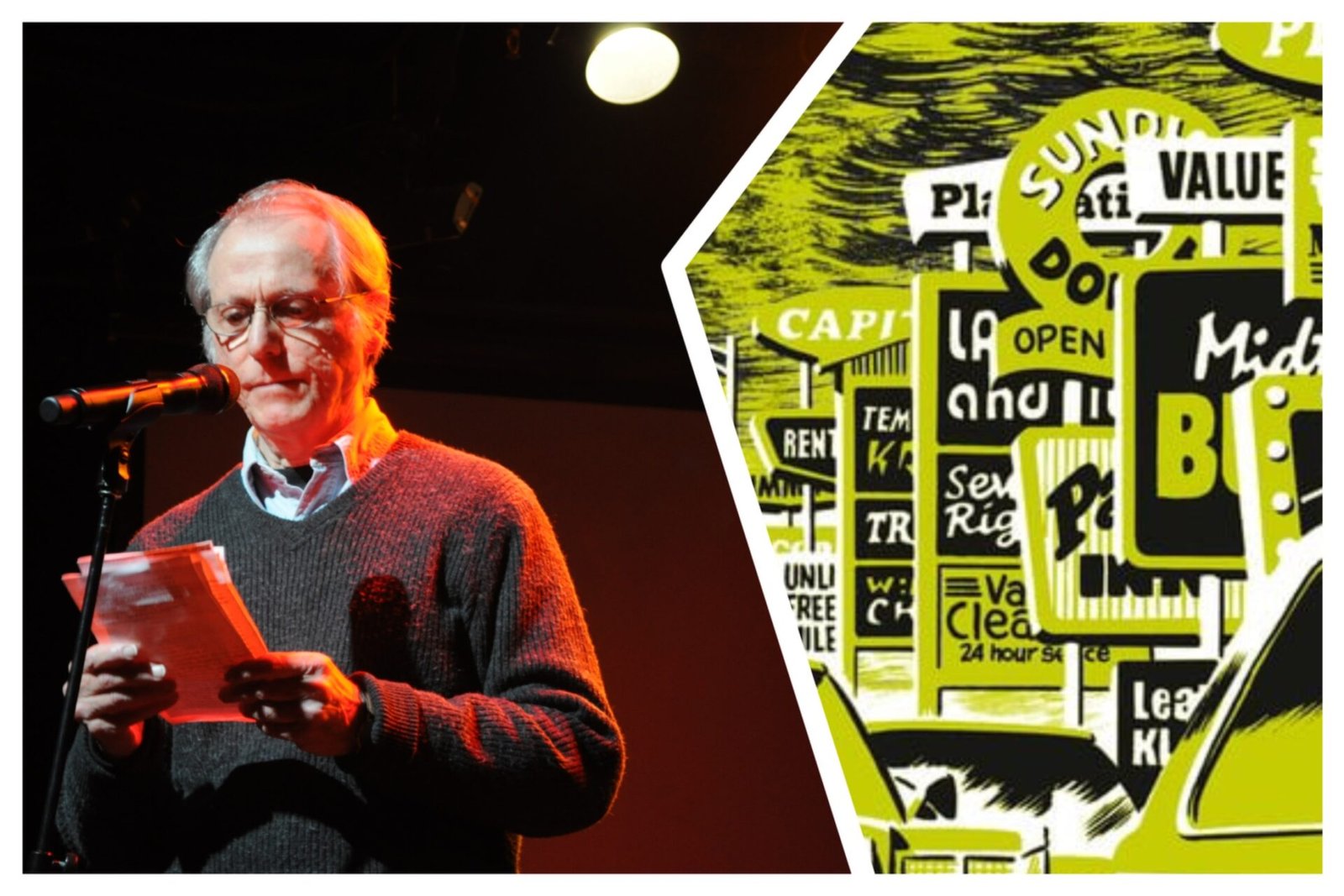
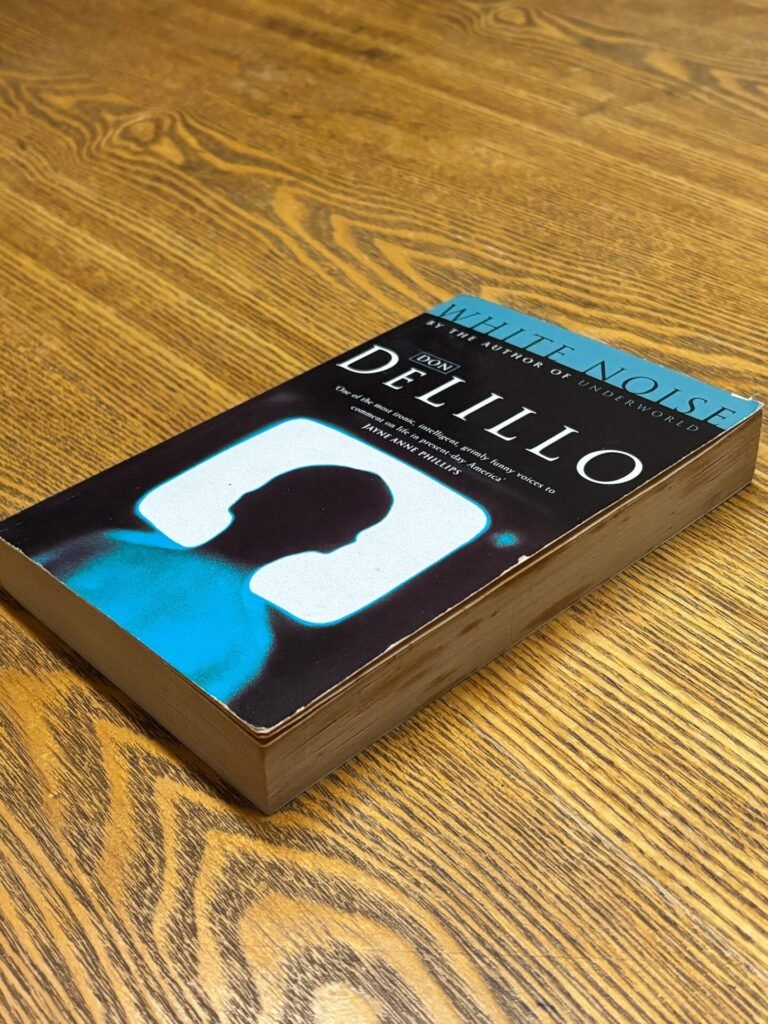
Written in 1985, Don DeLillo’s White Noise would not feel out of place on new release shelves today. The static of the white noise, something that we rarely see on modern television screens (if you are still watching television for television’s sake) has been ingrained in our culture, that the noise, though louder and more prevalent, is now ingrained in our lives.
We live in a constant white noise, drowned from the sounds of reality and instead, living in a hyperreality where what seems “real” becomes more real than reality. White Noise is an allegory for the American mind at the time, but has now perhaps become an elegy for a lost time and a prophecy of what awaits America, and for the rest of us. Given where we are in history, White Noise is an essential read.
From the View of the Station Wagon: The Inner Chaos of a College Professor
Jack Gladney runs a niche course as the head of Hitler studies in the quiet college town of Blacksmith. He’s the model of the family man: middle-class job, a station wagon that is not flashy but gets you where you need to go, his own from previous marriages and his wife’s kids.
Beneath this façade of suburban bliss, Jack and his wife, Babette, are very much terrified of death. An airborne toxic event hit the town one day, evacuating the town to a makeshift base. The toxic fumes trigger nostalgic episodes to some of its victims, but also shorten the victims’ lifespans. The event will soon pass, but not before Jack breathes in some of these fumes.
What does not pass is his fear of death, matched only by his wife’s. Without his knowledge, Babette participated in a shady medical trial to develop a drug to switch off the fear of death. But to attain the drug, she had to compromise her morals. When Jack discovered this betrayal, instead of chastising her, he also wanted in on the action.
A Look at the Inner Chaos of Middle-Class America
Without me realizing it, one of my favourite bands, The Airborne Toxic Event, borrowed their name from a section of this book. Speaking of which, if you have never listened to their music, I’d recommend you check them out. It is also, by far, the most memorable chapter of White Noise. The event, a toxic gas spillage in the pastoral college town, is a befitting allegory to how most of us view events from a distance: largely indifferent, a passive witness until it comes knocking on our doors.
Gladney’s initial reaction was an obdurate disbelief:
“These things happen to poor people who live in exposed areas. Society is set up in such a way that it’s the poor and the uneducated who suffer the main impact of natural and man-made disasters. People in low-lying areas get the floods, people in shanties get the hurricanes and tornados. I’m a college professor.”
He repeated this point again, doubling down on his denial. Within hours, he was already exposed to the toxic agent unknowingly and evacuated to the barracks. The evacuees were scrambling for whatever news they could gather from the people around them, hoping that the wisdom of the crowd could illuminate snippets of truth. Some of these snippets of information would be true, some not.
The parallels to our time are obvious. It is our denial that COVID won’t come our way, that it will be contained; possibly our denial that the war will not affect us; even now, some of us are in denial that the good times will keep on rolling and that our minds couldn’t be replaced by AI agents. Trust me, they can do a better job than we do.
It is silly and hilarious to laugh at Gladney refusing to believe that an absurd event can take him out of the comfort of his own home, but then aren’t we laughing at our own denials? Of our own severe ignorance that may cost us?
Questioning the Hyperreality of our Screens
The fictional town of Blacksmith boasts the most photographed barn in America. Well, at least the sign says so. For this reason, conga lines of tourists disembark from their buses to line up and take snapshots of the barn. It may be picturesque, but the tourists would seldom seeing the barn with their own eyes and breathe in the surroundings. In effect, the barn is only as real as the pictures taken of it.
Susan Sontag argued in On Photography that the act of taking a photograph is an aggressive act. It removes the photographer from the surroundings and distorts the reality taken from the lens. In DeLillo’s time, the neon blue lights of the television screen seal the viewer’s attention, bombarded by what the advertiser think best for them. Our time is not much different.
Our dependence on social media makes us the very same tourists looking at the barn through the lens of the camera. We’d consume reels or YouTube videos as we insert ourselves into the experiences of others, into the intrasubjective reality of our context, creating a new reality where there was nothing before. But it is not quite reality is it?
The algorithm in our reels, YouTube ads and newsfeeds keep us in our own personal silos, our own echo chambers of the mind, while the blue screen of our smartphones subtly smuggle the messages from advertisers. It is so engrained to our day-to-day that we barely question what we watch anymore.
Selectively Hearing the Echoes of the White Noise
The white noise of White Noise is this constant hum, an echo of background noise from the TV screen which assertively demands the attention of anybody within hearing range. Some of these comments can be as trivial as “Let’s sit half lotus and think about our spine,” or “If it breaks easily into pieces, it is called shale. When wet it smells like clay.”
Accumulated, they build up in the psyche, leading to an irrational fear of death. For the family, they are living through a capitalist nightmare that is the American life: their broken-down ageing station wagon, compared to their neighbours’ newer ones, implies that they aren’t really keeping up with the Joneses. For the Gladneys, who should be endowed with the middle-class safety net, this delivers them into a capitalist existential crisis.
Gladney is only too glad to spend to allay his fears, that inexplicable pervasive anxiety. When an acquaintance called him “a harmless, ageing indistinct sort of guy”, this triggered an irrational burst of spending. Money becomes, in effect, the antithesis of these negative reactions, an essential weapon:
“The more money I spent, the less important it seemed. I was bigger than these sums. These sums poured off my skin like so much rain. These sums, in fact, came back to me in the form of existential credit.”
But at some point, these sums weren’t enough. Money can only go so far to allay this fear of death. Gladney and Babette were looking for a more permanent solution, Dylar, a drug which removes that fear of death. In order to procure Dylar, they would go through extraordinary measures, compromising their dignity, morality, and sanity to do so. Jack would scrounge through the rubbish to search for remnants of these pills, eventually resorting to attempted murder; his wife would sacrifice her body.
But we need to ask: To what extent are we willing to do the same? Our collective fear of death is the highest it’s ever been. What will our fears of death drive us to do? The Gladneys’ resort to Dylar is a desperate but convenient band aid measure to counter this fear. In today’s America, every psychological shortcoming can be resolved with a wonder drug. The capitalist nightmare gets caught in the flywheel, as the act of combatting this fear becomes a consumeristic choice; ironically, a fear that was borne initially from excess consumerism itself.
Perk Up your Ears to the White Noise
White Noise is timely, like any good book often is. It is not for everyone’s taste. Underneath the linguistic doom and gloom, the plot is bare bones. Jack Gladney, an ageing professor too concerned about his mortality, is not a character that the reader will adore. He is almost repulsive, if he weren’t so comedic. But Don DeLillo does what he does best here: to question the American soul, that hangover when the American Dream has been achieved.
Reading this book, it seems that this dream seems to have failed long, long ago. DeLillo wrote White Noise towards the tail end of the Cold War. Within years, the Berlin Wall crumbled and the Soviet Union dissolved. The traditional middle-class pillars that we have long relied upon are crumbling daily. For America and DeLillo, the illusion of grandeur is long gone.
The toxic airborne event has come our way. We are breathing its fumes. The fumes of nostalgia, previously sweet and comforting, have now become putrid and unfamiliar. That can’t be a good thing.