Reviewed on PC
There was a time in video games where Stealth was king. Just a few decades ago the space was dominated by a variety of Snakes, Assassins, Sam Fisher, Garrett, and Corvo Attano.
Now, though, Assassins are more into swordfights than silent stabs, Snakes are nearly extinct, and no one as seen Sam Fisher, Garrett, or Corvo in ages. That’s where Styx, aka The Green Plague, comes in to play the hero and remind us that the pure stealth genre is alive and well.
Here is our review of Styx: Blades Of Greed, an old school take on an underserved genre with a shiny (albeit janky) coat of modernity.
Review code provided by Nacon.
Capping The Trilogy
Styx: Blades of Greed is the third entry in the Styx trilogy. It follows Master of Shadows (2014) and Shards of Darkness (2017), bringing a sequel to the franchise nearly 10 years after the previous entry.
The trilogy is developed by Cyanide Studio and published by Nacon and shares the same irreverent protagonist as its centerpiece: Styx, The Green Plague.
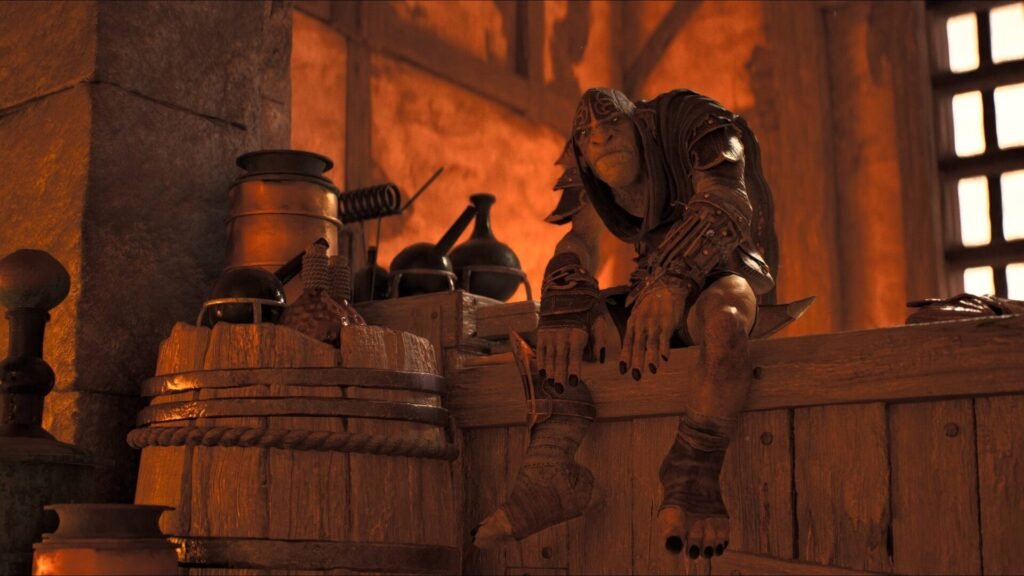
The grinning goblin is as anti as an anti-hero gets. In a universe where everyone hates goblins and is outright racist to them, Styx answers back in the same tone. He hates most living beings, kills the unlucky ones who cross his path, and steals everything he can.
Blades of Greed is a direct sequel to Styx’s two previous adventures, with returning locations and recurring characters, but it is completely accessible to people who haven’t played the two original games. In fact, I am one of those people and, while I’m sure the extra context would’ve been nice for some scenes, it wasn’t a deal-breaker at all.
This is partially because the game does a decent enough job at giving recaps, and so does the “Story so far” video posted by Cyanide. It is also because the story is the weakest point of the game.
Styx is an interesting protagonist, but isn’t utilised to his fullest in a narrative sense. Cyanide seemed unsure whether to all-in on a more serious take or a Deadpool-esque comedic relief, which seems to be directly related to Styx’s incarnations in Master of Shadows and Shards of Darkness, respectively.
As a result, in Blades of Greed, Styx is a character having a bit of an identity crisis. He’ll make quippy jokes, which sometimes land (I did laugh when he occasionally said “don’t loiter, kids” after dissolving a body with acid), hint at 4th wall-breaking humour, and laugh off the fact that he is murdering hordes of enemies.
This would be fine, by itself, the issue is that he bounces between this Deadpool-esque comedic relief and “the conflicted protagonist trying to find out who he is as he attempts to save the world” so quickly that it’ll give you emotional whiplash. While this doesn’t sound great (it isn’t), it isn’t as bad as it appears because, frankly, the story and the characters Styx interacts with are just the backdrop for the real fun.
Whether you prefer the comedic relief version of Styx or his more serious anti-hero trying to drop the act, you’ll absolutely enjoy being Styx. And I mean that in the most literal sense, because controlling The Green Plague is just pure fun.
Simply Fun
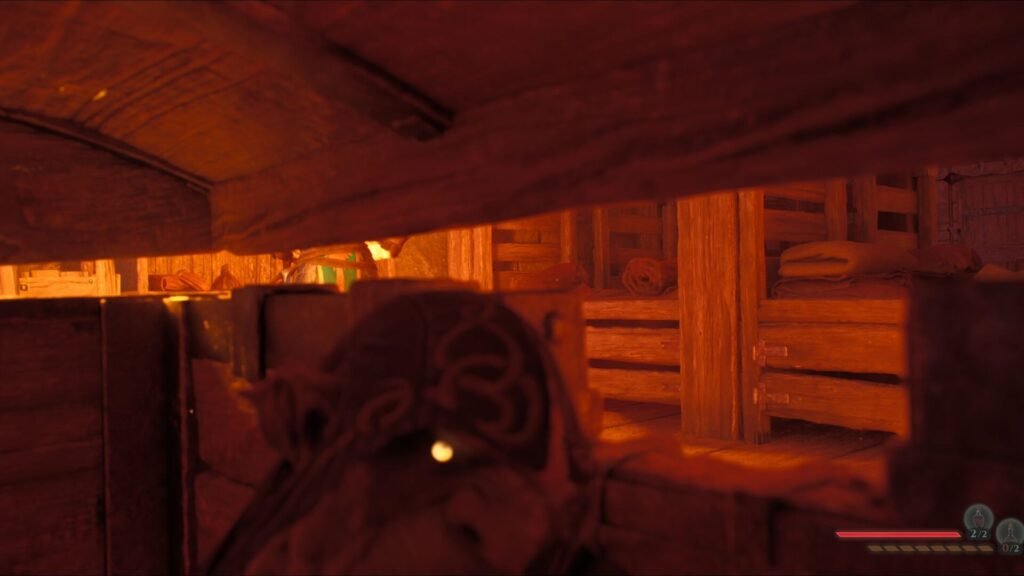
Styx is fast and responsive; he jumps high and far, and he fits into spaces that make me wonder if goblins are actually half-orc and half-cat. He has an arsenal of tools and supernatural abilities big enough to power an army, and he puts them to great use.
Blades of Greed iterates and expands on what Cyanide attempted to do with Shards of Darkness. The “infiltration stealth” approach of Master of Shadows occasionally shows up, but what you’re experiencing in the third entry of the franchise is a stealth-focused metroidvania platformer unfurling in massive vertical spaces.
The entire game, which took me a little over 12h to beat on the hardest difficulty, unfolds in the same three areas that you encounter in the first hour or so of your adventure. As Styx gains access to more abilities and better tools, he unlocks paths to previously unreachable areas.
Optional quests and upgrades have him go back and forth, letting you explore every nook and cranny of a map if you wish to. While the upgrades and the quests themselves often feel underwhelming (some of them feel outright unfinished), Blades of Greed nails the best aspect of a metroidvania and makes navigating the same areas with Styx feel fun. He becomes more agile and versatile with new abilities and tools, while you, as you keep revisiting the same areas, learn the layout of the map and traverse it much quicker.
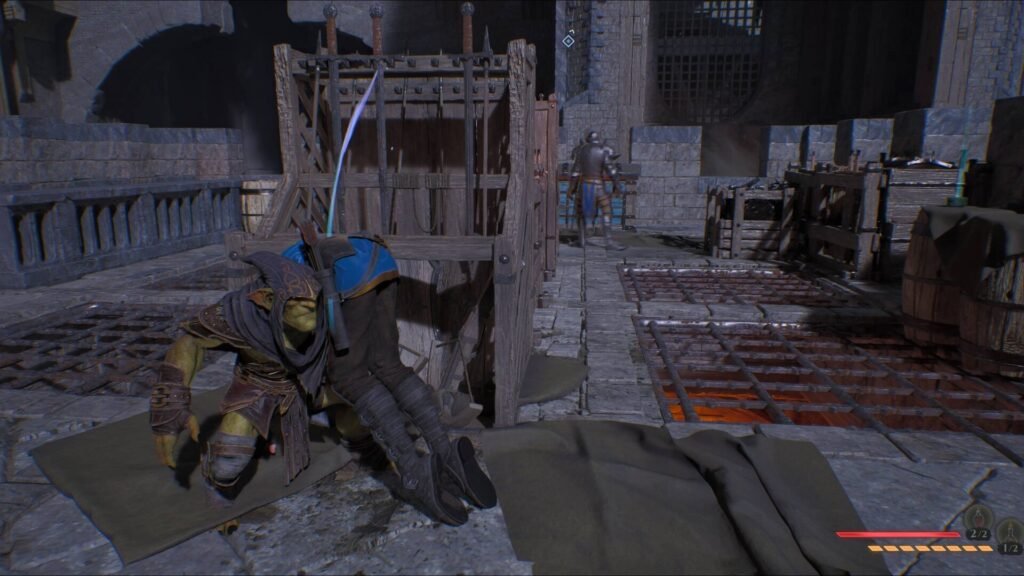
When Styx truly shines, though, is when he is completely unseen. Blades of Greed has the vague outline of a combat system, but it would’ve been a better game if it committed to a 100% stealth approach and dropped combat entirely.
You can lock onto enemies, dodge, and spam the attack button. Perfect dodges trigger a counter-attack that instantly kills normal enemies, removes the armour of armoured ones, or considerably damages stronger foes. Summarily, it sucks. Perfect dodges are unreliable at best; enemies do not react to your hits at all and don’t even seem to have death animations when killed in combat. They just flop as if all the bones in their bodies vanished, leaving a squishy corpse behind.
Combat has to be present because Styx: Blades of Greed features the occasional boss fight, which, again, is a feature that makes the game worse. Bosses suffer from the same issues that plague all other combat encounters because the system that Cyanide implemented doesn’t allow for much else.
On the one hand, though, there is one bad feature of the combat system that turned out positive. The system is so basic that it simply doesn’t function in group fights. If you are swarmed by more than two enemies, combat becomes impossible, and you’re certain to die.
This underlines the good part of Styx, which is stealth. While you don’t trigger fail-states by being swarmed by half a dozen enemies in direct combat, Blades of Greed kind of works that way, especially in harder difficulties. It is also good that you don’t automatically fail upon being discovered because The Green Plague has some very useful tricks up his amber-filled sleeve.
When you’re discovered, you can go invisible as you leave behind a shoddy clone of yourself. Thankfully, the human guards are racist to the point that they’re unable to distinguish you from your clones, even though you look completely different.
These clones can serve a variety of purposes: they explode upon being hit, allowing you to assassinate enemies who’re stunned by the explosion; alternatively, they also trick your enemies into thinking you died. This immediately returns them to patrolling mode, dropping the alerted status that prevents them from being assassinated from the front, among other things.
Warts And All
The genius of Styx: Blades of Greed is that, despite having underwhelming enemy AI, a fair share of jank, and the occasional bugs, the stealth system and the blisteringly responsive protagonist will make you look beyond the problems, focusing instead on the next shiny piece of Quartz that’s up for grabs.
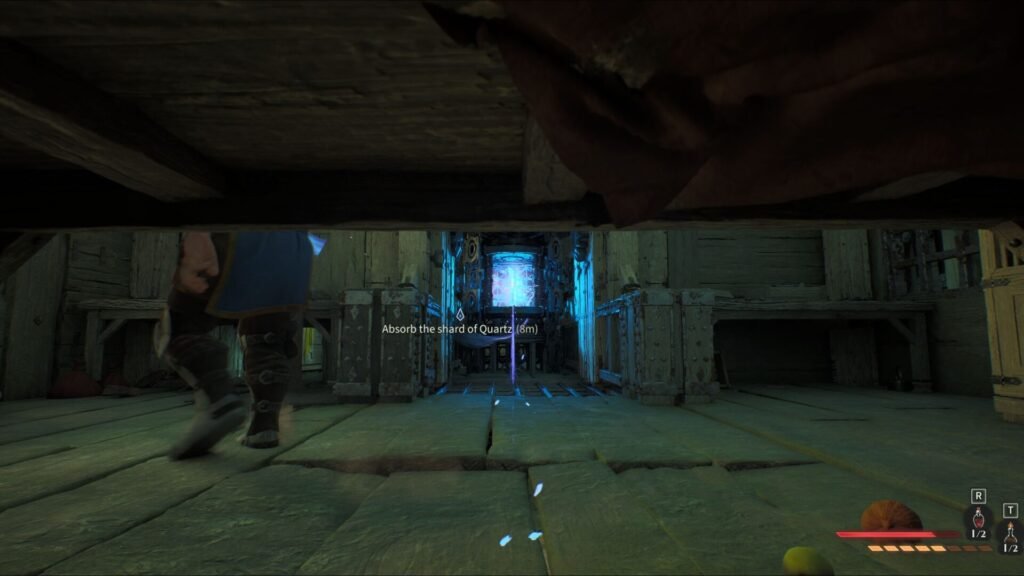
Marrying a great pure stealth system with the previously mentioned Metroidvania approach to level design culminates in a game that remains satisfying through its playtime. Blades of Greed does this not through the typical approach of iterating on the existing systems with more complex set-pieces or larger numbers of enemies (it does this too, but not always successfully), but because mastering the movement and tools at Styx’s disposal makes you better at the two sides of the game.
8h into your playthrough, you’ll be blazing through areas that took you ages to explore in your first go around. This is partially due to new fancy toys at your disposal, but mostly due to how much you’ve mastered Styx’s movement and how you can now make your way through a building filled with enemies unseen without killing anyone.
Therefore, Styx: Blades of Greed succeeds in bringing us back to a different age of gaming in two ways: it brings back the pure stealth of yore that is at risk of having its massive influence on the art form forgotten, and it gives us the nostalgic satisfaction of having fun with a game that thoroughly rewards you for being good at it.
Styx: Blades Of Greed.: Despite a few shortcomings, The Green Plague succeeds at bringing new life to the underserved genre of Pure Stealth. – Goncalo Santos