
Reviewed on PC
In Baladins, you embark on a whimsical tabletop role-playing adventure that reminisces about Paper Mario and Baldur’s Gate 3 all in one place. Mixing playful charm with choice-driven storytelling, the game invites you and your friends to step into a fantasy world where collaboration matters just as much as strategy.
The game unfolds each quest you encounter as if it were a short story shaped by each party member’s personalities, strengths, and collective choices, often leading to surprising or humorous outcomes. With Baladins recently dropping its Nintendo Switch and PlayStation 4 and 5 versions, it’s become perfect for small groups new to tabletop games.
A Story Shaped by a World on Repeat
As you embark on your quest as one of the Baladins: the Cook, Luxomancer, Dancer, Pyro, or the Bard, together you roll the dice and see where your adventures take you. While your decisions aren’t necessarily right or wrong, there are just various creative approaches that can lead to interesting outcomes for the quests.
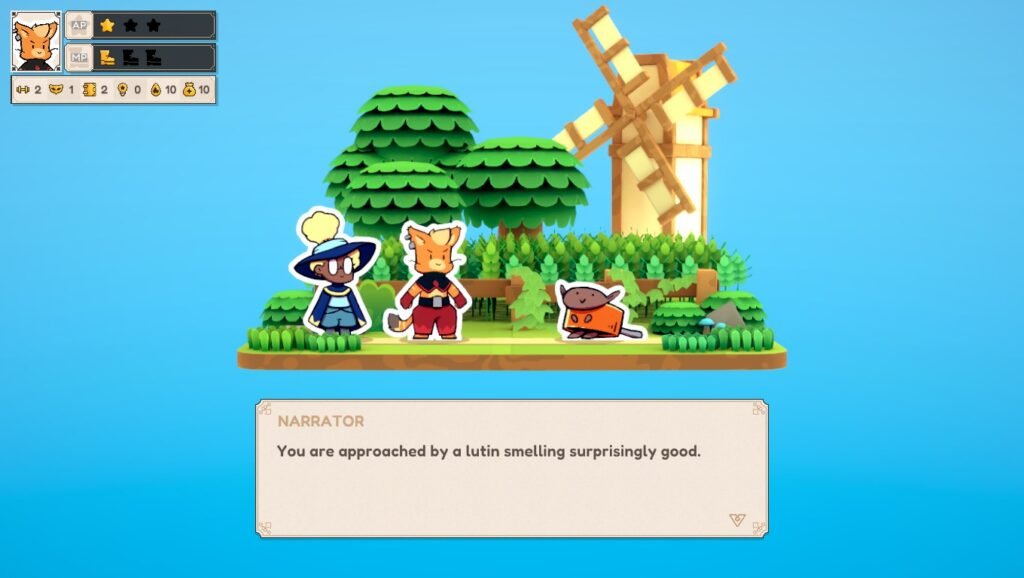
The story begins and ends within six weeks. Uniquely, the whole cycle repeats in a time loop that progresses with everyone in your party remembering the entire reset, while most of the NPCs aren’t entirely familiar with the timeline being reset. The reason for experiencing these timeloops? Well, I can’t say much to avoid spoiling the fun. However, each loop feels more like another chance to tell the story differently, and even acts as a new opportunity to improve your party’s collaboration and decisions from the previous time loop.

Limited Moves with Limitless Outcomes
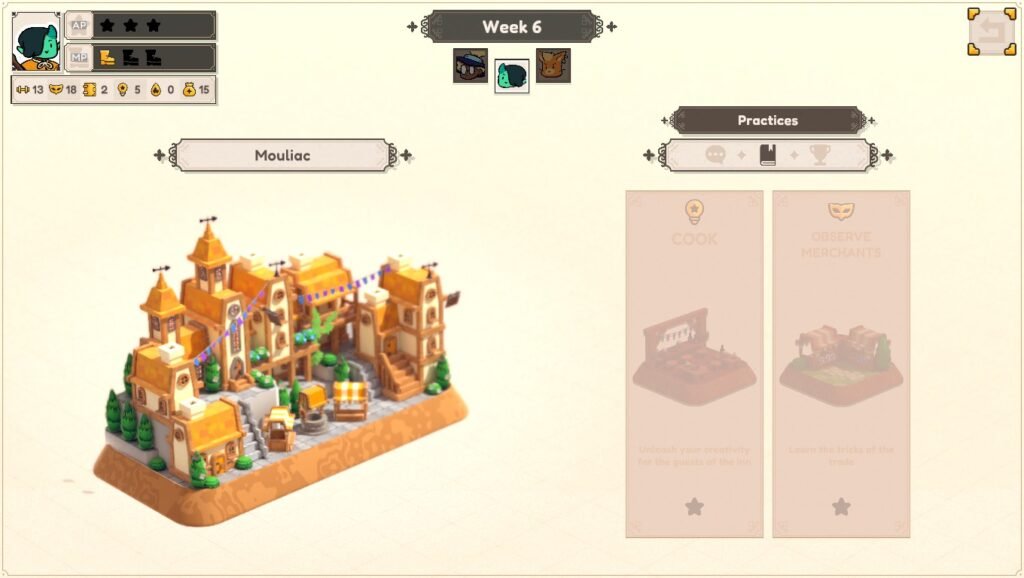
Baladins’ gameplay revolves around party decisions, dice-based outcomes, and branching narrative paths. You start with three Action Points (AP) and three Movement Points (MP), which you can use throughout a week, then end your turn.
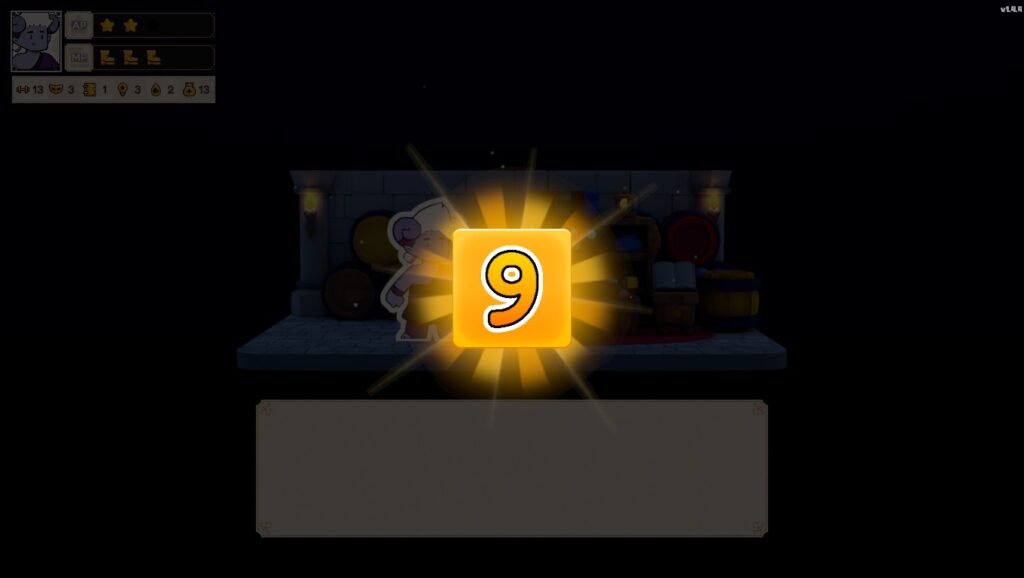
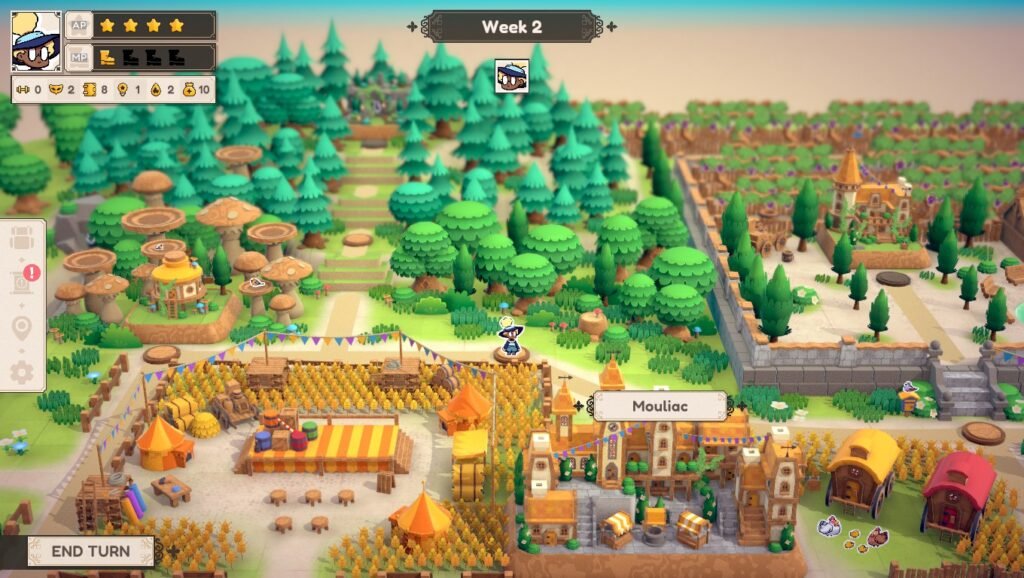
AP is used for actions such as doing quests, interacting with characters, or upgrading skills. While MP determines how far you can travel. Once these points are spent, the week for your character ends, forcing your party to carefully consider how and where to invest their limited points.
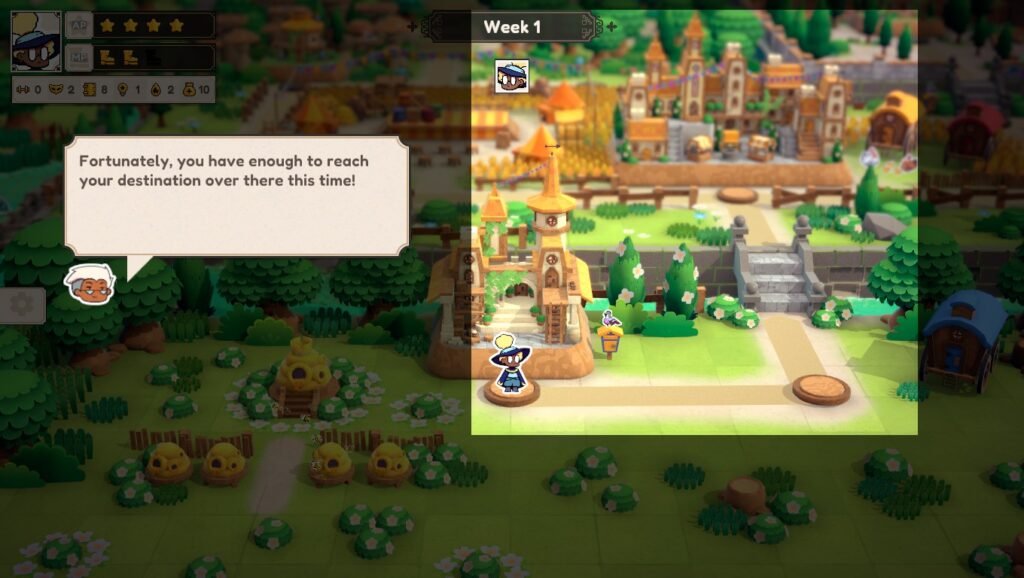
You don’t always have to move one tile per movement, though. If you have some party members in far-off locations, you can cannonball shoot yourself to them regardless of how many tiles they are from you for only one MP.
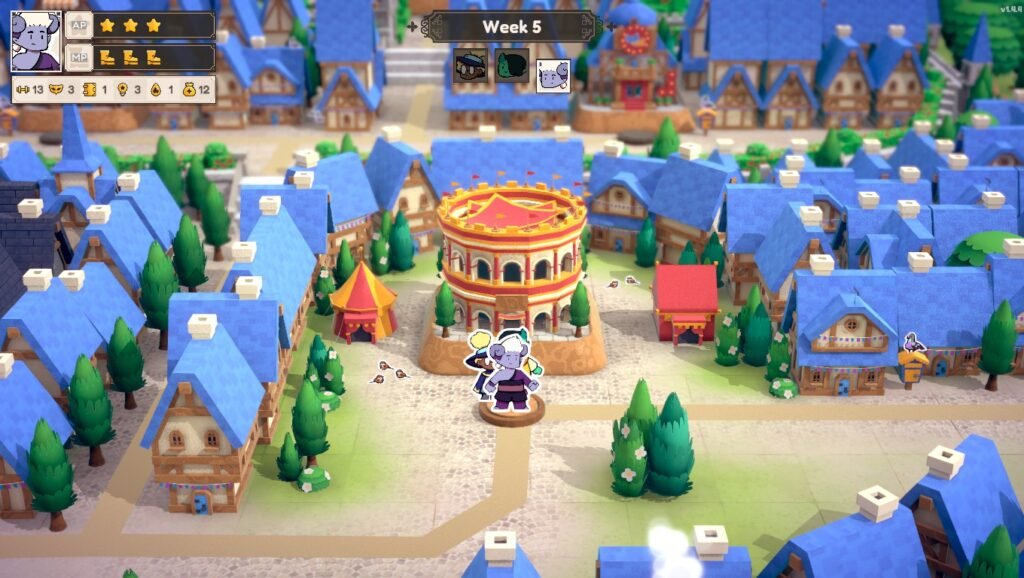
Items you obtain as well can affect how much AP or MP can be added or subtracted from you. Because of this, you need to have some strategic planning for your characters rather than impulsive movement (but being impulsive does throw your party into some fun results!). Plus, you can see the recap of your round at the end of every week.
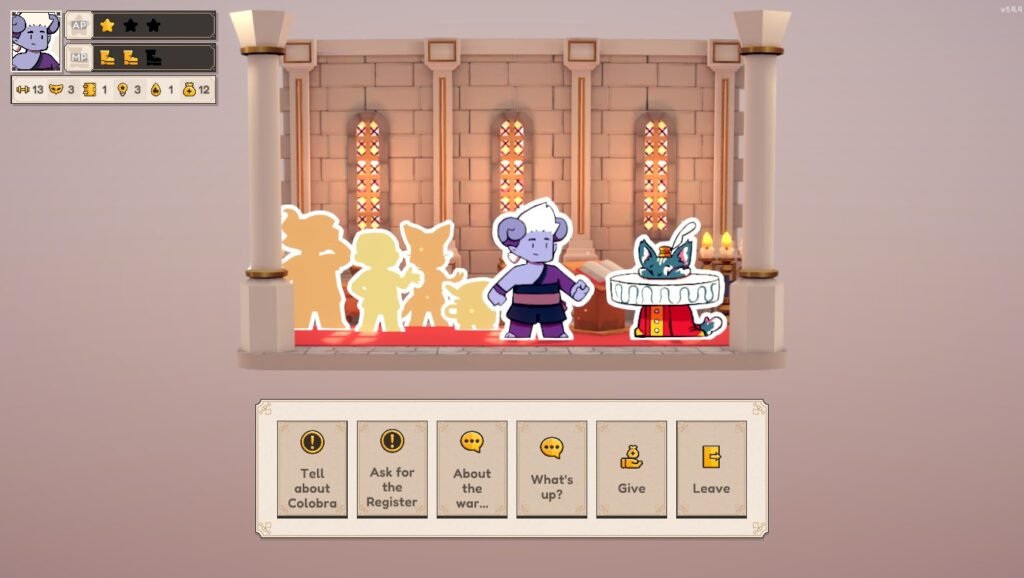
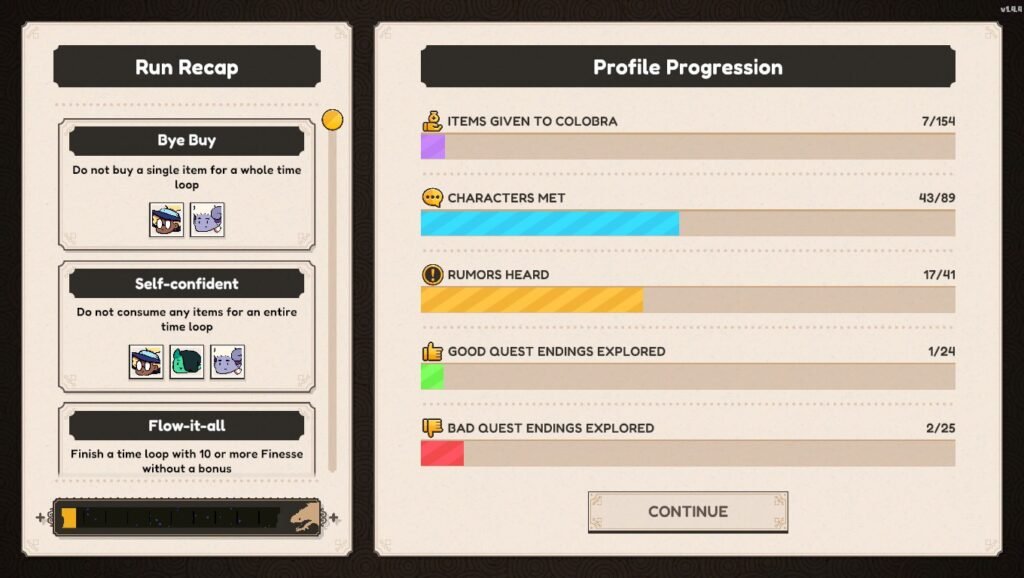
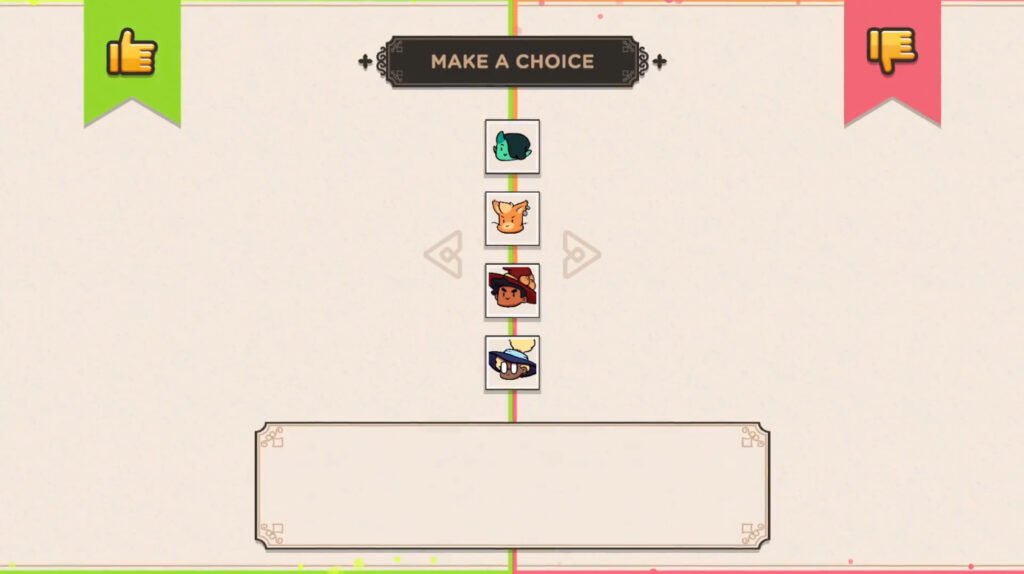
While the gameplay mechanics of Baladins seem fairly easy, it’s getting around everything that might make it challenging for you. The game simply throws you right into the story, and it’s truly up to you and your fellow party members on how you will navigate the game in terms of who to talk to, spending points, and making major decisions.
Bringing an Illustrated Fantasy to Life
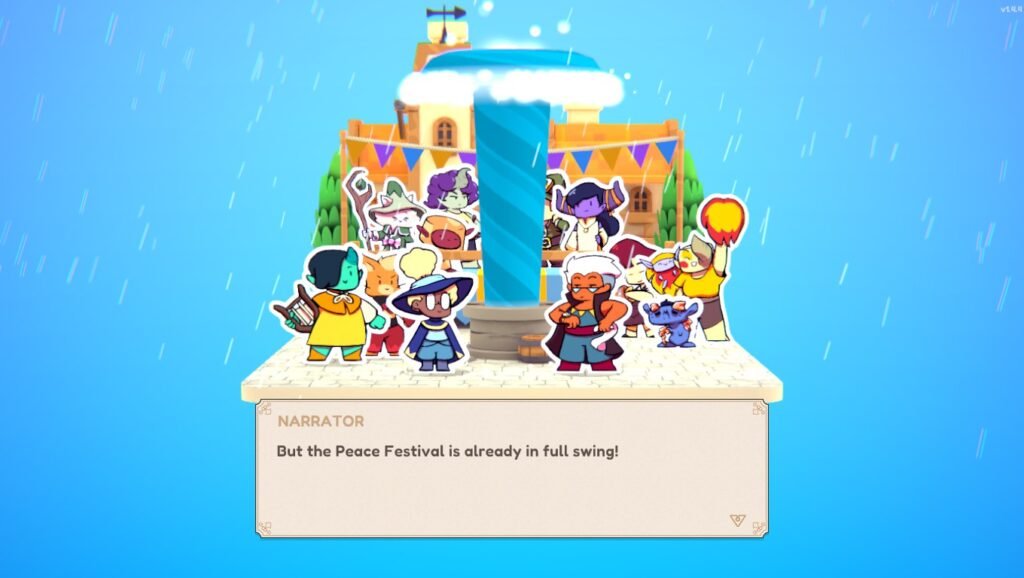
Perhaps Baladins’ strongest quality is its distinctive presentation, combining 2D character art with 3D environments to create a storybook-like aesthetic that feels both modern and nostalgic. Its visual style truly complements the game’s lighthearted tone as if it were pulled from a storybook, but in a tabletop campaign.
Besides that, the game also shines in co-op, where its systems are clearly built around group interaction. Quests rarely have a single solution, allowing parties to approach situations in multiple ways, depending on their characters, ideas, and willingness to experiment. The flexibility encourages replayability and makes collaboration feel meaningful rather than optional, especially when you and your fellow party members unravel a quest’s story and how to resolve its problem.
Freedom at the Cost of Clarity
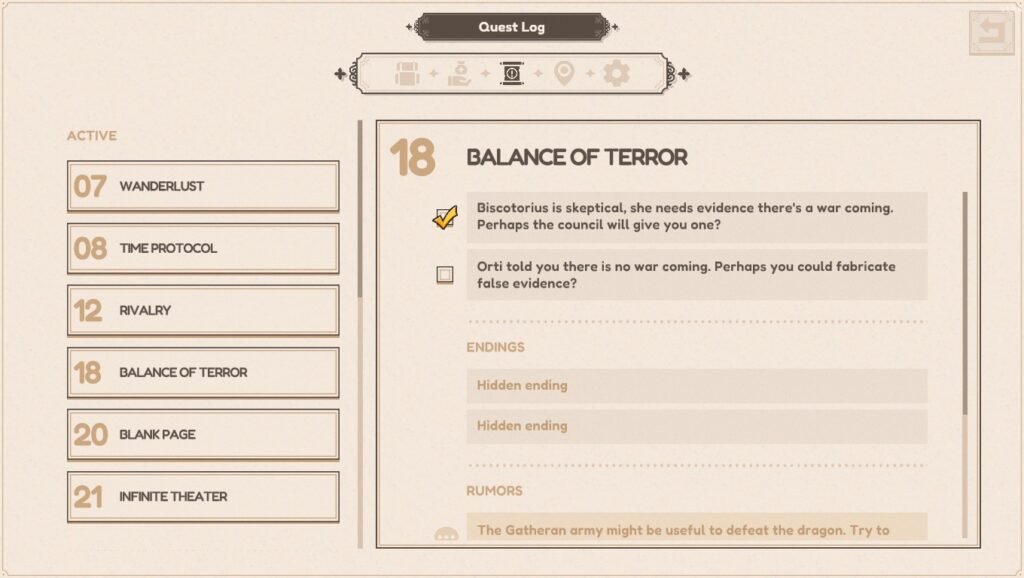
Despite its charm, however, Baladins can be unintuitive at times, particularly for newcomers. The interface lacks clear icons or visual indicators for quests for locations, characters, and points of interest, which can make navigation and decision-making confusing. It would be nice for quests at least to have image icons of NPCs, so you’d better remember who’s who.
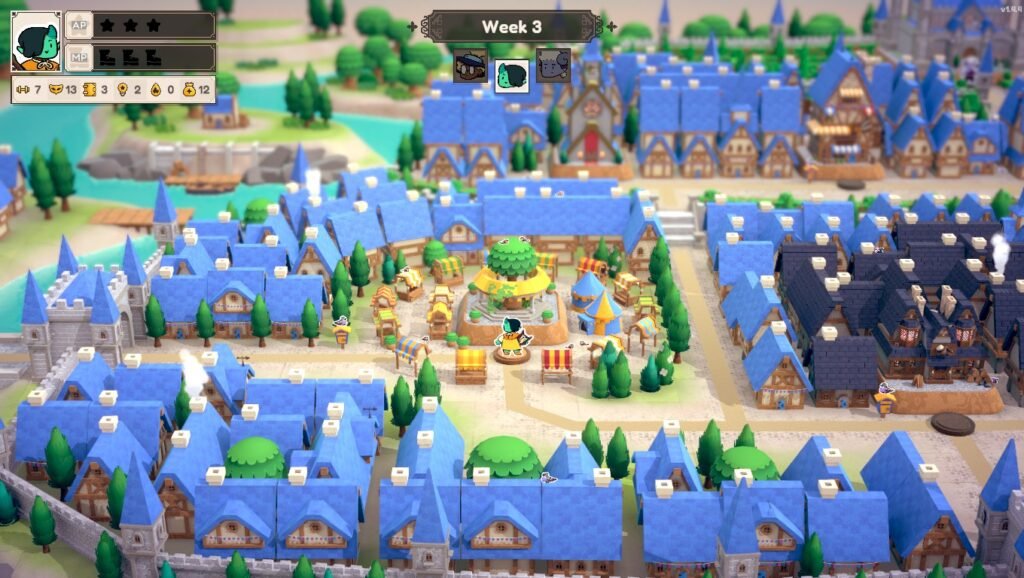
Similarly, switching players after turns limits your ability to move and even check your items. Everyone can see if the active player in a round goes into a tab or menu, but you cannot hover on items the active player has found to get information on them.
Additionally, the game offers limited guidance on how its systems work, leaving new players figure things out through trial and error. While this hands-off approach may appeal to experienced RPG players, it can be frustrating for those unfamiliar with tabletop-style mechanics, creating an initial barrier that slows down immersion slightly.
A Creative Gamble that Pays Off
Overall, Baladins is creatively designed to succeed most when treated as a storytelling experience rather than a traditional game to be mastered. Its visual style, flexible quests, and emphasis on player interaction make it a standout choice for friends looking to try out roleplay games in a relaxed setting.
While its lack of user interface clarity and limited guidance may be a bit challenging, those willing to experiment and occasionally stumble will find the game rewarding and replayable. The game is imperfect but heartfelt as it knows exactly what kind of experience it wants to offer: a shareable gaming session that’s best enjoyed together.
Baladins: A whimsical, co-op table-top inspired RPG that blends 2D character art with 3D environments, every choice and party interaction shapes your adventure. You'll love the games flexible quests, co-op focus, and replayability, letting you experiment with different strategies and outcomes. While the interface can be confusing at ttimes, the game's charm, creativity, and emphasis on shared storytelling more than make up for it. Overall, it's a heartfelt, replayable adventure best enjoyed with friends, rewarding those willing to explore and roll the story. – Renee Aguila