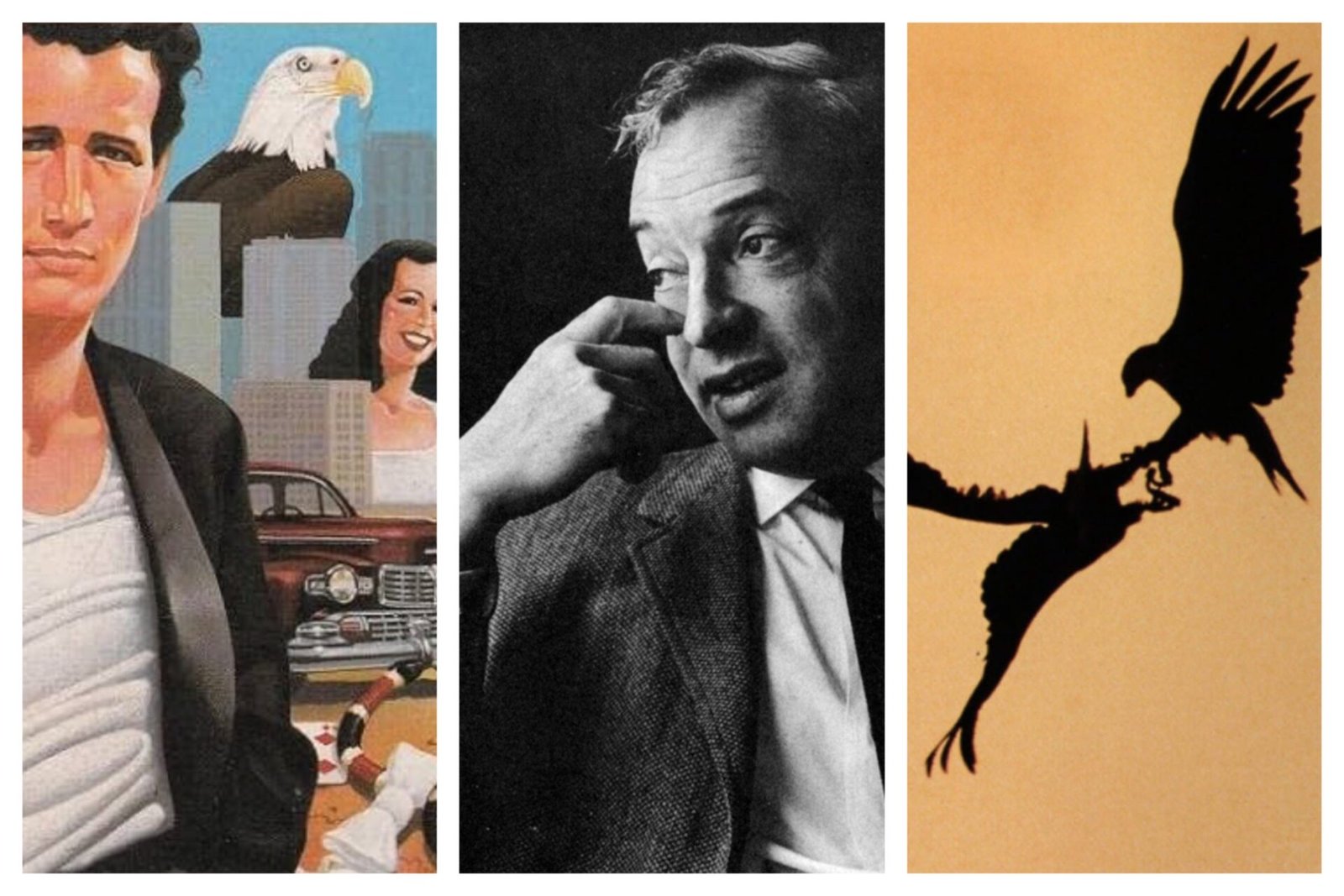
Saul Bellow’s The Adventures of Augie March opens with the now immortal opening lines, ‘I am an American, Chicago born — Chicago, that somber city — and go at things as I have taught myself, free-style, and will make the record in my own way: first to knock, first admitted; sometimes an innocent knock, sometimes a not so innocent.’ Right off the bat, he challenges the reader, promising an unapologetic voice, proud of his identity and attitude come what may.
This is the voice of Augie March, and it’s the prose of the entire novel. It is meandering, at times overthinking, often omitting crucial points and more often than not, hopelessly lost. But it is a voice which encapsulates the reader into a precarious time in American history from a young man of a unique background: Single parent, Jewish, two brothers one of whom mentally handicapped.
This is America during the Great Depression all the way to the Second World War. Living in a world where economic uncertainties are the norm, the divide between the rich and poor becoming more severe and one must fight to survive not with brute force, but with luck and cunning. Augie March however, is not a poster boy of your typical hero. He is passive, letting life pass by him and riding the wave of whatever comes. He is self-aware of this limitation and shares the same frustration with the reader.
Augie’s voice is restless, contradictory, and morally uncertain. The novel itself is long and structurally uneven, often drifting from one episode to the next without clear cohesion. But these apparent flaws are part of its design. The sprawl mirrors the instability of Augie’s world. Imperfect though it may be, The Adventures of Augie March secures its place as an American classic through the sheer vitality of its voice.

Plot Overview
Augie was born of lower middle-income Jewish family, never knew his father and his single mother, as tough as life is, does the bare minimum to keep the family together. The house is ruled by a tenant who doubled as the grandmother and tyranically managed the affairs of the family. It was through her pressure that Augie’s mentally challenged brother George was placed in a home. His other brother Simon had always been ambitious, if a little too wayward with women.
When Augie was older he would take a job with the local mogul Einhorn, who he adopted loosely as a father figure. When the Great Depression came, Augie lost his job though he remained in touch with his former employers. Augie would work a few more jobs, would lose his grandmother (his real one) and found his mother moved out from his old home. His brother Simon would have gambled away all the family’s meagre wealth to impress a girl who was quickfooted enough to leave him.
With an old flame Augie would travel to Mexico in the hopes of becoming an eagle tamer. When that relationship ended violently, he returned to America just in time for the war to break out. The government placed him as a merchant marine where he’d almost lost his life, barely escaping a sinking ship and surviving on a lifeboat with an amoral companion.
The Cohesion of Prose, Voice and Form
So ends the adventures of Augie March, as a tamed man whose marriage is on the verge of falling apart, who it seems, still as lost as he was when the story began despite his assertive opening lines. Augie March is a freewheeler, sometimes in control of his life, at other times not so much. But this control is an illusion as he realised that he had always been a pawn in other people’s schemes. Augie would never had a plan of his own but had always allowed himself to be absorbed in other’s plans.
Augie is not an easy hero to champion. He drifts, hesitates, submits to other people’s plans. You neither despise him nor root for him with conviction. He survives, but he does not quite evolve. The real magnet of the novel is not the man but the music of his narration. Augie may be passive, but Bellow’s voice is anything but.
It is akin to jazz, a stream of consciousness blurted out as heavy as a baritone trumpet. There is chaos in this voice but there is plenty of control too. This is reflected with the form of the story, taking shape as Augie’s life shaped by the outside forces taking hold of him. There is a fractal symmetry to this, that the sentences reflect the structure of the novel. But don’t be fooled: the lackadaisical approach to the language is deliberate and if we look closer these are beautifully constructed sentences. There is purpose, as Augie’s struggle with the language reflect the search of his identity:
“Take the fact that people generally were full of loathing and it cost them an effort to lock at one another. Mostly they wanted to be let alone. And they dug for unreality more than for treasure, unreality being their last great hope because then they could doubt that what they knew about themselves was true.”

What We Can Learn From Augie’s Times
If nothing else, The Adventures of Augie March is a chronicle of that curious time in history. It is a time that is, at least for us, cautionary if not instructive.
The Great Depression is the time when legends were unraveled overnight, Einhorn a case in point. But the warning signs were there: It was the time when lines of men loiter outside of offices for the opportunity of a day’s work, grown men and women resort back to their parents home as their daily costs of living become unsustainable.
It enforces the idea though that the poor(er) are hangers-on to the wealthy. There is no such thing as a self made man lest you lucked out in having struck a relationship with the right person at the right time. For Augie these types of persons always come along and he would swim into their schemes. His brother Simon is the opposite as he managed to build an empire for himself as he married into wealth.
The question, then, is who is exploiting whom. Do the poor attach themselves to the wealthy out of necessity, using proximity as leverage for social mobility? Or do the wealthy recruit ambition where they find it, turning hunger into profit? Simon’s marriage is openly transactional: he is granted space to pursue business so long as he succeeds. One wonders how quickly that generosity would have vanished had he failed.
However, the book was the most engaging not when Augie was navigating through the social ladders in the upper echelons, but when he really had to hustle as he brushed shoulders with poverty. Augie would have a hand in trafficking across the border, almost got caught, forced to hitch trains along the way to Chicago but not before making a wrong detour to Detroit. There is real grit in these small segments but sadly, they are few and far between.
Augie was forced to drift from one job to another, sometimes through choice, but most times because he drifted to it. Still we can see this as a reflection of the time as there was no such thing as stability. In our context, within the economic climate not too dissimilar to the Great Depression, the gig economy is well and truly alive. When stability is no longer a given, one has to jump from one available method of sustenance to the next.
So what can we learn from Augie? Perhaps not optimism, but adaptability. Augie survives less through vision than through flexibility. He drifts, but he adjusts. That may be the more realistic lesson: in unstable times, resilience often matters more than grand ambition. Survival is not heroic, but it is earned.
The Bildungsroman: In search of One’s Own Reality
Saul Bellow’s The Adventures of Augie March is a picaresque novel, a free-flowing, free-wheeling tumbling of one event to the next. This lack of consistency, though part of its technique, is the weakest part of the book. The “adventures” is borrowed from Twain’s title for Huckleberry Finn, another great American literary character. But for both characters, I don’t feel any strong attachment toward.
Arguably, I should be feeling more disposition toward’s Augie’s way of living. I felt frustration in some of Augie’s decisions, that he was self-aware that he is part of somebody’s schemes but without much thought just goes along with it. It is only the latter parts of the book that he was able to break free from these shackles, when Stella called him out on it:
“To these words that she spoke I responded tremendously, I melted toward her. I was grateful for her plain way of naming a truth that had been hanging around me anonymously for many long years. I did fit into people’s schemes.”
It is in a greater irony then, that Augie fell into Stella’s scheme to sneak her out of town to escape her erratic boyfriend. But this process of falling into schemes is part of the act of growing up, finding one’s own person. In this respect, The Adventures of Augie March fits the mark of a bildungsroman to a tee. Augie tries to construct his own version of reality while competing with the reality of others:
“And this is what humanity always does. It’s made up of these inventors or artists, millions and millions of them, each in his own way trying to recruit other people to play a supporting role and sustain him in his make-believe.”
Yet, despite all these competing realities, there exists universal realities which may flew under the radar, and at times, we must confront:
“Everyone tries to create a world he can live in, and what he can’t use he often can’t see. But the real world is already crated, and if your fabrication doesn’t correspond, then even if you feel noble and insist on there being something better than what people call reality, that better something needn’t try to exceed what, in its actuality, since we know it so little, may be very surprising. If a happy state of things, surprising; if miserable or tragic, no worse than what we invent.”

Does The Adventures of Augie March merit its status as a modern classic? Absolutely. Augie himself may frustrate, and the novel may wander, but Bellow’s achievement lies in the voice: at once streetwise and intellectually penetrating. It is a distinctly American sound, born in a time of national anxiety and still resonant today.