Reviewed On PS5
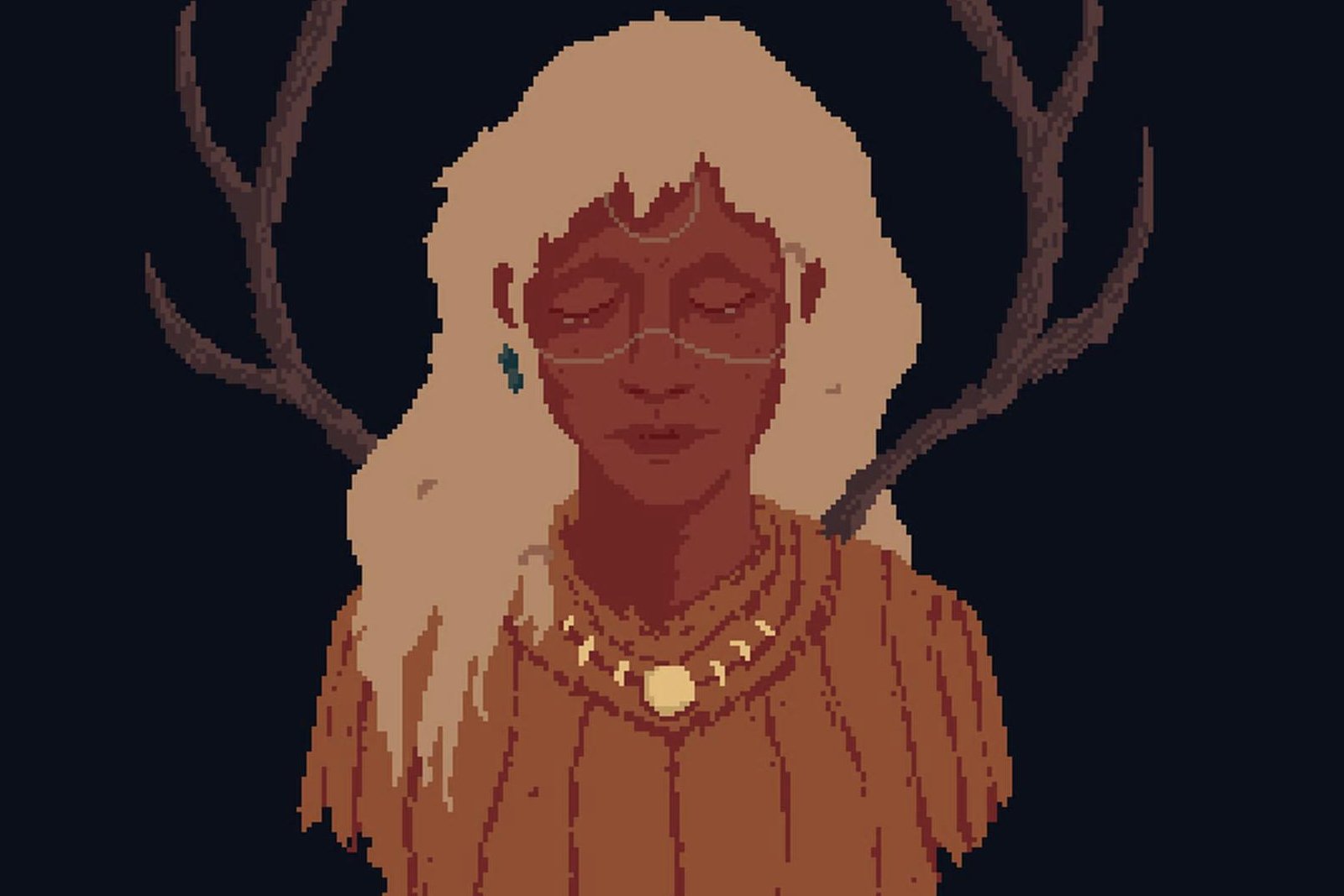
With its enchanting pixel graphics and themes steeped in shamanistic folklore, The Outer Zone’s Death Howl is more than just another deck builder. It forgoes the usual roguelike formula in favor of a single, open-world narrative, focusing on exploration and challenging combat to create, as the game bills itself, “a soulslike deckbuilder.” The result is a compelling, personal story that occasionally makes you want to hurl the controller in frustration.
Grief At The Dawn Of Time
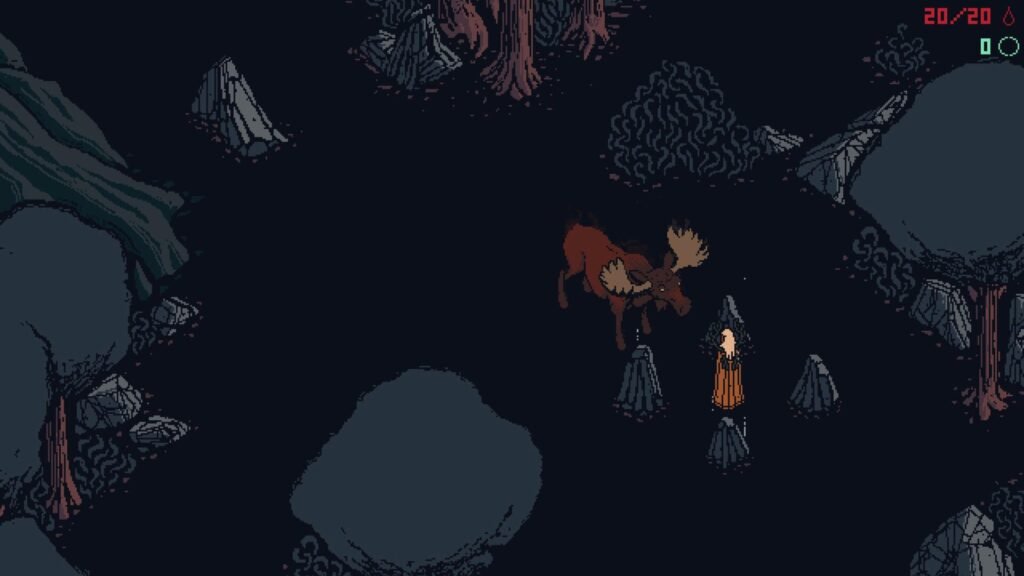
Death Howl takes place during the Mesolithic Period, around 10,000 BCE, give or take a few millennia. Ro, a young mother, has lost her son Olvi in a tragic accident, and embarks on a quest into the Spirit Realm to bring him back. Ro is the daughter of a shaman but not a shaman herself, and has to learn to work magic in the Spirit Realm in order to defend herself from the hostile creatures there while she searches for Olvi.
Guided by a wise moose called Nanntok, Ro has to learn patience and acceptance while traversing the Spirit Realm, seeking the aid of the Great Spirits before ascending the Howling Mountain to face Sorg, the keeper of the dead. While fairly simple, Death Howl‘s story is well-timed and executed, offering memories of Olvi and the rest of Ro’s family as you go.
Ro’s growth and her journey through grief and loss are particularly compelling to watch – at the beginning, she insists on going straight to face Sorg, and has to be talked down by Nanntok so that she’ll be ready for the trials ahead. By the time you finally make your attempt on the Howling Mountain, Ro is steadfast and prepared to face the end of her quest, whatever that might mean.
With an exploration of grief front and center under a mountain metaphor, of course, I couldn’t help but draw parallels to Celeste. Death Howl has many of the same themes, but it’s more subtle about them, and ultimately more successful as a result. Swapping out a frantic platforming challenge for a thoughtful turn-based one makes the experience more meditative as well. However, where Celeste ultimately rewards skill and repetition, Death Howl sometimes finds itself relying a bit too much on luck to get the job done.
The Heart (And Blood, And Viscera) Of The Cards
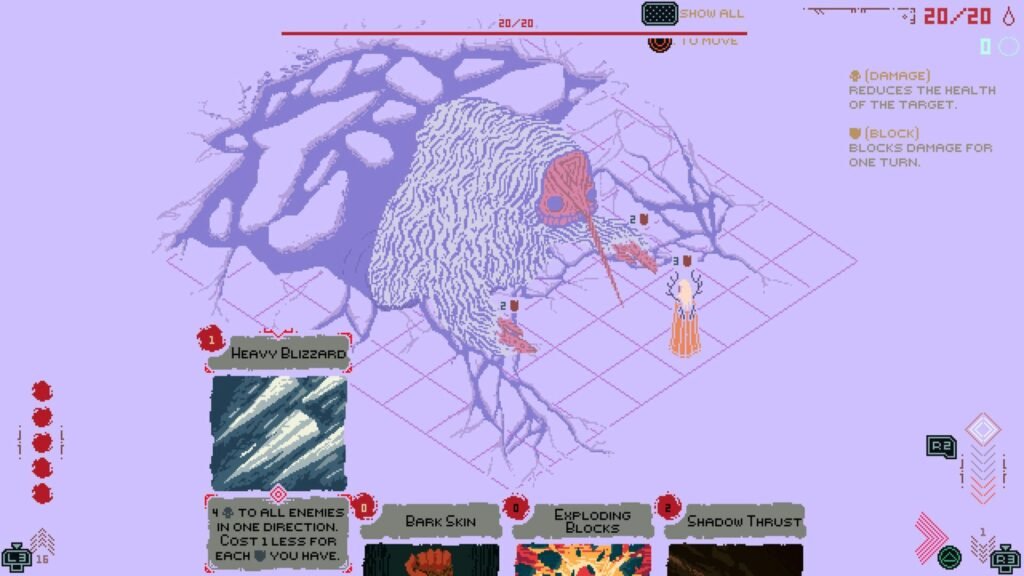
Combat in Death Howl is fairly standard, as tactical deck builders go. Positioning is particularly important, especially later in the game when you start facing enemies with insta-kill attacks, or you’re down to your last few hit points and need to make sure you can survive one more round. Since mana is used to move, though, you’ll often find your resources stretched thin quickly on any given turn.
There are, of course, cards that refill mana or grant extra movement.
The soulslike element is in exploration; stopping at Sacred Groves lets you heal and unlock fast travel points, but doing so resurrects every non-boss foe you’ve defeated. Getting anywhere means not only surviving battles, but being able to survive several in a row on Ro’s 20 HP without returning to a Grove and resetting your progress.
Progression is primarily lateral. While there are a handful of small skill trees, you mostly grow by expanding the pool of cards available to you, rather than any sort of leveling up. This means that if a fight is giving you trouble, you can’t rely on coming back with better stats, but you might be able to unlock new cards that fit the situation better than what you have.
There’s a catch, though – cards in Death Howl are associated with the biome from which they’re unlocked. Playing a card outside its home region – for example, a snow card while you’re in the swamp – makes it cost one more. It’s not a terrible cost, but it can throw off your mana curve enough that cards that were staples at home become hard to justify in any other region. Only at the end of the game, on the Howling Mountain, can you finally try all those cool combos you’ve been dreaming up without any penalties.
Each biome’s card sets have a distinct theme, letting you experience the breadth of the design work that the devs have put into the game as you explore. However, you have to unlock the cards of a new realm a little bit at a time. Say, for example, you’ve just finished the first area, the forest, and have moved on to the snowy region to the north. Only a handful of snow cards are available to start, so you need to build your deck from (generally bad) Realmless cards and overcosted leftovers from the forest, struggling your way through fights until you’ve gathered enough material to unlock new sets.
Fighting Fate
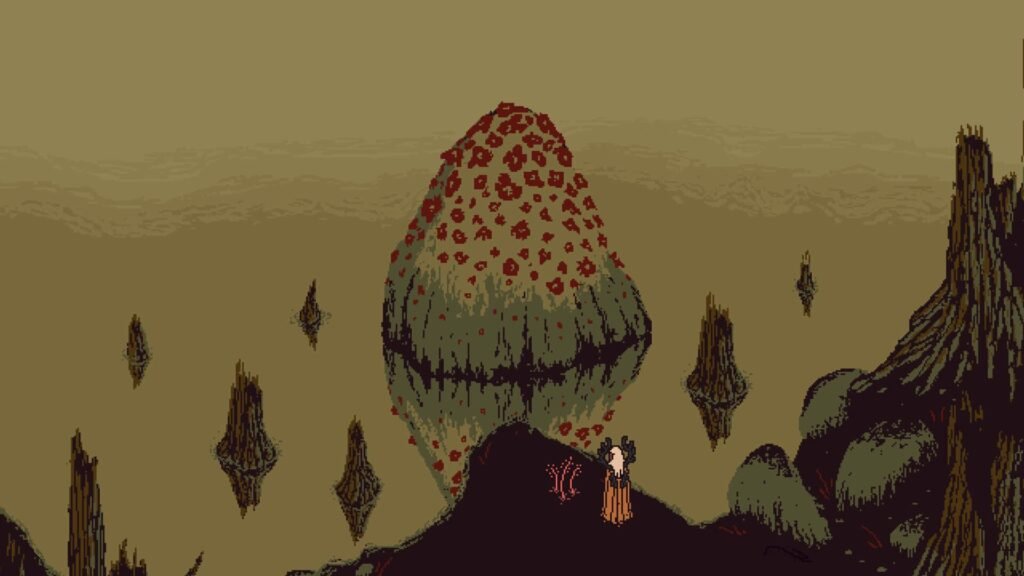
When the battles in Death Howl work, they’re some of the best fights in the genre. Bosses like Exorath and the Moon Eel have that soulslike tenacity to them that will crush you into the ground but call you back for another round, armed with new knowledge and ready to win.
Once you get into the groove of a biome’s gameplay style, it’s immensely satisfying to combo off as the designers intended, or head to the Howling Mountain and try a no-holds-barred deck against the game’s toughest enemies. Other fights, though – namely Cephagloom and a handful of map encounters that seem to have been designed by sadists – can feel like pounding your head against the wall even with a decent deck.
Watch out for spiders. Trust me on this.
In fights like these, so much can come down to your opening hand (particularly if you start low on health) that it begins to feel like poker. Eliminating a key support unit or dangerous damage-dealer early on becomes critical, and sometimes the cards just don’t fall the way you need them to. There are few things more disheartening in this game than getting to the end of a fight that’s confounded you, only to realize you’re one damage short of lethal before getting kicked back to the start of the battle.
Consoled On Console
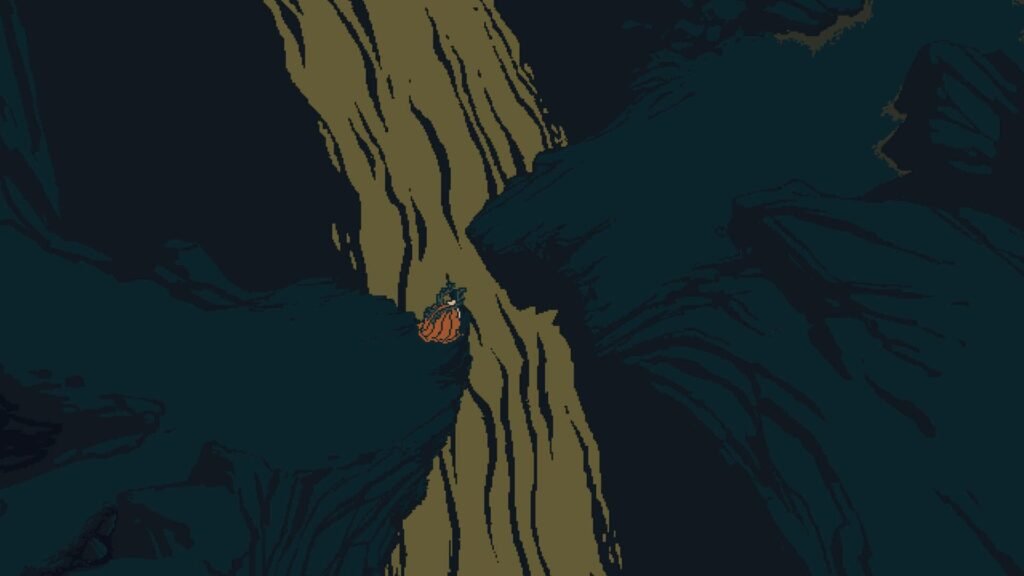
The PC version of Death Howl has been out since December, and if you’re playing it on console, you’ll probably feel, as I did, like it’s intended to be played on a mouse and keyboard rather than a controller. For the most part, the game makes the transition nicely; tooltips are easily brought up with a button press, and during combat, you can swap between your hand and the map grid quickly.
The only real tripping point for me was in the menu, where I struggled to remember which button (R1? D-pad? Stick?) would get me most efficiently to the page I wanted to reach, and would usually just manually tab over the long way instead.
While I played Death Howl on PS5, I feel like it’s the kind of game that would excel on the Switch thanks to its portability.
Howling At The Moon
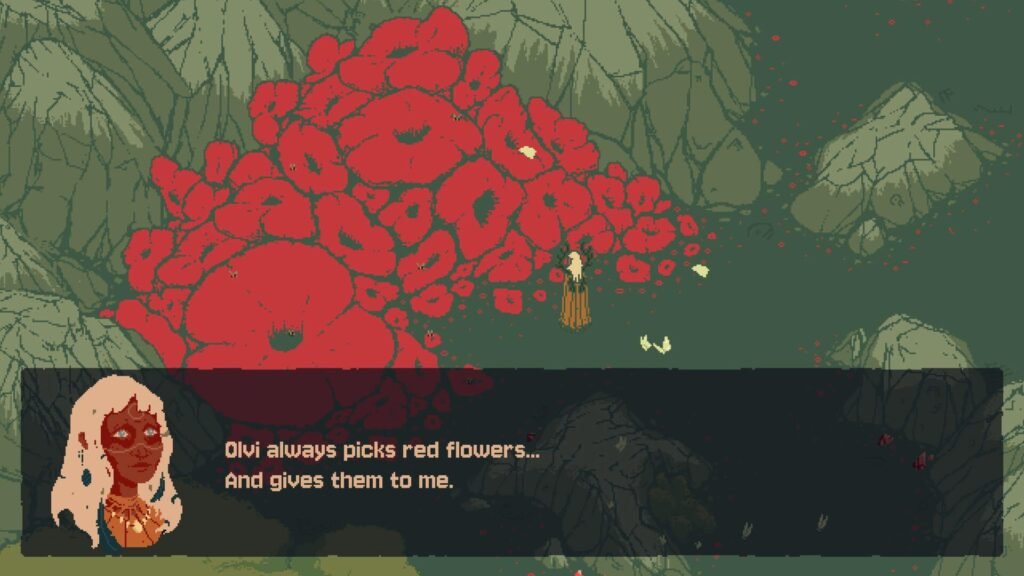
Death Howl deserves praise for its aesthetics, themes, and subdued story. Its gameplay is an experimental blend of genres that has its moments, but only succeeds some of the time. Don’t let the soulslike label fool you, though – as challenging (and frustrating) as Death Howl can be, it’s not a hardcore grindfest, and it isn’t going to demand that you git gud.
The game is about overcoming adversity and unlocking potential, both in terms of story and gameplay, making it worth the journey. Barring any future DLC, you likely won’t need to play it more than once, but that one playthrough will likely stick with you, thanks to the heart that the developers put into it.
Death Howl: A lovely exploration of grief in the stone age. When the combat works it soars, but there are some instances where the experimental blend of soulslike and deckbuilder are exasperating. – MattArnold