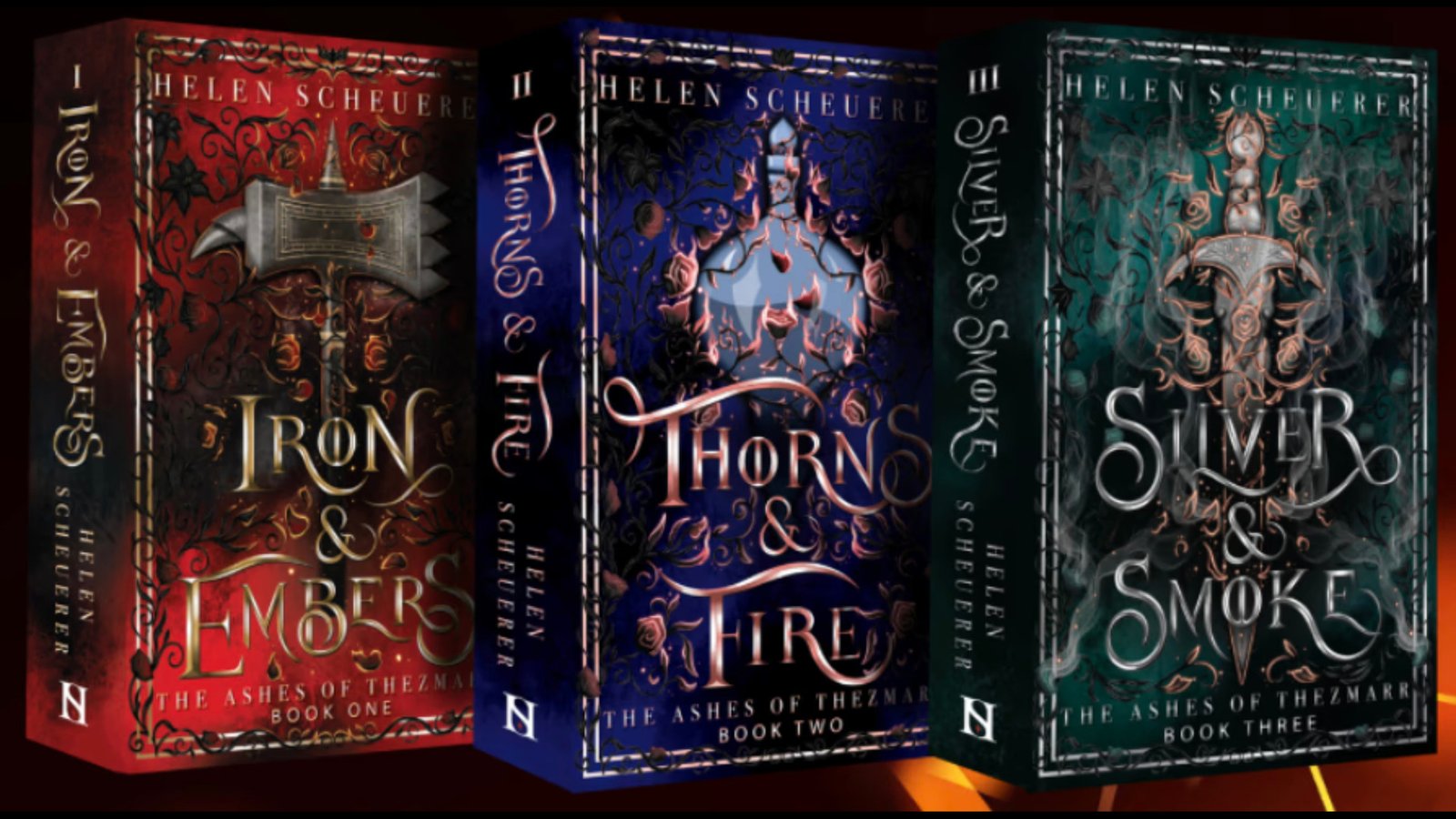
*I received The Ashes of Thezmarr series for free in exchange for an honest review. Everything written here reflects my genuine reading experience. Spoilers may be ahead, though I did my best to avoid any major spoilers.
When I first read the blurb for The Ashes of Thezmarr, I was genuinely excited. The concept immediately hooked me. A pre-established relationship filled with unresolved tension, history, and emotional wounds.
Second-chance dynamics are something I typically love and rarely find in my ‘romantasy’ novels. There’s a richness that comes from characters who have a shared past. The emotional stakes are higher, the resentment feels earned, and the romantic tension can feel layered and complex.
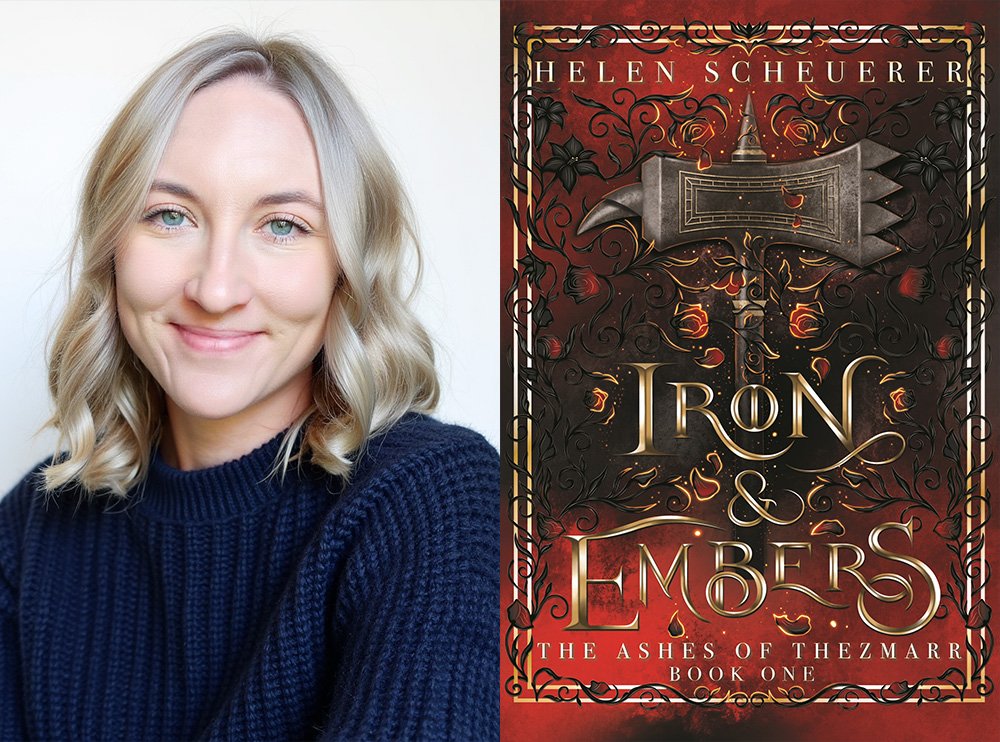
And in the first few chapters of Iron and Embers, I was all in.
We are introduced to Wren, a revenge-driven Princess, now healer turned poisoner. And Torg, the legendary bear-slayer war-sword. Once upon a time, they fought side by side in one of the greatest battles known to the realms. But five years later, they hate each other, haven’t seen each other, and plan to keep it that way. Old wounds still sting at the mere thought of the other. The setup? I loved it.
The forced reunion happens when Torg is assigned as Wren’s bodyguard while she is finally sent to study at the most prestigious alchemy academy in the realms. Political stakes, academic rivalry, lethal competition, unresolved history. There was so much potential layered into that premise. I was invested in Wren’s journey, intrigued by the academic setting, and curious about how their fractured relationship would unfold.
Unfortunately, for me, that excitement didn’t last.
Once the spice began, it came in abruptly and heavily. After that point, it felt constant. Nearly every chapter contained either Wren and Torg openly ogling each other in front of others, prolonged sexual tension, or internal monologues focused on what one character wanted to do to the other.
Now, I want to be clear: I knew going in that this was a fantasy romance with spice. I am not opposed to romance or even spice scenes. But for me personally, it was laid on far too thick. Instead of enhancing the tension, it overwhelmed it. When every chapter centers on lust, the impact diminishes. What could have been a slow-burning chemistry instead felt immediate, constant, and repetitive.
The romantic tropes were another major sticking point for me. This series leans heavily into forced proximity, soul mates, enemies-to-lovers, and repeated separation for tension. These tropes can absolutely work, but they require build-up and nuance. They need to feel earned.
Here, I often felt like they were being deployed checklist-style rather than organically woven into the story. At one point, I was listening to a few chapters with my partner and successfully predicted every trope that was about to occur before it happened. That predictability removed the excitement for me. Tropes should feel like satisfying pay-offs, not like foregone conclusions telegraphed chapters in advance.
Perhaps most frustratingly, at the end of each book, it felt as though there needed to be a rushed or loosely justified reason to separate Wren and Torg again, simply to recreate the tension for the next instalment. Instead of feeling like an inevitable narrative turn, these separations felt engineered.
By the third book, I was genuinely struggling to get through it. And that’s disappointing, because underneath the heavy romantic focus, there is an interesting story trying to break through.
Wren, as a character, is easily the strongest aspect of this series. A healer turned poisoner is such a compelling concept. Poison is often framed in fantasy as a “feminine” or “dishonorable” weapon, something subtle rather than powerful. But here, it is presented as precise, scientific, and devastatingly effective. Wren’s intelligence, her dedication to alchemy, and her refusal to be underestimated were genuinely enjoyable to read.
The science behind the alchemy was one of the highlights for me. There was clear thought put into how poisons function, how compounds are created, and how they interact in the body. The detail gave the magic system texture and credibility. It grounded the fantasy elements in something tactile and immersive.
The academy setting was a strong point. The inclusion of artwork at the beginning of the book, showing a birds-eye view of the campus, was a lovely touch. It made the world feel tangible. I could visualise where events were happening, where fights and competitions were taking place. It enhanced immersion in a way I appreciated.
The underlying political and competitive tension had potential as well. The deadly gauntlet, the fragile soul bond, and high-stakes academic prestige could have carried a gripping narrative arc. At times, glimpses of that stronger story shone through, and during those moments, I was reminded why I was initially excited.
The prose itself is also solid. When the focus shifts away from explicit scenes and trope reinforcement, the writing flows well. Descriptions are vivid without being overly purple, and emotional beats land effectively. I enjoyed the language in the quieter, plot-driven moments.
But for me, everything in between began to feel like filler, scaffolding erected purely to justify the next romantic escalation. The story often felt paused rather than propelled by these scenes. Instead of deepening character development, many of the intimate scenes felt repetitive.
One of the biggest issues was that emotional growth didn’t always seem to match the intensity of the physical relationship. The characters’ internal conflicts were frequently overshadowed by their desire. I wanted more exploration of their shared trauma from the great battle. I wanted a deeper reconciliation. I wanted conversations that unpacked their five-year separation in meaningful ways. Instead, those emotional layers sometimes felt glossed over in favour of physical attraction.
I also think part of my disappointment comes from mismatched expectations. The blurb did not, in my opinion, fully convey just how spice-forward this series would be. That may be on me for not researching further before diving in. Readers who actively seek high-spice fantasy romance may have a completely different experience than I did.
But as someone who prioritizes plot, character growth, and world-building over spice content, I found myself increasingly disengaged.
By the end of the series, I didn’t feel strongly connected to the overarching narrative. I wasn’t emotionally devastated, euphoric, or particularly reflective. It was, for me, ultimately forgettable. There were strong components, but they were overshadowed by an overreliance on sexual tension and familiar tropes.
To be clear, this is entirely subjective. There is clearly an audience for heavy-spice fantasy romance packed with classic tropes. If you love forced proximity, soulmate bonds, possessive warriors, and frequent spice woven into a fantasy setting, this series may be what you’re looking for.
For me personally, however, it did not strike the balance I was hoping for.
Overall, I would rate The Ashes of Thezmarr a 4.5 out of 10. It had an incredibly promising premise and standout protagonist in Wren, but the execution leaned too heavily into spice and predictable trope development for my taste.
The Ashes of Thezmarr by Helen Scheuerer: An incredibly promising premise and standout protagonist in Wren, but the execution leaned too heavily into spice and predictable trope development for my taste. By the end of the series, I didn't feel strongly connected to the overarching narrative. I wasn't emotionally devastated, euphoric, or particularly reflective. It was, for me, ultimately forgettable. There were strong components, but they were overshadowed by an overreliance on sexual tension and familiar tropes. – Taylor Owen