Space opera is science fiction evergreen. There will always be a desire for huge scales, distant empires, impossible journeys, and stories where the fate of entire worlds can hinge on a single ship in the wrong place at the wrong time.
And the genre is not just about spectacle. The best space operas use that scale to explore politics, identity, survival, and the quiet terror of realizing how small humans really are.
2025 delivered a strong lineup, with books ranging from high-concept thrillers to slower, stranger, more philosophical epics. Here are the space opera novels that stood out the most.
Slow Gods — Claire North
A cosmic disaster seen through one broken life
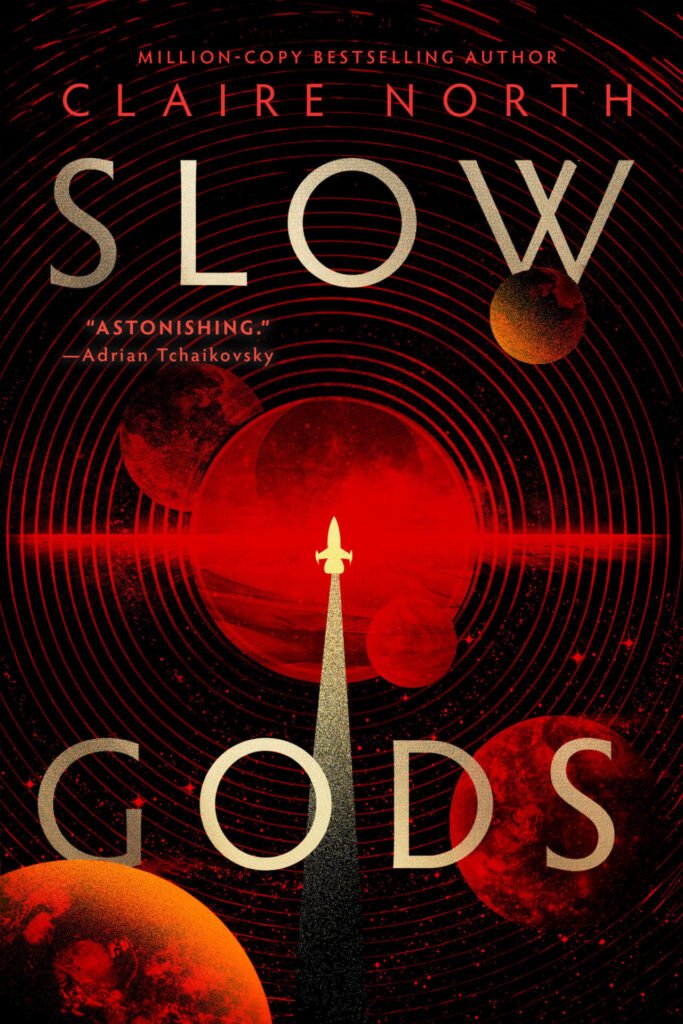
Claire North’s Slow Gods follows Mawukana na-Vdnaze, a man born into the Shine, a ruthless interstellar regime where debt is destiny. When a mysterious entity known as the Slow announces that a binary star will go supernova and wipe out entire systems within a century, Maw’s life collides with galaxy-level catastrophe. After being imprisoned and later trained as a Pilot, he survives an arcspace jump that should have killed him, emerging altered, and slowly pulled into the political and philosophical shockwaves of the coming disaster.
This is space opera for readers who want big-scale sci-fi but also big on ideas. How civilizations respond to extinction, how identity fractures under systems, and what survival means when the timeline is measured in… decades. If you like space opera with weight and a unique protagonist, Slow Gods is an easy standout.
The Two Lies of Faven Sythe — Megan E. O’Keefe
Mystery-driven space opera with pirate energy
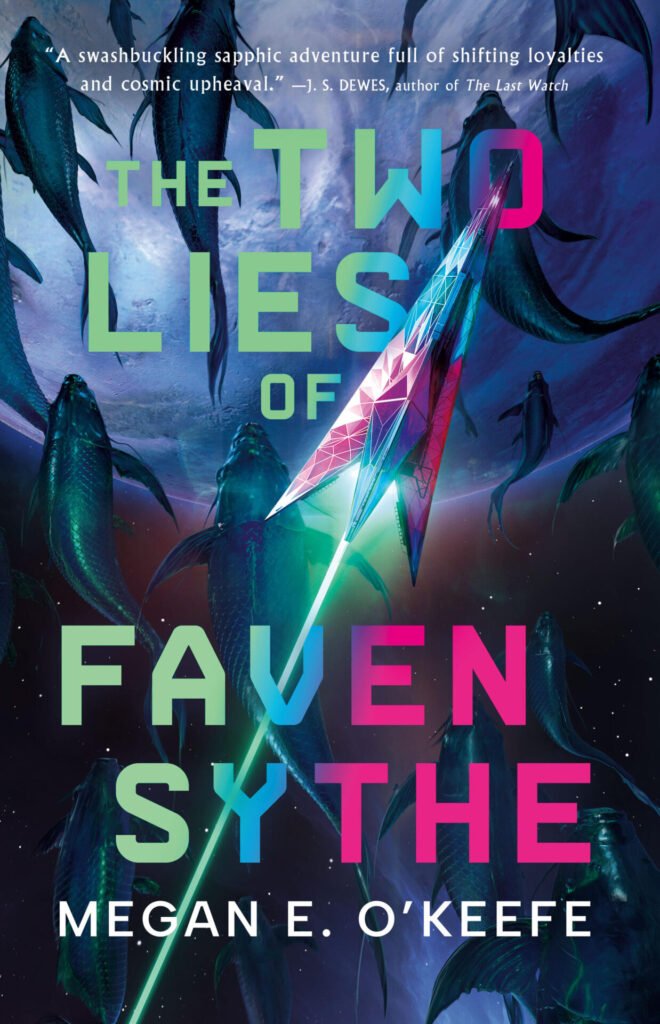
Megan E. O’Keefe’s The Two Lies of Faven Sythe starts with a ship that has basically become a legend. The Black Celeste (yes, the reference is quite chilling) is the kind of name people whisper about, a wreck drifting in the Clutch, a cosmic graveyard where old vessels go to die and where no sane person goes looking for answers. But when Faven Sythe’s mentor vanishes and leaves behind a starpath that ends right there, Faven does what most people would not. She follows it. The only person who might understand what happened is Bitter Amandine, a notorious pirate with a very clear rule: never go back to the Clutch.
This is a kind of space opera that reads like a chase through dark corridors. If you like stories where scale goes hand in hand with mystery, this one’s for you. It’s fast, tense, and built around that classic sci-fi question: what happened out there, and… why is everyone terrified of it?
Shroud — Adrian Tchaikovsky
First contact survival on a world that should not exist
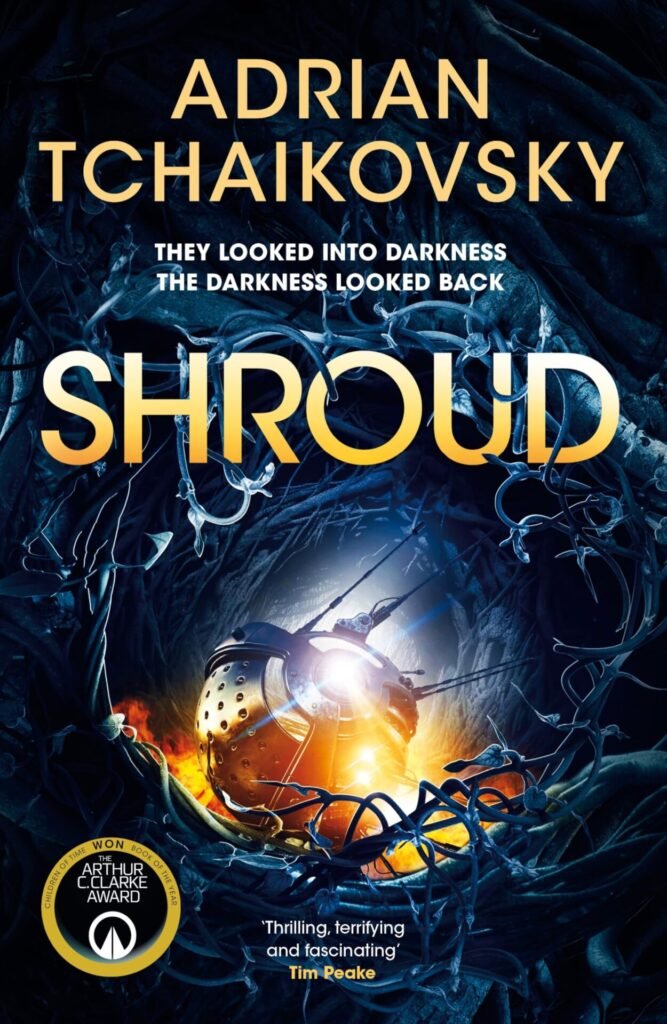
Shroud follows two scientists, Juna Ceelander and Mai Ste Etienne, who are part of a corporate expedition sent to investigate a distant star system’s moon known only as Shroud. This moon is pitch black, high-gravity, and hostile to human life, yet it emits mysterious signals that hint at complex native ecosystems and intelligence. When an accident forces Juna and Mai to crash-land on the surface, they must struggle to survive in extreme conditions while piecing together what this world — and its strange native life called the Shrouded — really is.
This is space opera that blends first contact and survival with deep alienness. It suits readers who enjoy science fiction where contact with the unknown. Shroud will appeal to fans of thoughtful first-contact stories like Children of Time but also to those who lean toward alien ecology and survival narratives that test human assumptions about communication and cooperation.
Dark Diamond (Time’s Shadow #1) — Neal Asher
Assassinations, rewinds, and a weapon everyone wants
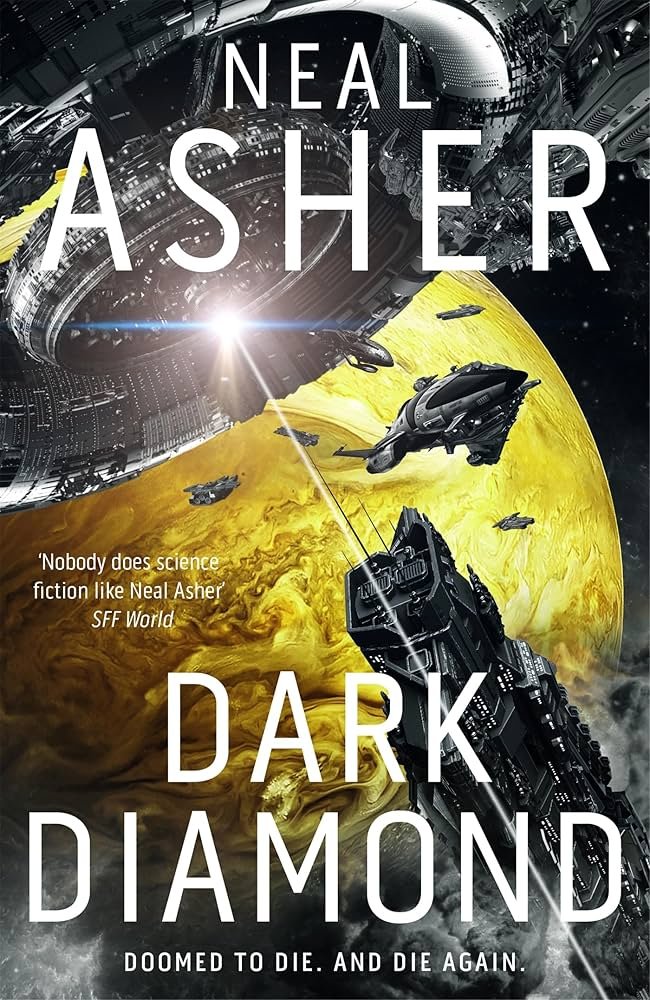
Neal Asher’s Dark Diamond opens on Captain Blite in the far-future Polity universe, a galactic civilisation dominated by powerful artificial intelligences and advanced technology. Blite survives a string of assassination attempts not because he is invincible but because of a mysterious black artifact known as the dark diamond, left to him by a rogue AI called Penny Royal. Each time he dies the dark diamond reboots time back to just before his death, forcing him to relive the same moments over and over while retaining memory of every attempt. As he gradually uncovers how the device works, he realises that this temporal anomaly draws the attention of powerful Polity agents and dangerous alien forces, including the crab-like p-Prador, all of whom covet the dark diamond’s potential.
This is space opera built for readers who love high-concept hooks with relentless pacing and cosmic stakes rather than quiet introspection. If you enjoy your science fiction with patented Polity flair — intricate worldbuilding, ruthless AIs, far-flung societies and relentless escalation — this is a standout example from 2025. Fans of expansive universes shaped by AI power dynamics and sprawling conspiracies, or anyone who likes their heroes tested in loops of violence and revelation, will find Dark Diamond satisfying and provocative in equal measure.
Seekers in the Void — Glynn Stewart
A corporate space mission that turns into something much stranger
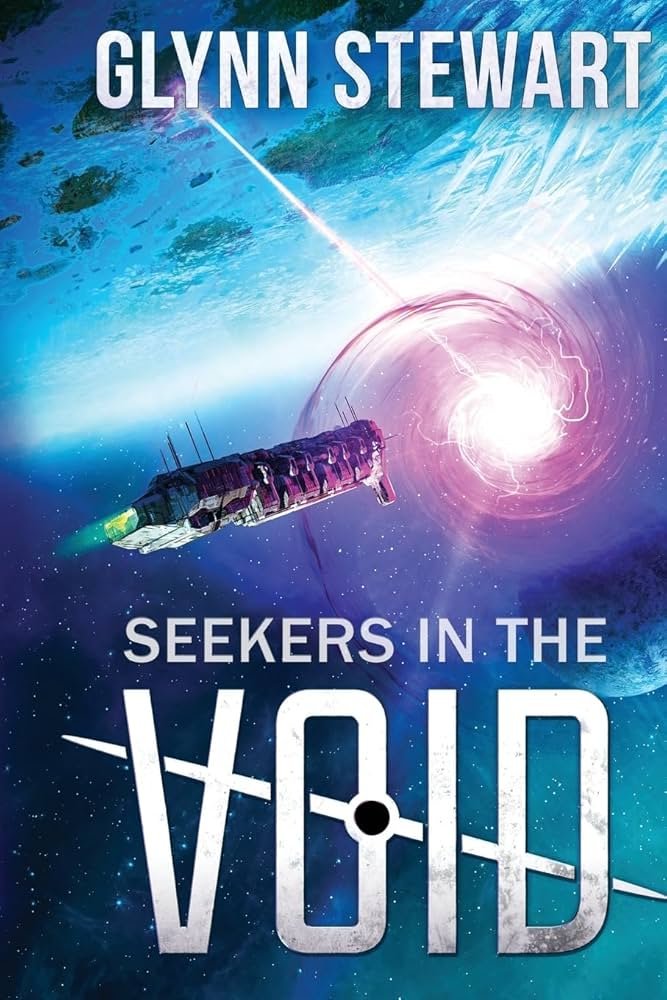
Seekers in the Void centers on Captain Cirilo Webster, an officer of the vast Santiago Corporation, the megacorporation that controls interstellar travel between the human colonies known as the Seventy-Seven. Finally given command of his own old freighter, Webster hopes to do right by his crew and satisfy both his employers and the unusual client who hired them for a research mission. But nothing goes to plan. The assignment may not be what it seems, Santiago’s policies have made plenty of enemies, and even the ship’s own cyborg security unit begins exhibiting unexpected behaviour as the journey unfolds.
This standalone space opera will most likely appeal to any readers who like corporate intrigue. If you enjoy stories where the universe feels wide and unpredictable and the crew feels like a team you want to follow, Seekers in the Void fits perfectly alongside more philosophical or high-octane entries in this list.
Conclusion
What I liked about this 2025 selection is how many different flavors of space opera it manages to cover.
Some of these books go for scale and philosophy, like Slow Gods, where the galaxy feels less like a playground and more like a machine grinding people down. Others lean into tension and mystery, like The Two Lies of Faven Sythe, which reads like a haunted expedition with a ship-sized secret at the center. And then you have books like Dark Diamond, which is pure high-concept momentum, brutal, fast, and impossible to put down once the time-loop premise kicks in.
Space opera never really goes away, because the genre is basically built for readers who want the universe to feel huge again. And in 2025, it did.