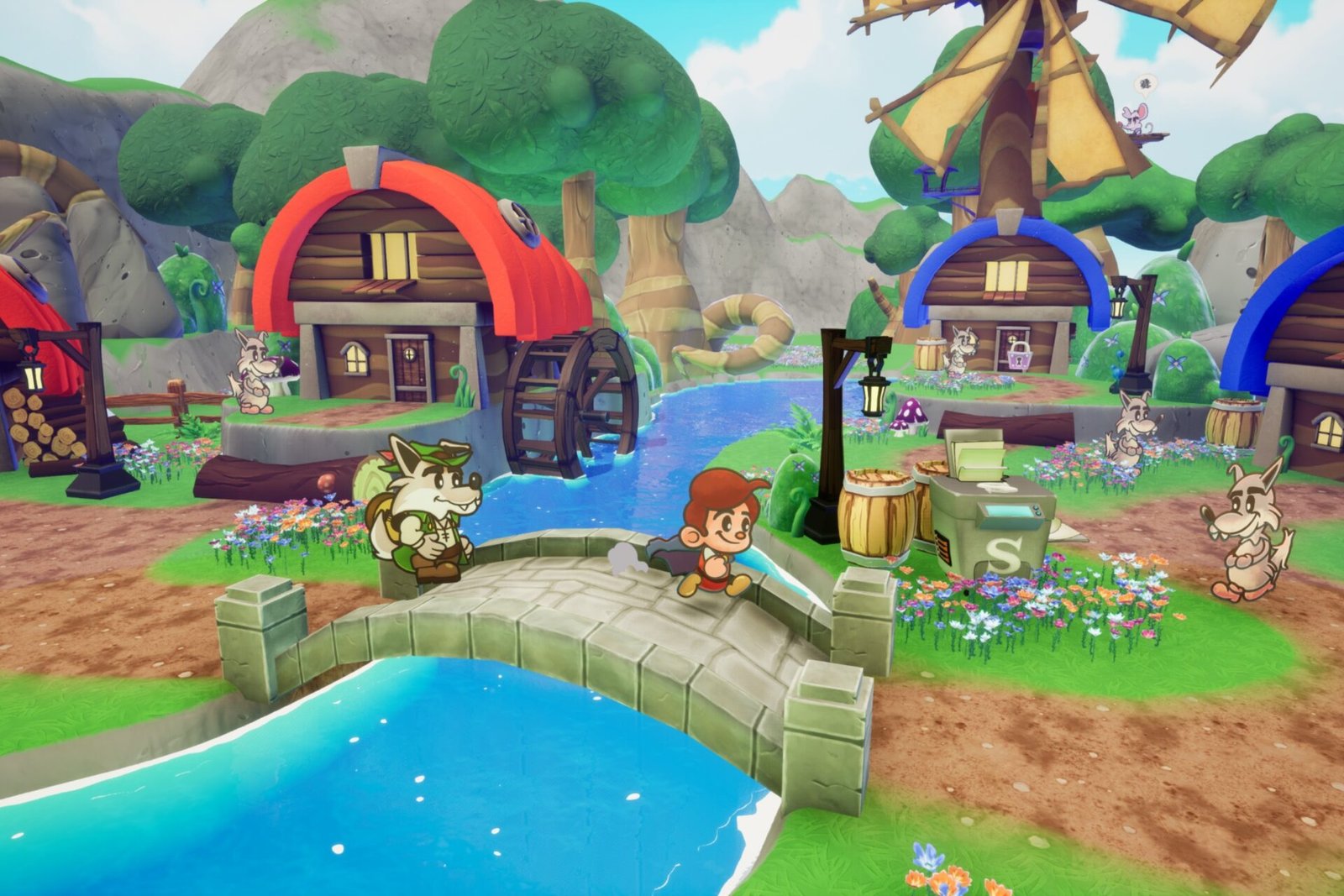
Reviewed on PC
January has been off to a great start for new game releases. A little early on, I discovered this quaint, Paper Mario-like game called Escape from Ever After. It’s a turn-based action RPG game where you play a storybook hero, Flynt Buckler, attempting to dismantle corporate greed by climbing the corporate ladder alongside some fairytale characters he meets along the way.
While I may not have played Paper Mario itself, watching streamers play the game did put me in awe of its art style, combination of platforming, puzzle-solving, and combat. It made me very excited to play Escape from Never After, which did not disappoint in its vibrant graphics, colorful cast of characters, highly-engaging gameplay, and its hilariously corporate spin on classic fairytale stories.
Castles Turning into Cubicles
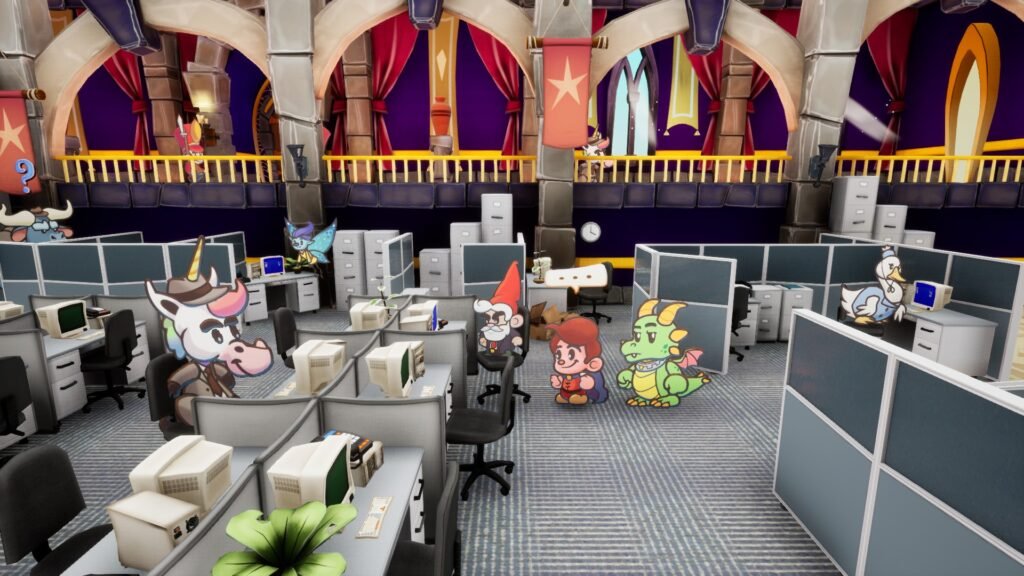
To kick things off, we find Flynt, who is about to face off against his nemesis, Tinder the Dragon, at his castle. However, as he enters, he’s met by a receptionist and finds a lot of modern corporate appliances and furniture, which leaves him a little dumbfounded. On top of that, Flynt can’t find Tinder anywhere.
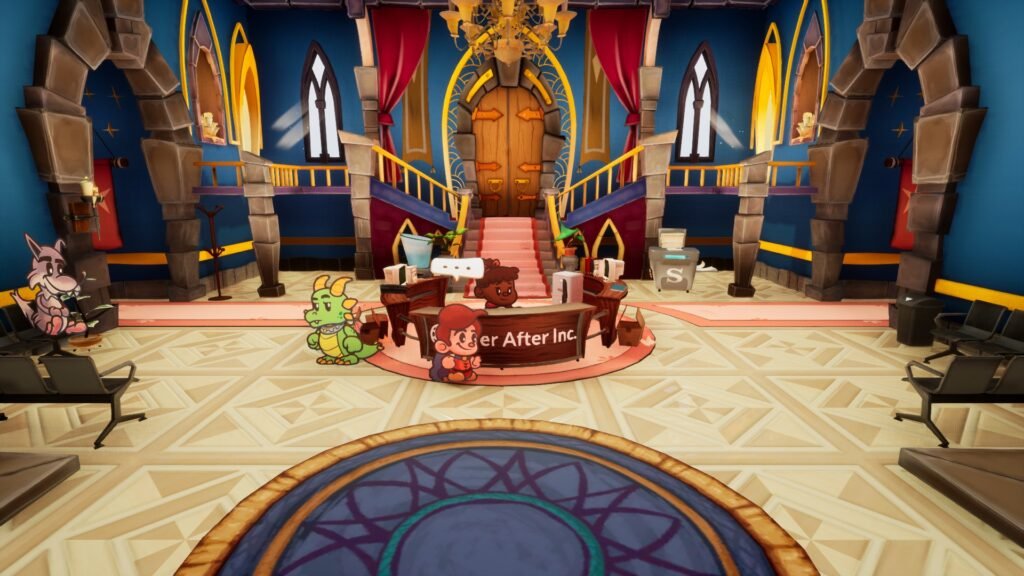
You then learn from the corporate executive, Mr. Moon, that storybooks are apparently an untapped market rich with valuable resources, and of course, cheap labor. This makes it perfect for the real-world conglomerate Ever After Inc. to intervene and exploit the stories.
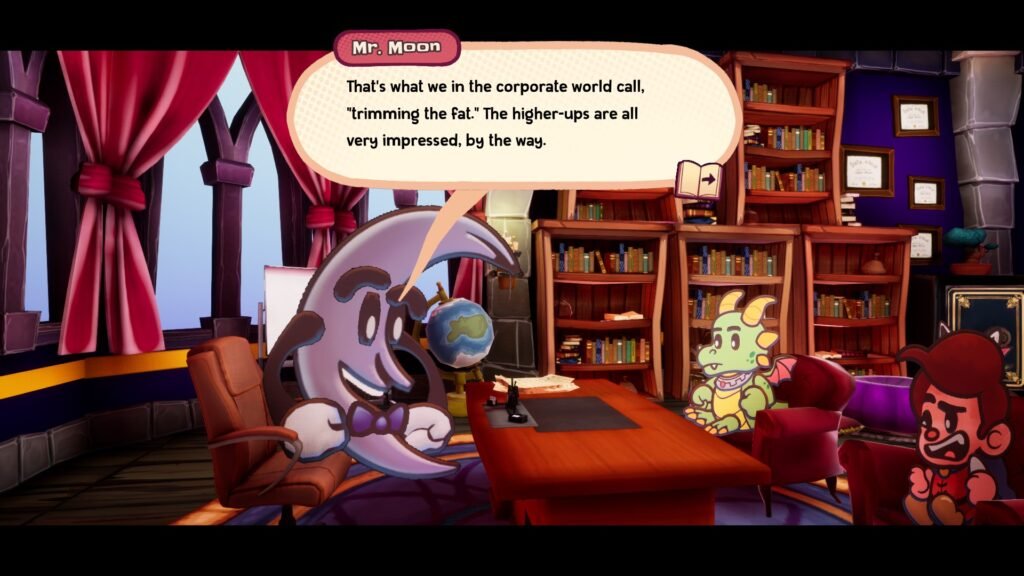
As you later find Tinder and rescue him from the dungeon of his castle, both of you decide to team up and take down the company from the inside by making your way up the company through promotions.
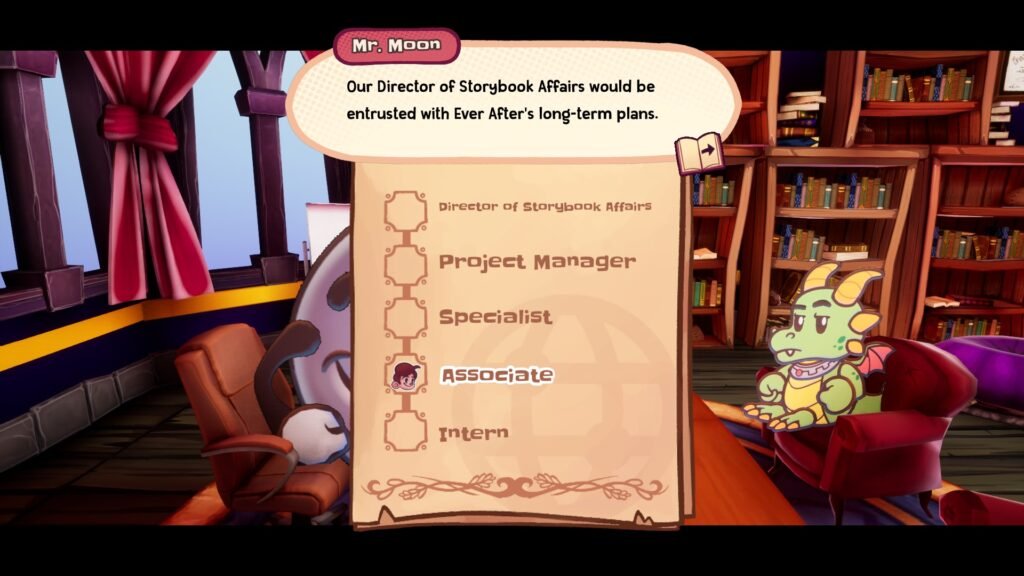
I never expected to find the ideas of capitalism and fairy tales in one place. It’s absurd, and funnily enough, that’s what makes it work. The clash of an office atmosphere with magical creatures like unicorns, minotaurs, and fairies, dealing with overwork and gossiping co-workers, has made me very intrigued by what this mish-mash world has to offer.
The dialogue consistently pokes fun at modern office culture and fantasy tropes. Sometimes, you’ll get emails from your co-workers in-game, and they’ll have requests related to their everyday life, like Pinocchio’s birthday. Another is when you meet Wolfgang, an iteration of the Big Bad Wolf. His name is an interplay on the famous musician, and in his story, he uses some powerful music to help Flynt and Tinder in their journey.
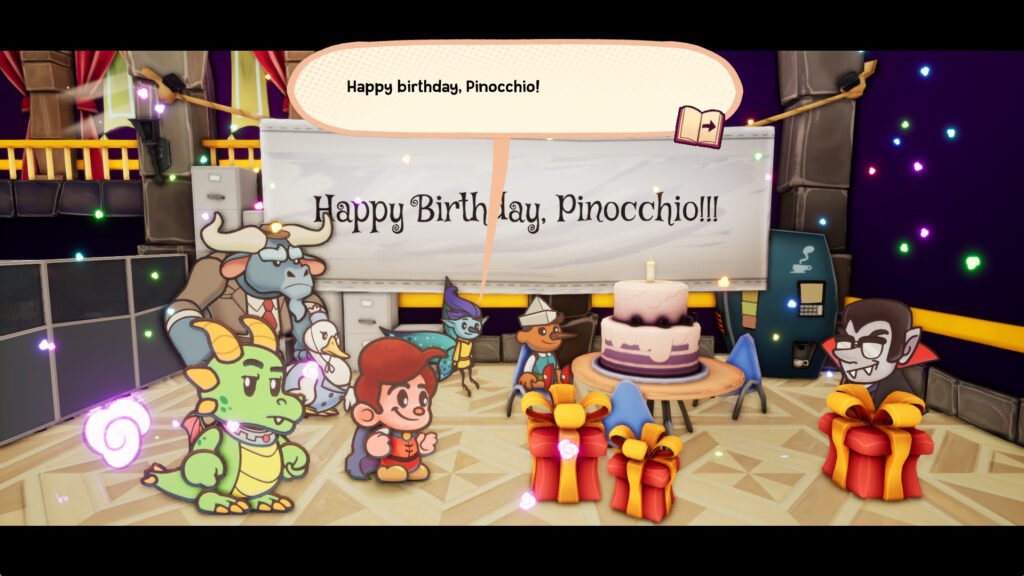
This game knows when to slow down and let its characters breathe. I love seeing Flynt’s growing awareness of how broken the system is, paired with Tinder’s fiery and no filter personality. There’s just enough satire and sincerity to make Escape from Ever After quite clever.
Climbing the Corporate Ladder, One Turn at a Time
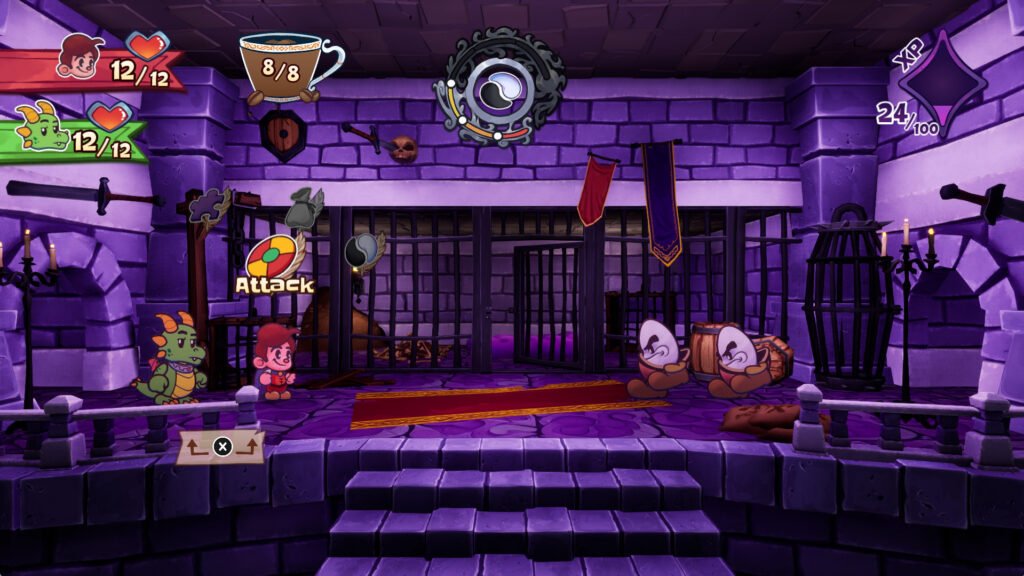
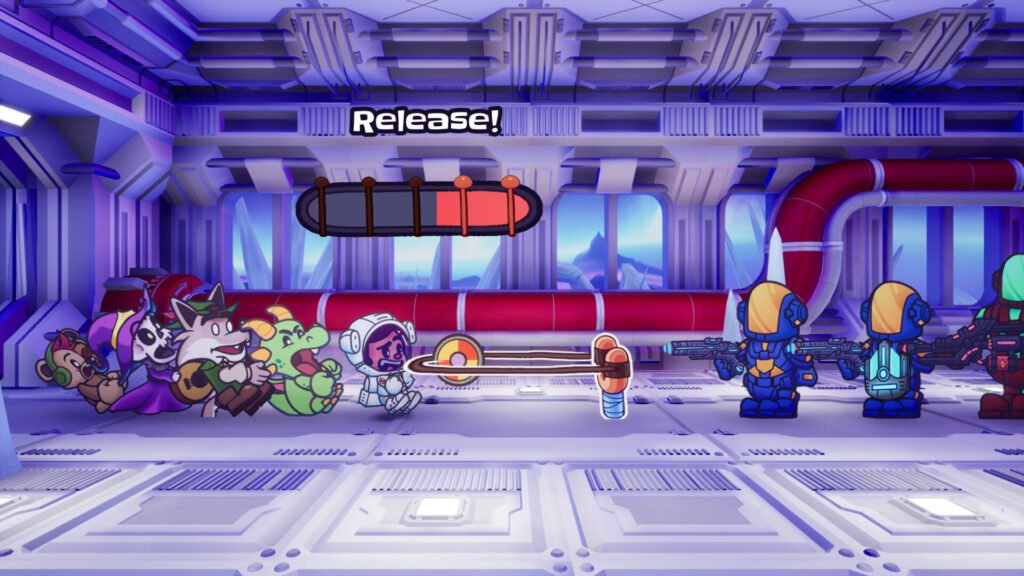
Moving towards the gameplay, it’s been quite some time since I’ve played a turn-based game, with my most recent being Baldur’s Gate 3 and Clair Obscur: Expedition 33. The combat system was very fun to learn for this game, and I thought it was also very forgiving. With only two party members you can deploy at a time, you have to make decisions of attacking, using synergy moves, items, or even other tactics like researching your enemies. At the same time, you need to be able to anticipate the rhythm of your enemies’ attacks.
It was thrilling to see how each character had their own set of moves that reflected their personalities. It even plays out like a typical fantasy RPG party system, with Flynt being the main attacker and Wolfgang providing support with his music-based moves that can not only attack but also give you and your team some buffs.
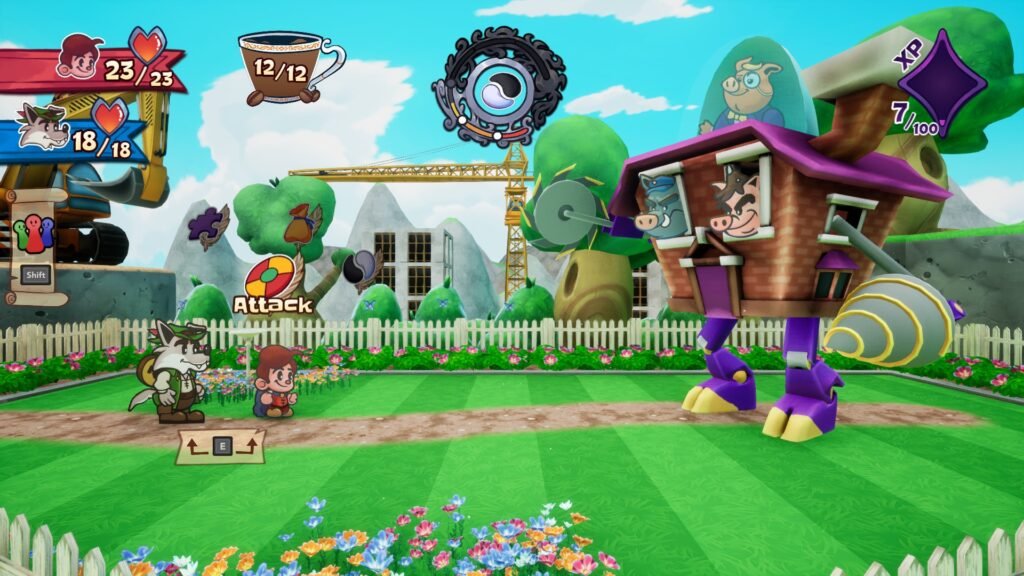
The enemies you’ll encounter are also no exception to how personalized each enemy type’s moves are. Some can fly, which requires you to use attacks that can shoot them down to the ground. Other characters have buffed shields that Tinder’s flames can’t use. A very unique set of moves I’ve seen is when one of the Three Little Pigs presses a button to summon a herd of Robot Pigs to swarm and attack you.
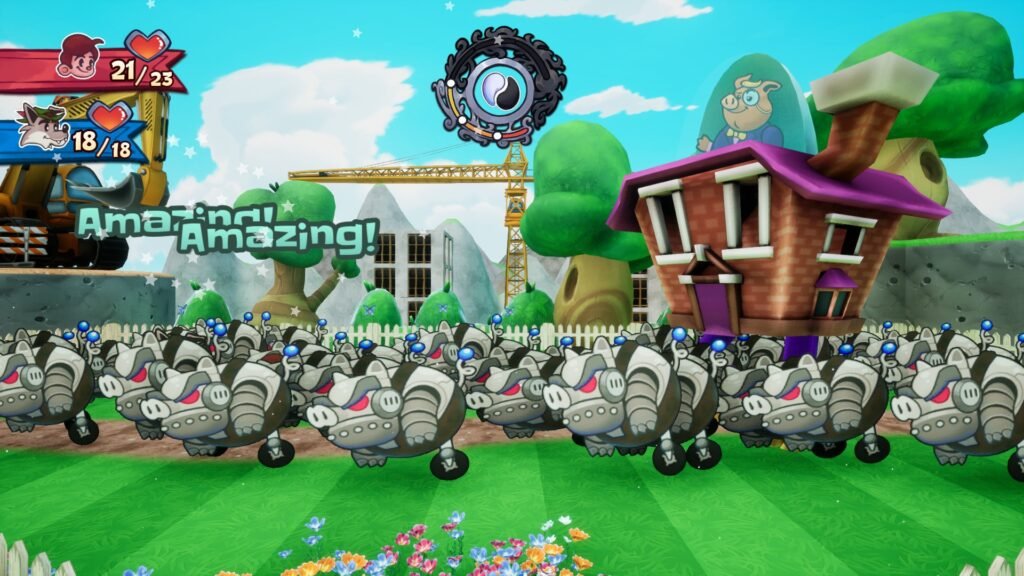
More than the very animated combat system you’ll get to experience, you’ll also enjoy the platformer aspect of Escape from Ever After. When travelling between locations, you’ll be collecting coins, doing a few tasks for the local townsfolk, running into enemies, and finding items that can help upgrade you and your team. While most of the platforming was pretty easy to get by, there are still some moments that will test your problem-solving skills and how well you know your characters.
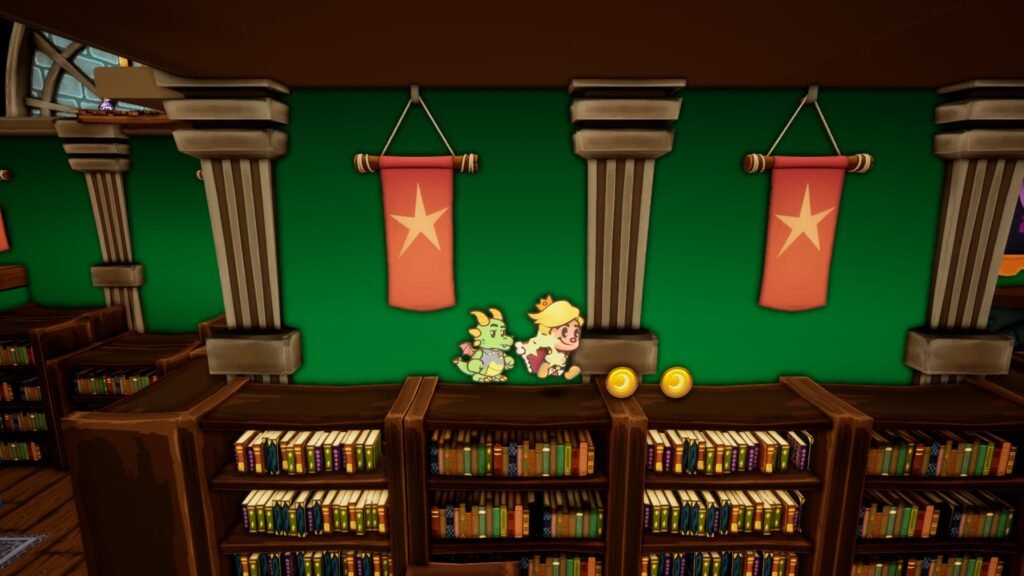
The Art of Making Capitalism Look Adorable
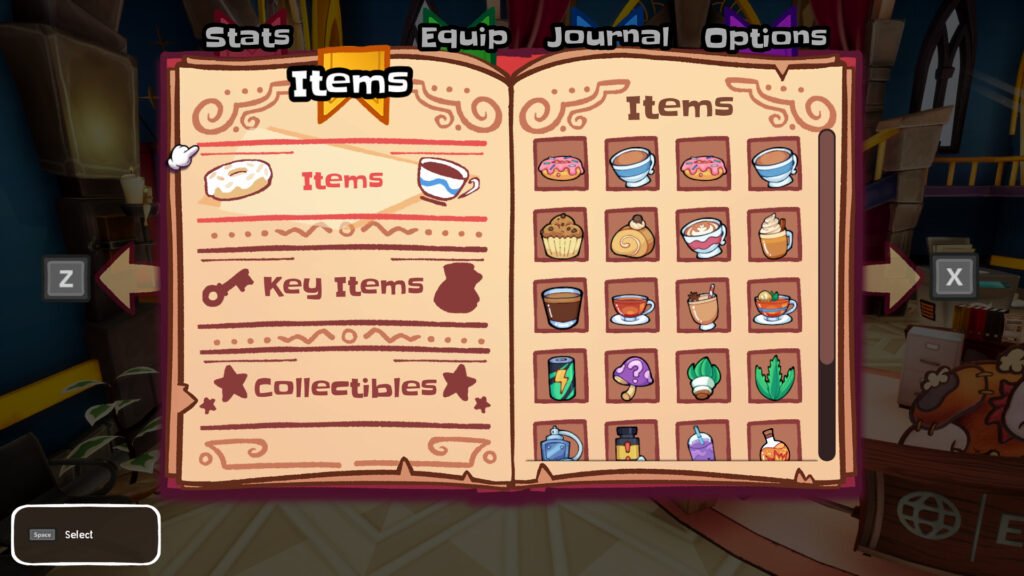
Furthermore, this game’s visuals are quite straight out of a children’s fairytale book, but with some twists as well. Mainly, you’ll be checking your menu interface that holds your party’s stats, items, equipment, journal, and game settings. The interface is seamless and makes learning about the different characters, enemies, and objects you encounter very effortless.
You can expect to see bright greenery with colorful butterflies, cottages filled with items to find, and NPCs to meet. Sometimes, an out-of-place copying machine is also found there, so you can save your game. This pushes that clashing corporate and fairytale narrative outside of your office quarters.
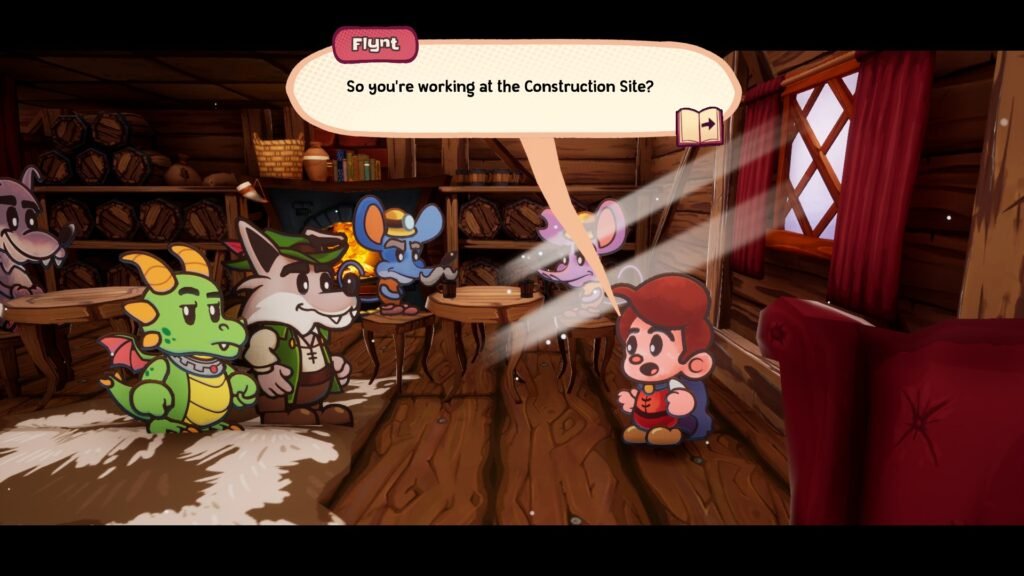
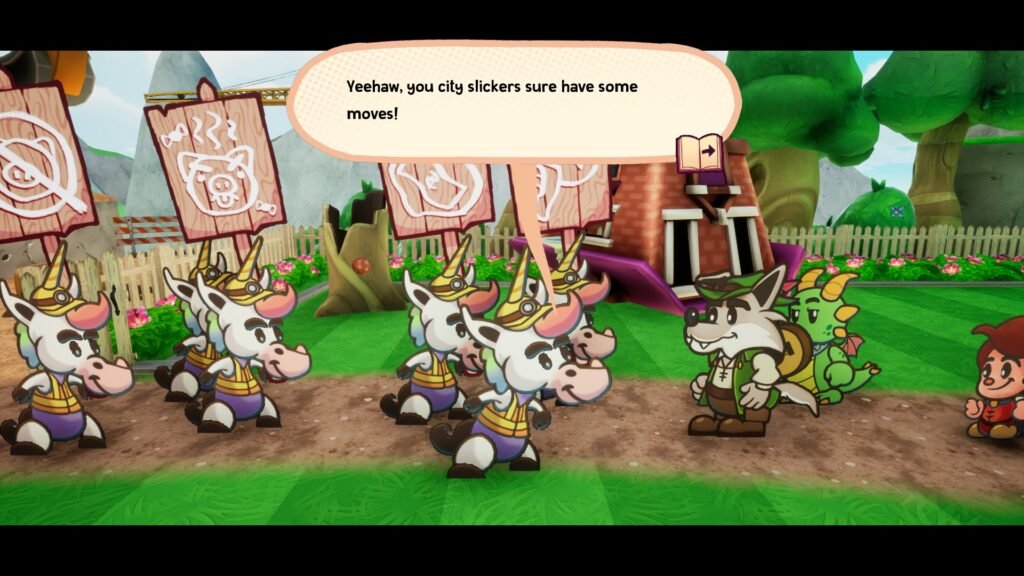
At the same time, however, you will be met with unusual settings. From construction sites with unionizing unicorns, The Shadow Over Innsbeak that reminisces about the Edwardian period of London, to an ominous and horror-like basement room where a cultic ritual occurred, this game has gone beyond my expectations.
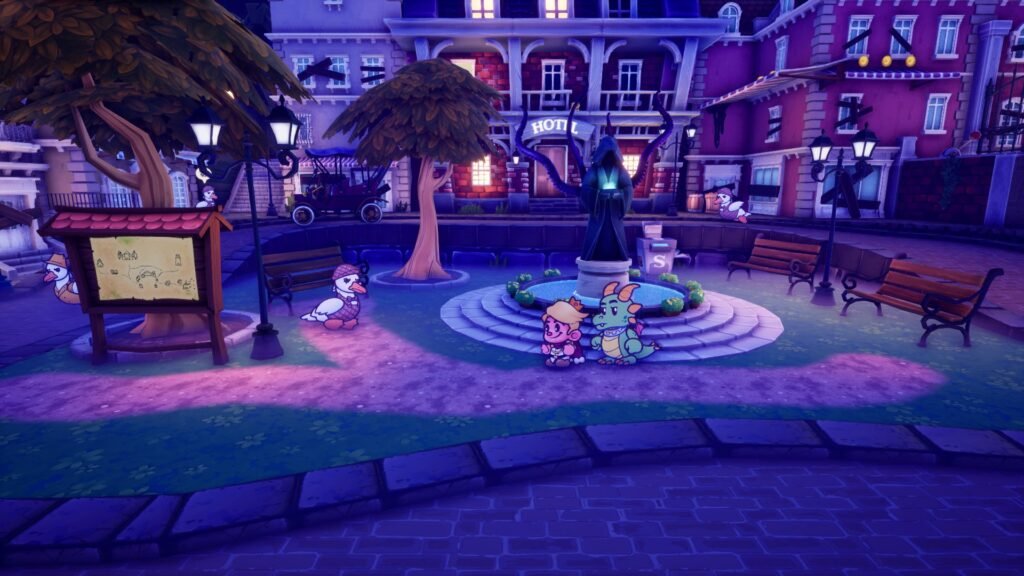
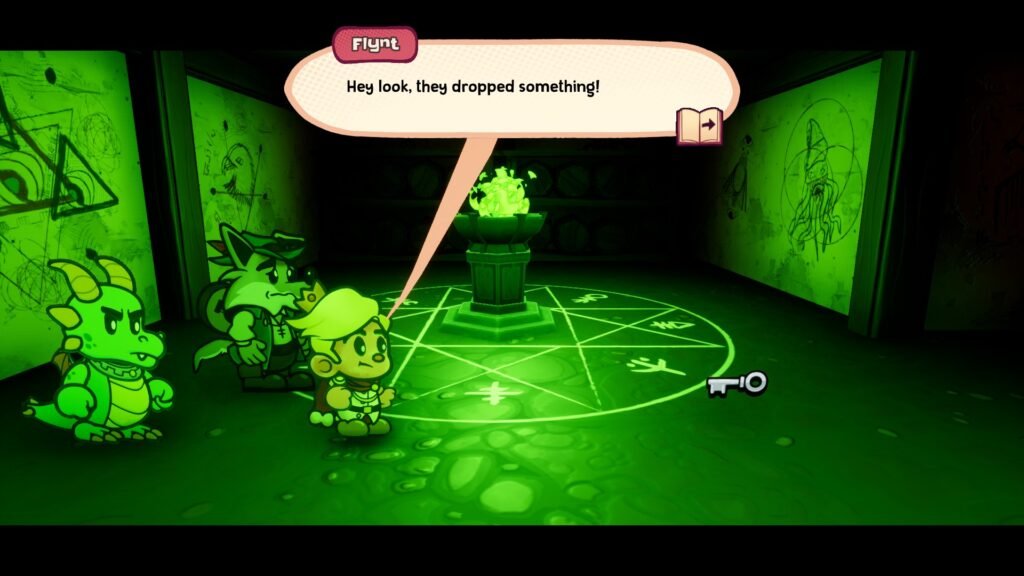
I genuinely enjoyed the customization aspect of this game, wherein you can decorate your little office and change Flynt’s clothes. I wish, though, that office decoration were a bit more expanded, allowing you to move items around and to put as many frames, items, and desk objects as you want. I’m also hoping to see if Flynt’s merry band of friends can also get costumes you can put on them in future updates.
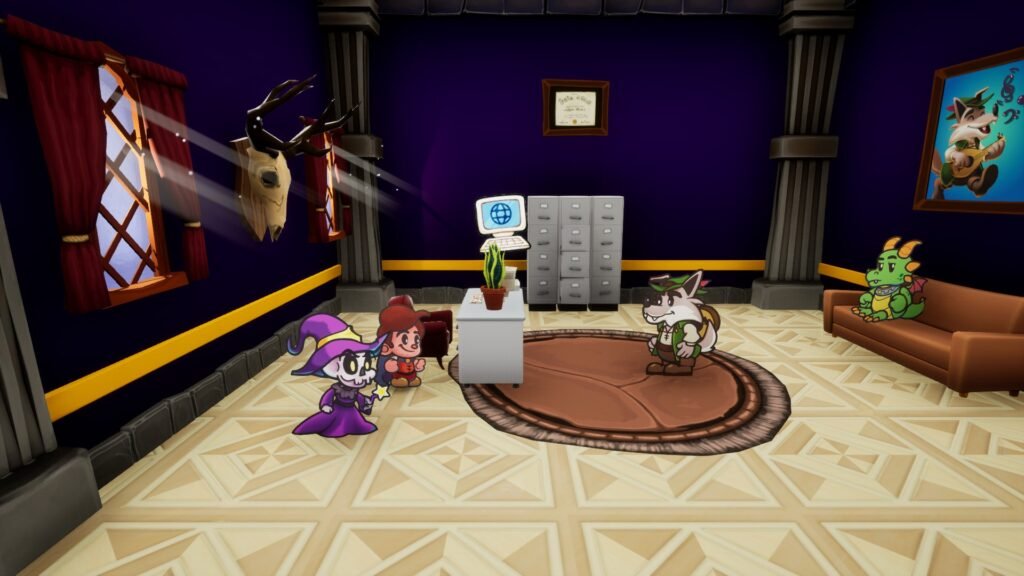
On a similar note of how this game has been very immersive and experiential, you’ll also come to enjoy the vibrant soundtrack Escape to Ever After offers. With a big band and jazzy instrumentation, the music elevates the adventure aspect of this game, with even a hint of elevator-like background music when you’re at Ever After Inc.’s headquarters.
Few Hexes and Crawling Bugs
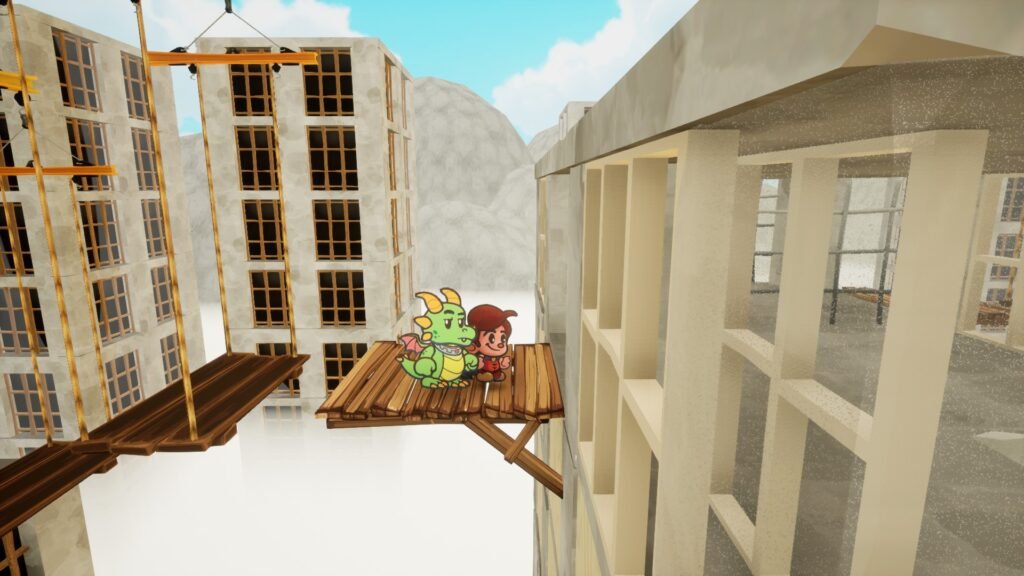
Despite the exciting adventure and features this game has it offer, it still isn’t without its hiccups. I’ve encountered a few bugs, such as glitching through some manholes and portals that didn’t lead to the next scene or location you’d expect, which can briefly interrupt immersion and can sometimes make you assume if it’s part of the fantasy of this game.
You might also have a bit of a challenge adjusting to Escape from Ever After‘s style, especially if you aren’t familiar with games like Paper Mario. Hopping off from moving platform to moving platform can become frustrating if you don’t get the timing and alignment right. But it’s those types of moments when playing, learning about a differently-styled game, that make them fun to play.
A Fairytale Worth Escaping Into
Overall, Escape from Ever After is a charming adventure that successfully blends whimsy and corporate satire. Its story, characters, and worldbuilding are delightfully illogical yet fresh and engaging. Besides that, its visuals are imaginative and supported by a memorable soundtrack, with the game’s intricate detailing making Escape from Ever After truly feel alive.
That said, one of the game’s most interesting aspects for me is how it weaves themes of capitalism and exploitation. From Ever After Inc’s relentless monetization of storybook worlds to the depiction of overworked magical creatures navigating office politics, the game cleverly satirizes how profit-driven systems can disrupt creativity, friendship, and, of course, morality.
Escape from Ever After has remarkably become a standout title for me this year for how it confidently commits to its ideas. I loved its interplay of fantasy and reality that has made the game feel both lighthearted and poignant. If you’re looking for a game that has one hell of an adventure, this is a game that’s hard to forget once the storybook closes.
Escape from Ever After: Deemed as a love letter to the Paper Mario games, Escape from Ever After brought a unique spin on classic fairytale stories by inserting corporate humor in its fantasy world. With its laid-back and witty writing, memorable characters, approachable yet compelling combat, and thoughtful platforming, the game balances humor and heart very well. Its storybook visuals, imaginative settings, and jazzy soundtrack also bring this absurd world to life. Despite a few minor bugs and limited customizations, the game stands out as a clever and heartfelt adventure that's goes beyond the end of a storybook. – Renee Aguila