
Reviewed on PC
There are plenty of solo developers who take the (comparatively) easy way for their first game; a first-person horror game with recycled assets, or maybe an RPG Maker epic. Salvatore Grosso isn’t one of those devs. His Steam debut, Encounter: The Lost Cards, is a roguelike built from the ground up to be engaging, challenging, and more than a little weird, with a robust combat system that’s the epitome of “harsh, but fair.”
A Deck Of Destiny
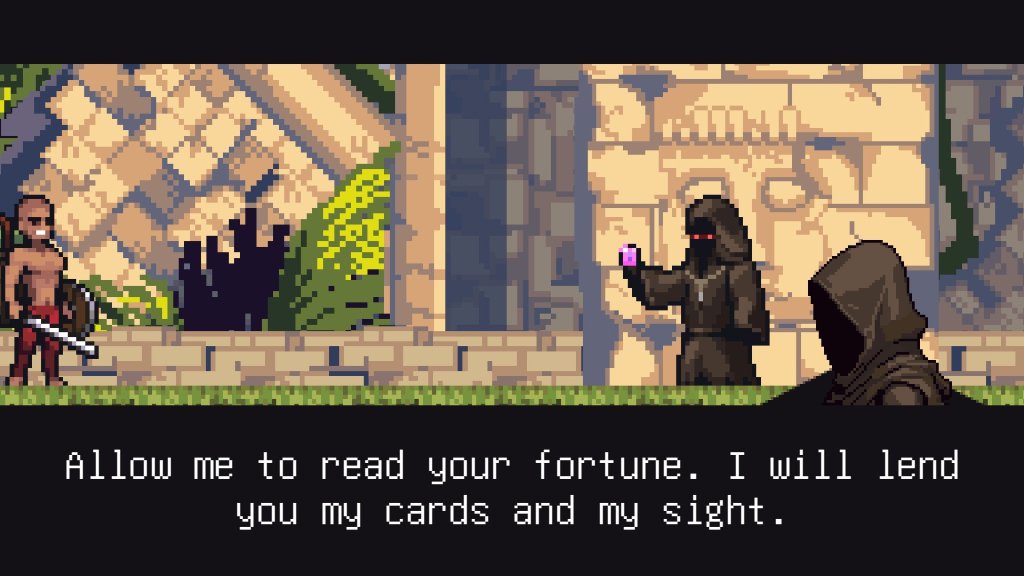
Despite what you might think based on its name, Encounter isn’t a deckbuilder. Instead, the NPCs, monsters, and merchants you meet along the way are determined by cards pulled five at a time from a tarot deck. Each possible encounter has two versions, depending on whether or not its card is pulled inverted. For example, if you come upon a farm, the farmer might be willing to sell you some crops… but if the card was drawn inverted, he’ll instead demand that you leave his property or risk a fight.
At the start of a run, only the minor cards are in the deck. The major arcana (or simply Majors, as the game calls them), which contain powerful and potentially dangerous encounters, can only be crafted once you’re fairly deep into a run. You’ll also need to find ways to shuffle the discard pile back into the deck, because if it ever runs out, the adventure is over.
The Majors are central to the game’s story. Each of the central angels and demons that govern the world drew one of the Majors to determine their role in the cosmos. The lord of Hell, unhappy with his lot millennia after drawing Death, accepts a trade from a mysterious being called the Collector, vacating his throne in the underworld and throwing off the universal balance.
The Collector is ultimately trying to get his hands on the Hermit card, one of many Majors that has been lost, and they’re treating the objects that oversee the universe like a trading card binder to do so. On each run, you play as one of four mortal adventurers that’s been given an offer by the Collector; all you have to do is find the Hermit and bring it to them.
The backstory is all established throughout the tutorial, but after that the plot thins out in favor of pure gameplay. That’s one of Encounter‘s biggest missed opportunities; we don’t get any background on three of the four playable characters, and the interplay between the various angels and demons is begging for more screen time. The developer teased more end-game story content post-launch, so hopefully we’ll get more later on!
Pixelated Pugilism
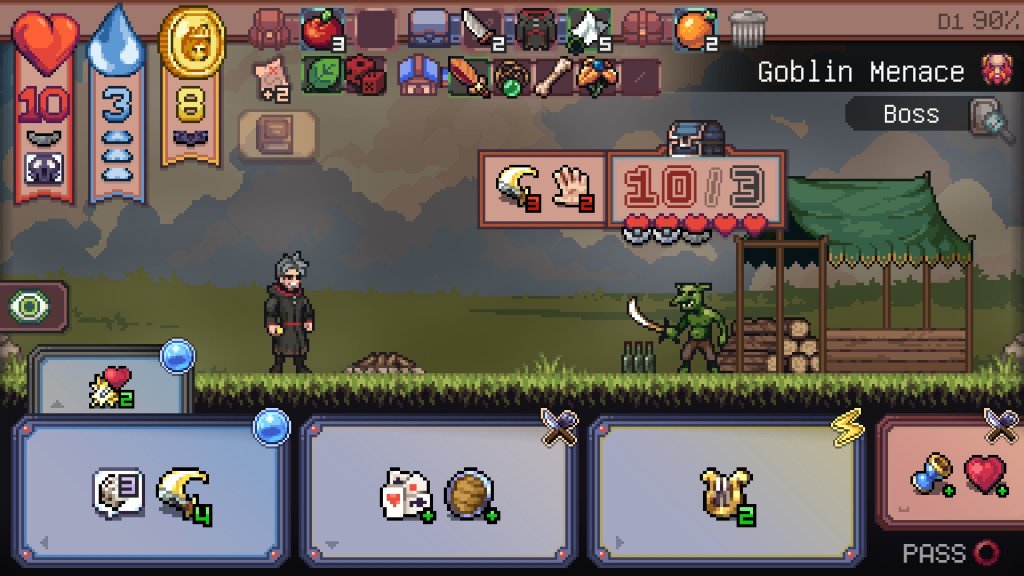
The meat of Encounter is in the combat. You can expect an average of three fights, including a boss, in each five-card segment of gameplay, with noncombat encounters making up the rest of the spread. The basics are all familiar roguelike fare; you have limited actions per turn, a stamina system keeps bigger, slower moves in check, and armor protects your precious hit points (but magical attacks can bypass it entirely). Encounter‘s challenge lies in how it limits your options, and in its overall learning curve.
Your inventory space is extremely limited, and buying more is expensive but ultimately necessary. Item durability is also generally low, especially for weapons, so you can’t rely on a single loadout for an entire run; between planning ahead, keeping your current build viable, tracking craft materials, and having room to pick up new items you find along the way, inventory management forces a lot of tough decisions. Once you start throwing in Runes – items with passive abilities that activate in the order they appear in your inventory from left to right – finding a good setup is hard but extremely satisfying when you manage it, even if it doesn’t last.
For example, a common early-game boss drops the Zombie Head, which has two uses. If you’re carrying it, then each turn it reduces your Luck stat by one (giving you worse results on die rolls) but giving you one extra action per turn. If your Luck is already at zero, it can’t go lower, so it’s basically a free action at the cost of an inventory slot. If you equip the Zombie Head, you can use one of its three charges; you can’t do anything else that turn, but it also negates the enemy’s turn, letting you get out of taking a potentially lethal attack. It’s best against bosses, but that means you have to lug the rotting head around until you need it, taking up space you could use for something else.
All of Encounter’s abilities are denoted by icons, which you can get tooltips for just by right-clicking on them. Given enough time in-game, they’ll become a second language, but until then it’s hard to really understand everything you can do in the game. For example, I was about eight hours in before I discovered you can heal multiple times at an Inn, not just once – the action doesn’t end your turn, so as long as you have the actions and coins to spend, you can do it. Breakthroughs like this will improve your runs, but be prepared to see the death screen a lot early on.
Side Quests To The Underworld
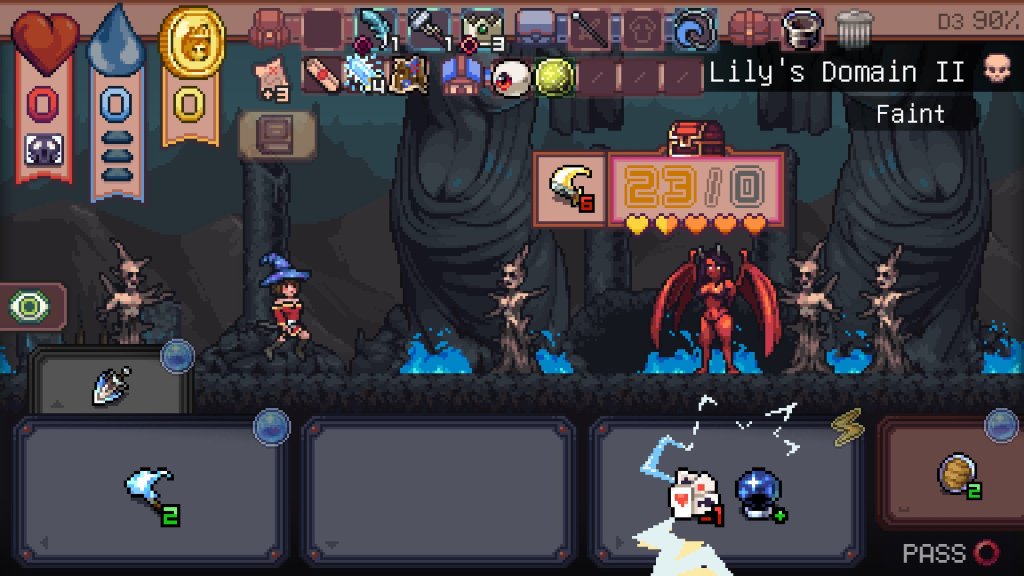
Speaking of death, Encounter handles the old dirt nap in a fun and engaging way that you can learn to plan for and manipulate with a bit of skill and a good amount of luck. Throughout your journey, some actions will be considered virtuous or sinful. The world is a pretty harsh critic, though; virtuous actions are rare, while things as minor as overeating can be considered sinful. If your character dies, you’ll receive judgment and go to the appropriate afterlife.
If you have more virtue than sin, you get a trip to Heaven, where you have the opportunity to buy powerful but expensive gear (if you can afford it) before resurrecting. If your judgment is neutral or sinful, though, it’s off to Hell with you. Lilith, the holder of the Devil card and interim ruler of the underworld, won’t let you off as easy. If you had exactly as much virtue as sin, or if you have a flower to bribe Lilith with, you can get a resurrection based on a roll of the dice. Alternately, you can fight Lilith, who is around the same power level as a mid-tier boss. If either of these gambits fail, it’s game over.
You’re also limited to three resurrections. Your fourth death ends the run, regardless of how virtuous you were.
Seeking The Hermit
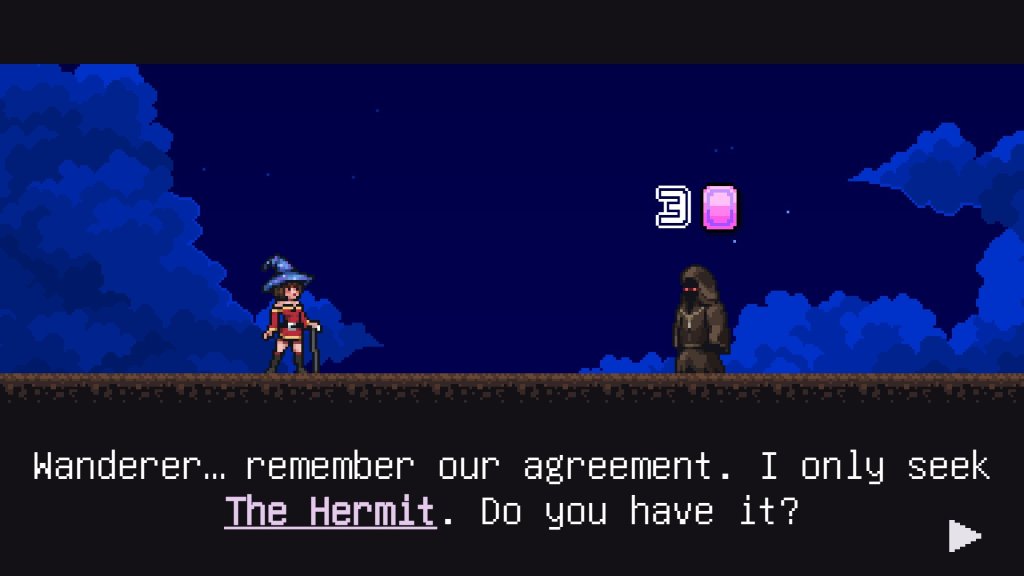
The biggest lightbulb moment in the game by far, though, was realizing just how you’re supposed to complete a run. If you want to figure it out for yourself, go ahead and skip to the next section. It’s not really a spoiler or a puzzle solution, since the information is all right there in the game, but the realization completely changes how you approach each run.
One class of items you can find are flowers. In addition to getting out of Hell, they’re also used for crafting – specifically, you need to use a flower at any Inn just to unlock the crafting mechanic. Once you’ve gotten through the starter portion of a run and received your first Major, which is always the Fool, you can craft new Majors from flowers. As far as I can tell, this is the only way to get new Majors, expanding the deck (and, by extension, the run). That also means it’s the only way to get the Hermit.
Since bosses get progressively harder the longer a run goes, and the deck will eventually run out, the game becomes a race to gather flowers and craft them into Majors, hoping to get the Hermit so that you can turn it in to the Collector when they appear. No matter how powerful you get or how long your run goes, you won’t get anywhere without flowers. Spending them on resurrections or other boons might keep you alive in the short term, but won’t finish the run. It’s a brilliant way of making something that seems innocuous or secondary suddenly become central to the gameplay loop, and the “a-ha” of figuring it out was the highlight of my time playing Encounter for review.
Rendering Judgment
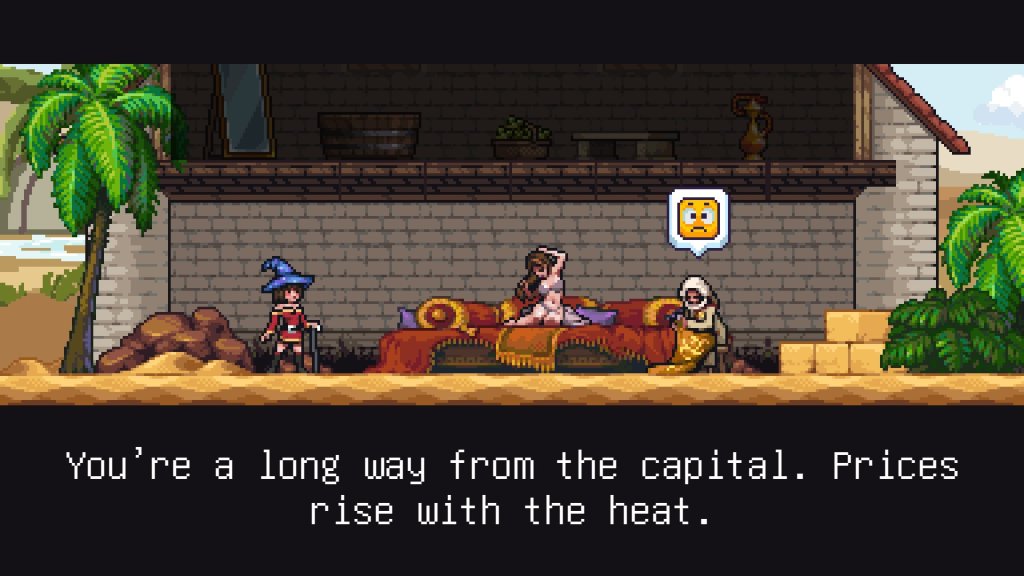
Overall, Encounter is a serious showcase of game design chops by a solo developer. It’s not revolutionary, but it doesn’t need to be – it does everything it sets out to do, and does them right. The entire gameplay system shows careful, thought-out design with a unique edge that works outside the box. The pixel art is fun and detailed, if a bit eyebrow-raising; the world seems to be largely populated by lingerie models, but if that’s what it takes to get this indie game more attention, then so be it. The visual design goes hand-in-hand with the soundtrack, certifiable chiptune bops that will bring you back to the good old days.
Considering that the game launched a day early from its January 26th 1.0 release, complete with balance changes and new goodies for early access players, and based on the heartfelt message to Encounter‘s still-small community on Steam, this is a labor of love that will see further work on development. If, like me, you’re the sort of player who likes to play with the hand you’re dealt and see how far it gets you, and don’t mind having to pick yourself up and start over, this could be one worth checking out.
Encounter: The Lost Cards: This pixelated roguelike RPG from solo developer Salvatore Grosso is clever and challenging, but its learning curve might frustrate new players. Stick with it for a satisfying experience with plenty of "Oh, I get it now" moments. – MattArnold