Big fantasy series are fun, but one in a while, you need a complete story that begins and ends in a single book. A fantasy palate cleanser, so to speak. A way to keep the magic alive without committing (again) to three, five, or fourteen volumes in a row.
Here are seven fantasy standalones that deliver full worlds, strong themes, and total narrative closure. And, promise, there will be no sequels, no cliffhangers and no hidden trilogies waiting behind the corner.
The Sword of Kaigen — M.L. Wang
A powerful military fantasy standalone with award winning acclaim
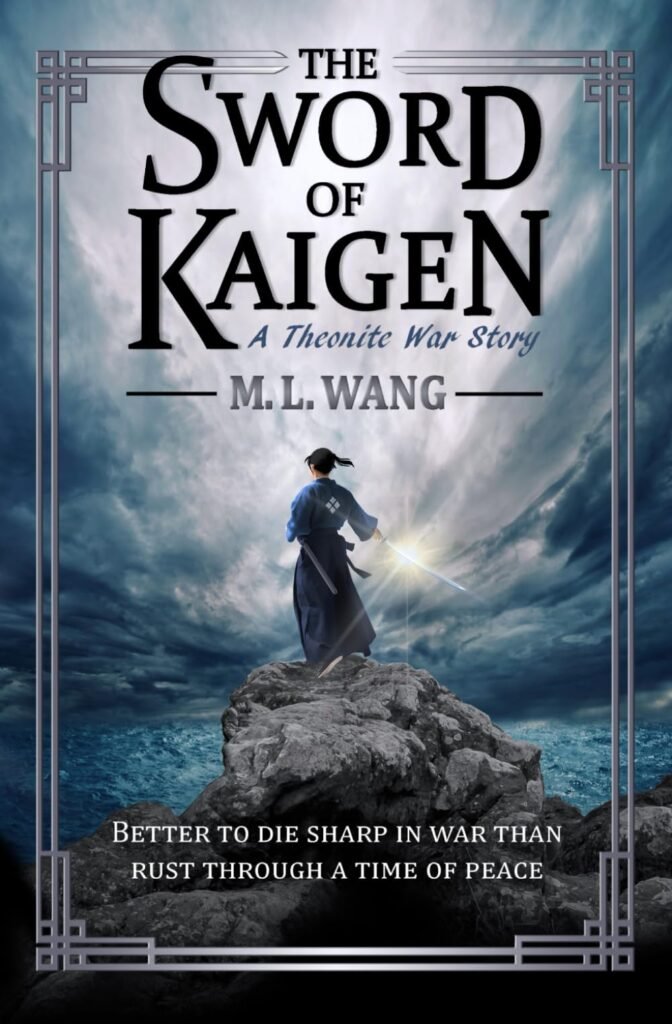
At the edge of the Kaigenese Empire, on the frozen Kusanagi Peninsula, live warriors who can raise the sea and shape blades of ice. The Sword of Kaigen follows the Matsuda family, especially Misaki, a mother who buried her past as an elite fighter, and her son Mamoru, a teenage heir trying to live up to a legendary name just as war comes crashing back to their home.
The novel mixes high stakes military fantasy with a very intimate family story. Elemental battles rip entire landscapes apart, but the emotional core is quieter and more painful, built around grief, disillusionment, and the cost of loyalty to a lying empire. It won the 2019 Self Published Fantasy Blog Off, beating nine other finalists from a field of around three hundred self published entries, and in 2025 it even topped the SPFBO Champion of Champions event, where all past winners competed.
It is technically set in the same universe as Wang’s Theonite books, but functions as a complete story on its own, with no need to read anything else.
The Everlasting — Alix E. Harrow
A fresh 2025 fantasy novel about memory, time loops, and identity
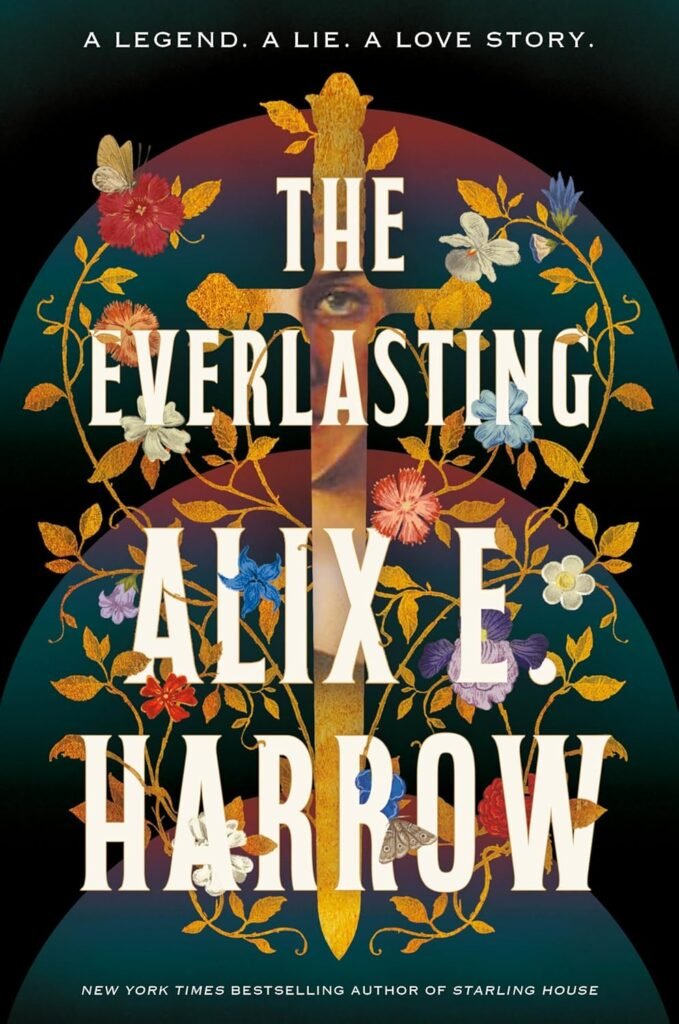
Alix E. Harrow’s The Everlasting is a time loop epic that stretches across a thousand years of history in the fictional nation of Dominion. The book centers on Una the Everlasting, a legendary knight who has lived and died through countless cycles of war, and Owen Mallory, an anxious historian sent back from the future to make sure Una’s story unfolds according to the official record.
On paper, Owen is there to protect the myth. In practice, he meets the real Una, falls into a complicated loyalty to her rather than the legend, and starts to question who gets to write history in the first place. The novel has been described as “a book about love in a bad world that is determined to build a better one,” tying together political violence, propaganda, and a very personal romance within the structure of a looping war narrative.
It has already turned up on several 2025 fantasy and speculative fiction lists, so I think it’s going to generate online conversations for a while.
Tigana — Guy Gabriel Kay
A classic standalone epic about memory, culture, and resistance
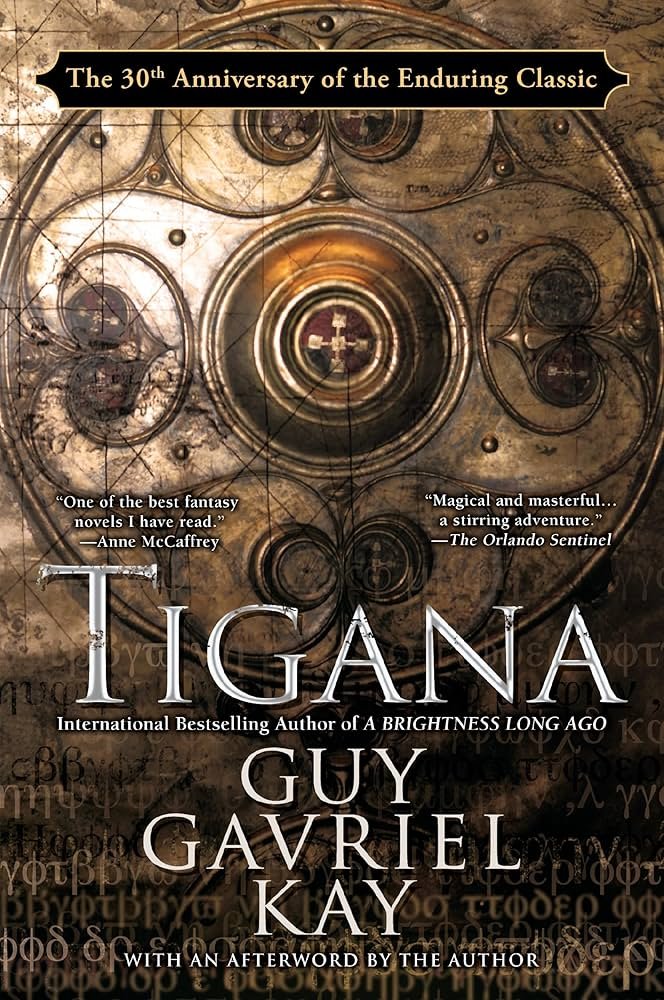
Tigana is a major landmark in modern fantasy, and one of the strongest examples of a true one book epic. The story takes place in the Peninsula of the Palm, a secondary world loosely inspired by Renaissance Italy. After a brutal conquest, sorcerer king Brandin erases the conquered province of Tigana from collective memory. Only those born there before the curse can still hear and speak its name.
The novel follows exiles and rebels who are fighting not just for political freedom, but for the restoration of their erased identity. It is a book about memory, language, and the violence of empire, built around a slow burn plot of infiltrations, shifting alliances, and betrayals.
Tigana won the 1991 Aurora Award for Best Long Form Work in English, and was also nominated for the World Fantasy Award and the Mythopoeic Fantasy Award, which gives it solid critical weight on top of its long term fan reputation.
The Night Circus — Erin Morgenstern
A self contained magical romance set in a surreal dreamlike circus
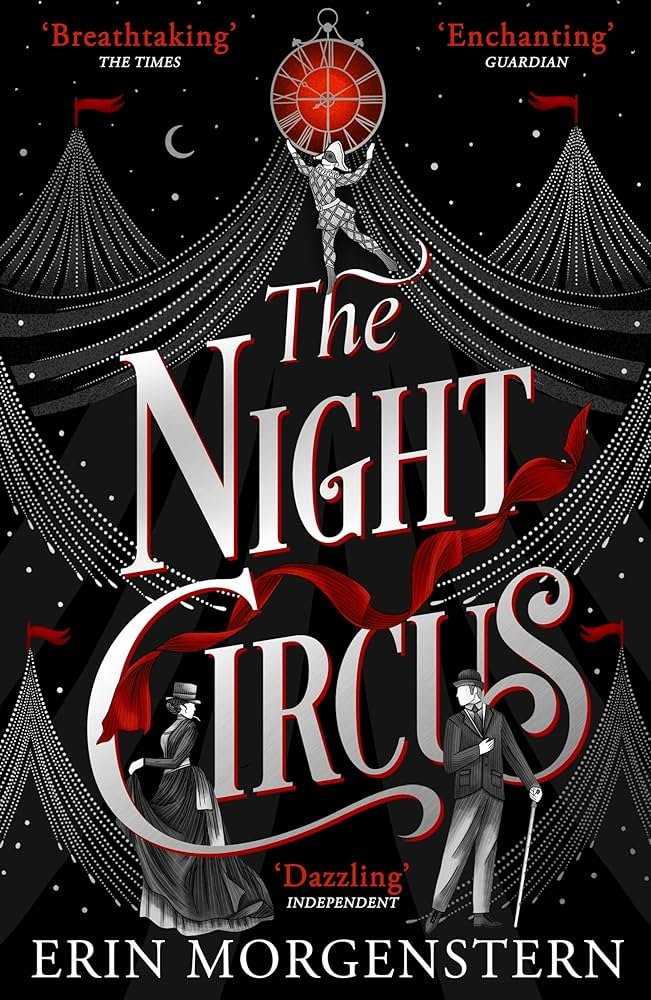
If you’re a Redditor, I bet you’ve heard about this one already.
The Night Circus is set around Le Cirque des Rêves, a black and white circus that appears without warning, opens only at night, and vanishes again without a trace. Inside that aesthetic hook sits a quiet but intense magical contest. Two magicians, Prospero the Enchanter and the mysterious Mr A. H., raise their protégés, Celia and Marco, to compete through elaborate magical creations woven into the circus itself.
The book is famous for its focus on mood and imagery. It is not structured like a typical quest fantasy. Instead, it leans into nonlinear chapters, multiple points of view, and set pieces that feel like walking through themed tents of illusions, clocks, ice gardens, and dreamlike exhibits. Readers often describe it as a setting centered novel, where the circus is the main character.
As a standalone, it delivers a complete arc for both the competition and the love story at its heart, and it keeps turning up on “best fantasy” lists and adaptation news, which is very useful for search traffic.
Piranesi — Susanna Clarke
A short literary fantasy mystery set inside an endless labyrinth
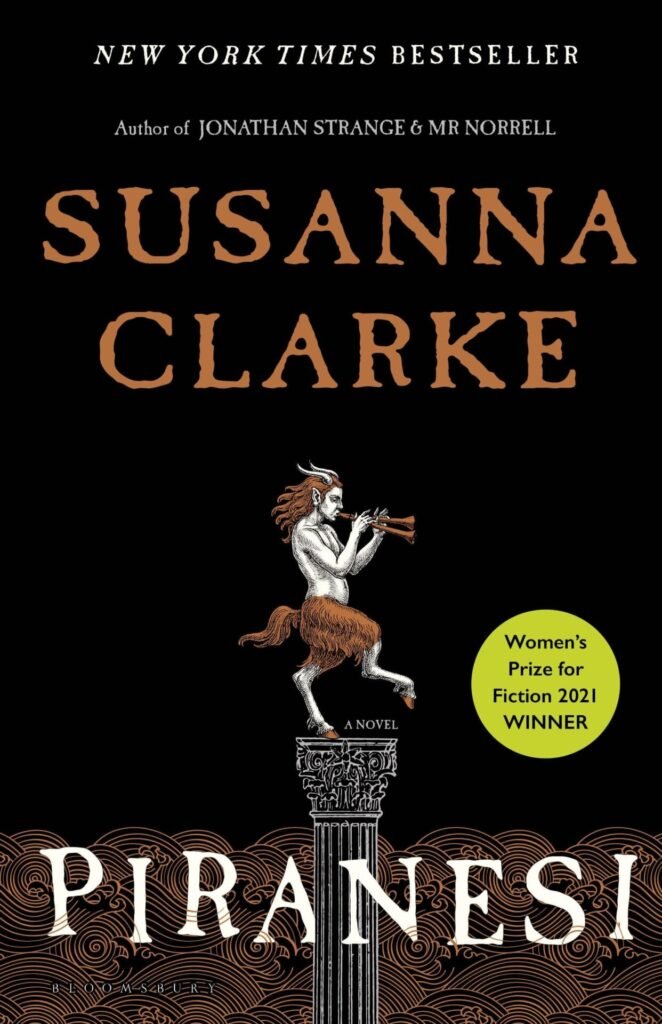
Piranesi lives in the House, which is not a house in our sense, but a vast labyrinth of endless halls, staircases, and thousands of statues. Some halls flood with the tide, others are full of birds, and Piranesi has built an entire life around mapping this strange interior world and caring for its hidden rhythms.
There is only one other living person in the House, known simply as the Other.
As Piranesi’s meticulous journal entries accumulate, small clues start to suggest that his memory and the reality of the House are not quite what he thinks they are. The book functions as a puzzle box told in a deceptively simple voice. Many reviewers recommend going in with as little prior knowledge as possible, but you can safely say this: it is short, self contained, and devastating.
For a reader between big series, Piranesi is perfect. It feels like a complete experience rather than the start of something, and it has strong literary and genre attention behind it.
The Buried Giant — Kazuo Ishiguro
A post Arthurian fantasy about memory, trauma, and forgetting
The Buried Giant takes place in a mist drenched, post Arthurian Britain where people cannot remember their own past. Axl and Beatrice, an elderly couple, leave their village to look for the son they dimly recall, travelling through a landscape of decaying forts, ruined monasteries, and dragons, while slowly recovering memories that might destroy their relationship.
The novel uses fantasy elements to talk about collective and individual memory, trauma, and the question of whether some forgetting is necessary for peace. Academic work on the book leans heavily into these themes of cultural memory and amnesia, reading the mist and the buried history as metaphors for how societies choose what to remember and what to conceal.
If you’re looking for something slow and thoughtful to take a break between high stakes battles, this one’s perfect.
Into the Broken Lands — Tanya Huff
A complete quest fantasy through a dangerous magic twisted wasteland
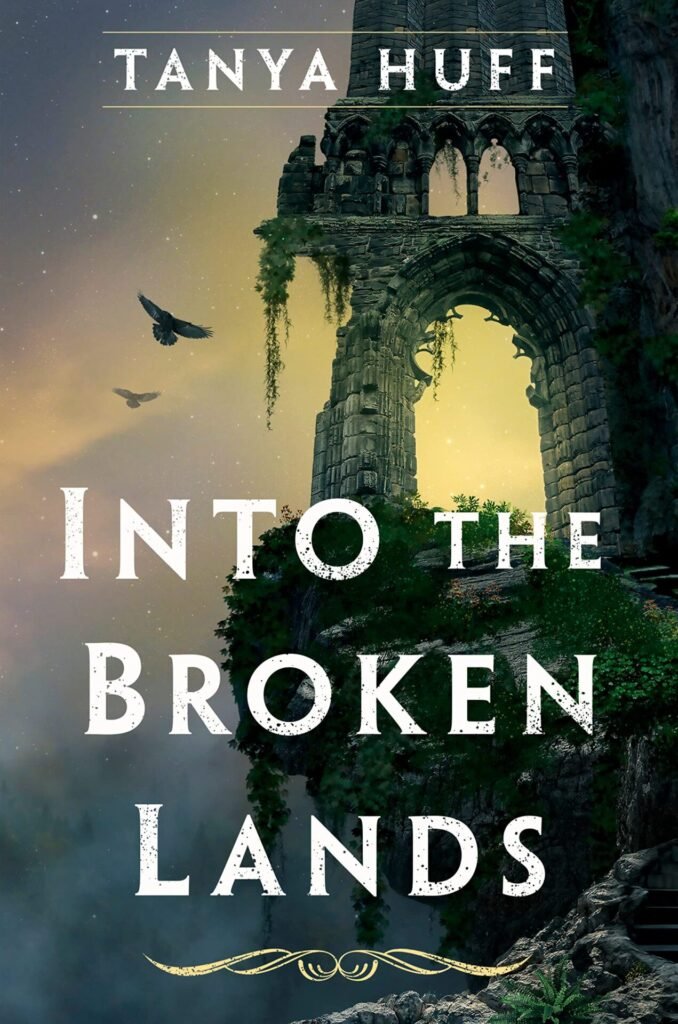
Into the Broken Lands sends two rival heirs and their retinues into a dangerous wasteland shaped by old magical catastrophes. The Broken Lands are full of twisted flora, lingering spells, and unstable terrain, more like magical radioactivity than traditional high fantasy wilderness. Each generation, somebody has to cross this region to renew a compact that keeps their city alive.
Huff uses that quest setup to explore leadership, power, and the kind of compromises people make when survival depends on inherited obligations they barely understand. Readers have enjoyed the book’s dense, original setting and the way it digs into questions of responsibility and identity rather than just piling on monsters and fight scenes.
It tells a full story in one volume. There is room for a sequel one day, and some reviewers say they would happily read one (I know I would), but as it stands it closes its own arc and does not require anything else.