Reviewed on PC
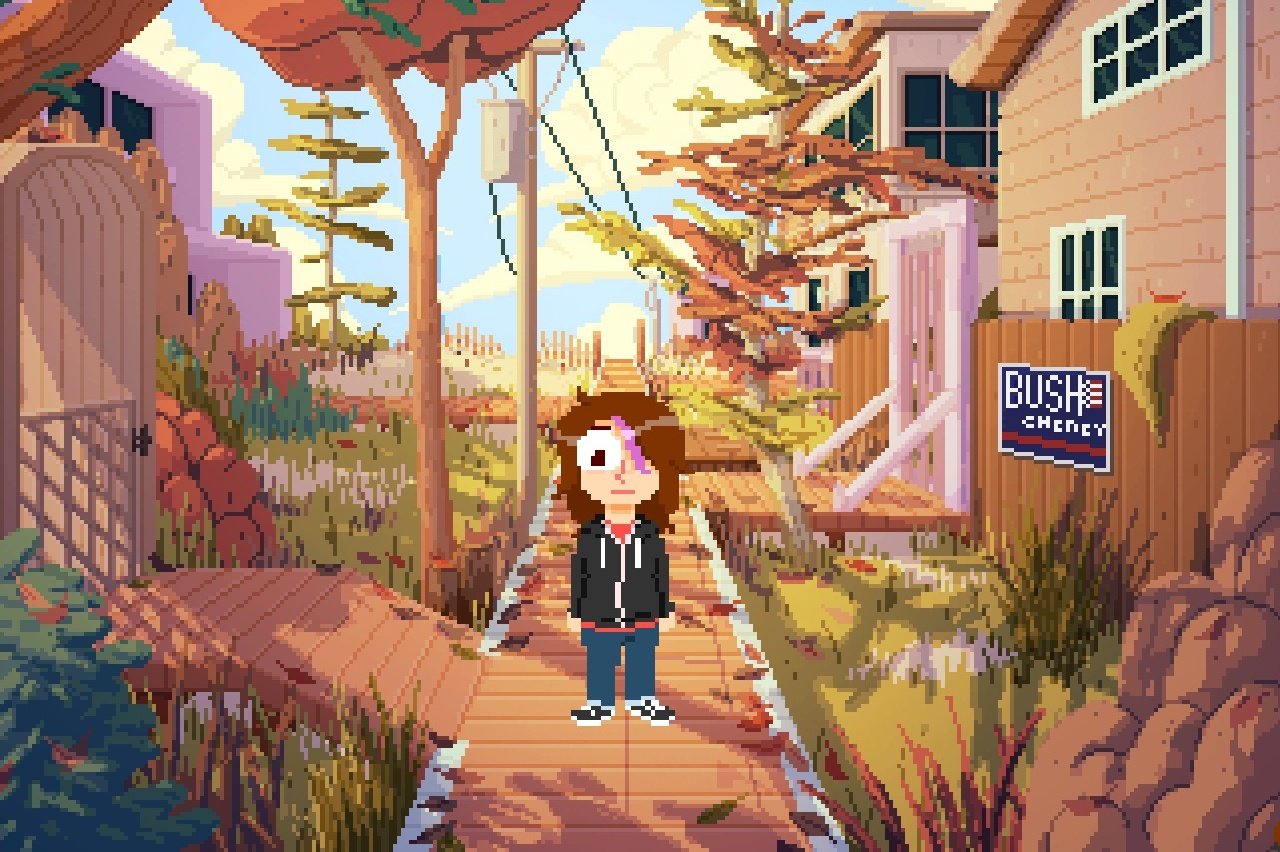
In Perfect Tides: Station to Station, we’re taken back to the seemingly ordinary life of Mara Whitefish as she enters college. The point-and-click sequel to Perfect Tides, Mara is now navigating adulthood as an aspiring writer while being awestruck by The City.
For newcomers to Mara’s story, such as myself, I thought this simple “interact-and-talk to people” game was just it. However, its unfiltered dialogue, authentic characters, and early 2000s immersion quickly reveal that this game is far more reflective than it first appears.
Telling an Awkward, Anxious, and Achingly Human Story
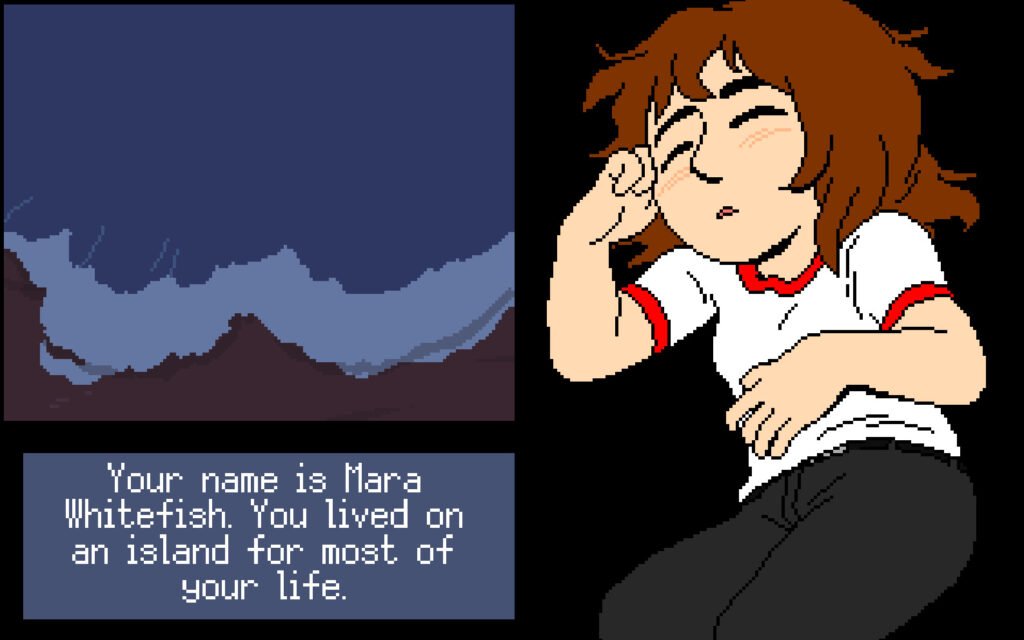
Here lies a deeply personal coming-of-age narrative that’s vulnerable and captures the type of awkwardness, excitement, and quiet dread of becoming an adult. At first, I was getting frustrated with how self-doubting and anxious Mara was as a protagonist. But those frustrations of mine seem to mirror the deeply personal experiences I had when I entered college a few years ago.
We usually expect a near-perfect game protagonist with all the “right” morals and having the self-confidence of a main character. Mara’s not like that. She feels like a background character in the colorful life The City has to offer. Someone that we can see ourselves in, just fading into the busyness of life.
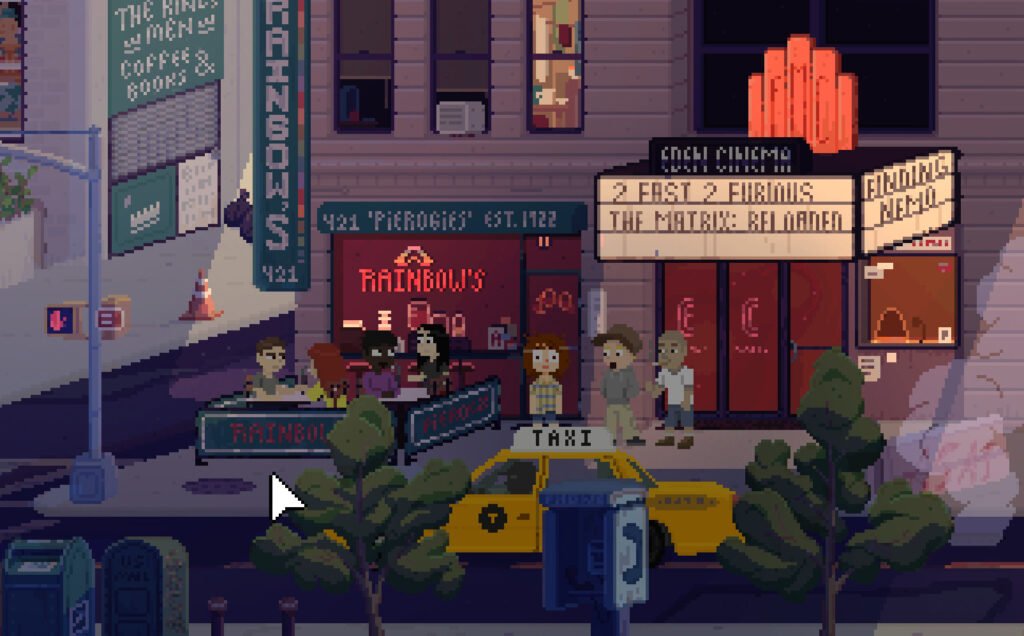
I’ve come to appreciate as well how varied her relationships are with her peers in The City. They aren’t just one-off characters to progress Mara’s story. Daniel is an impulsive and laid-back, sometimes even seeming to neglect his close friendship with Mara. Adam isn’t just a seething boyfriend whom Mara pours her heart out to over calls. Rosetta may have all the opportunities she has as an artist and is nonchalant about it (which Mara envies), but she still feels that she needs to struggle more to succeed. Every character I’ve met so far has a bigger background we don’t exactly know of yet, which makes it very thrilling to discover.

Navigating the World of Perfect Tides
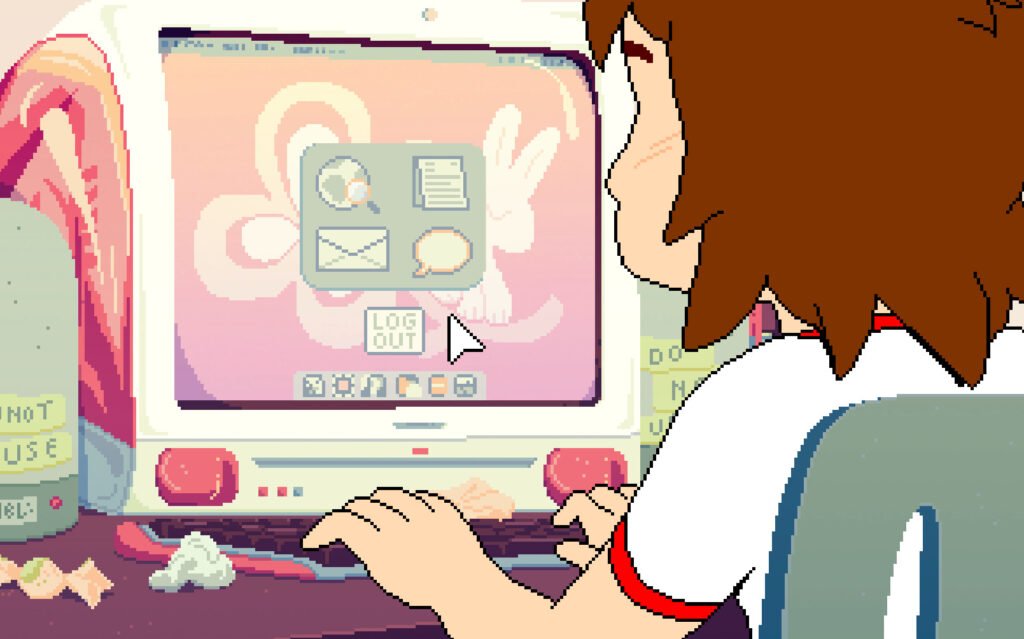
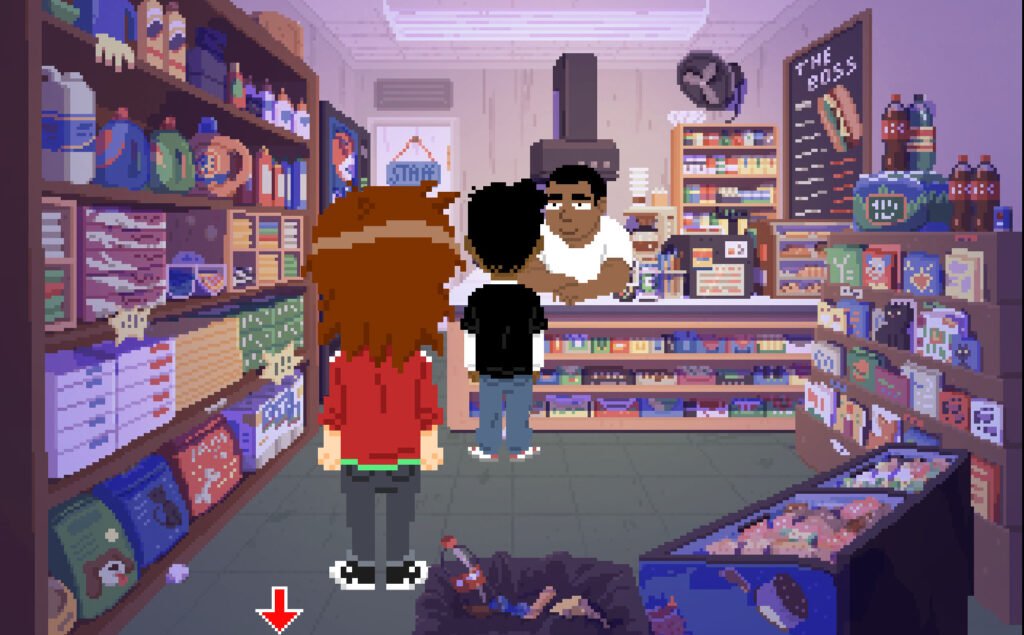
If you’re not too familiar with point-and-click games, it does involve a lot of interaction and exploring what a game has to offer. For Perfect Tides: Station to Station, I mainly struggled when it came to moving between locations. At times, I couldn’t seem to easily find the exit of some rooms as they were only cued by your cursor changing to an arrow when hovering it on the screen’s lower border. In the latter chapters, however, some doors easily point you in the right direction.
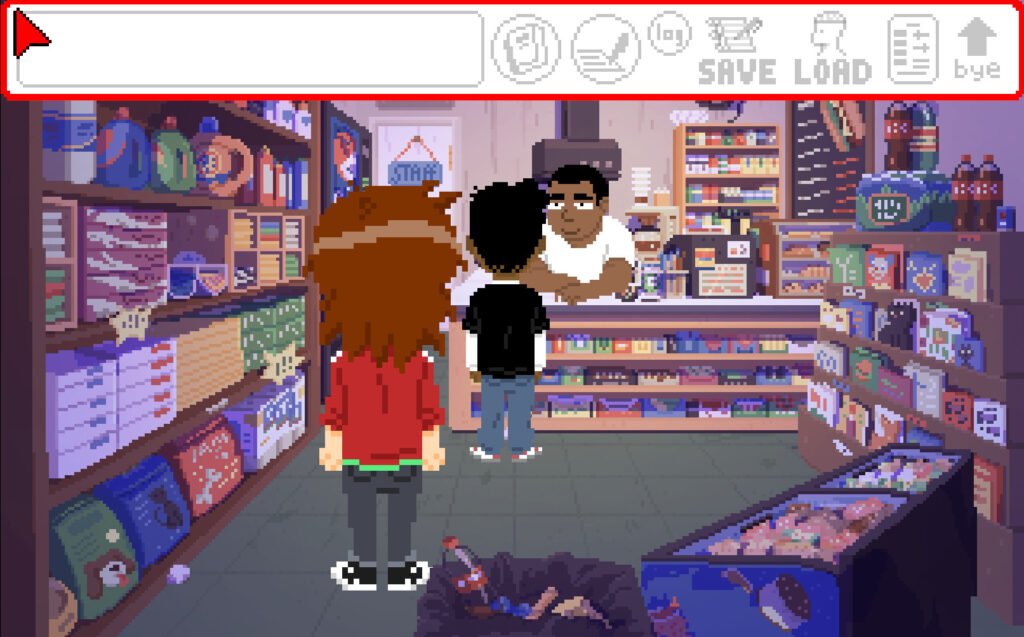
There’s also the slight inconvenience with the inventory and settings interface right on top of the screen. As you hover your mouse on the top area, you won’t be able to interact with a scene’s objects because of the interface blocking that. It made me assume that there was nothing to click and learn about those objects in those spaces.
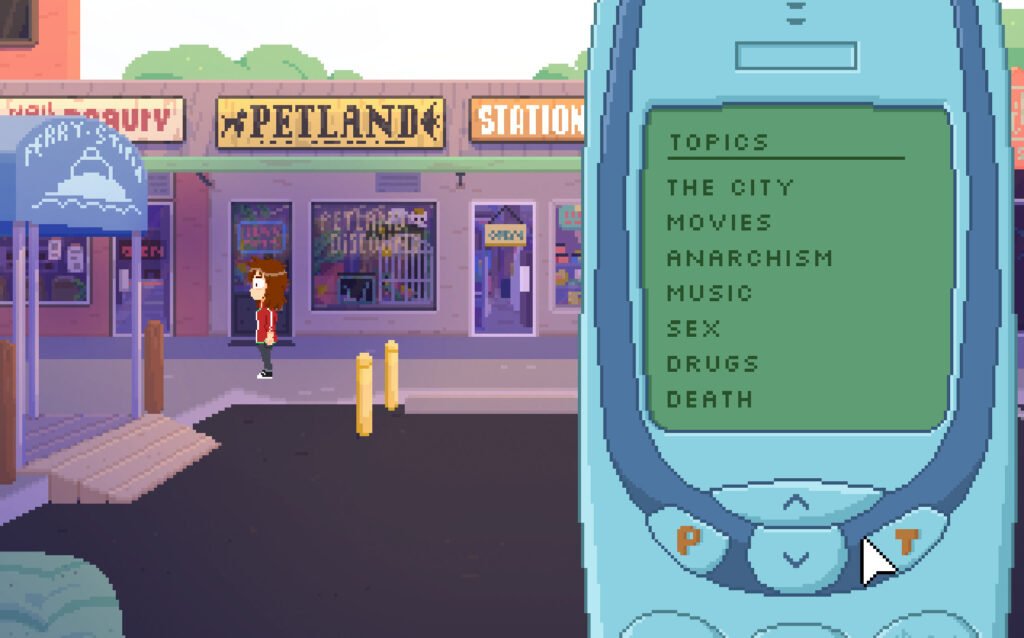
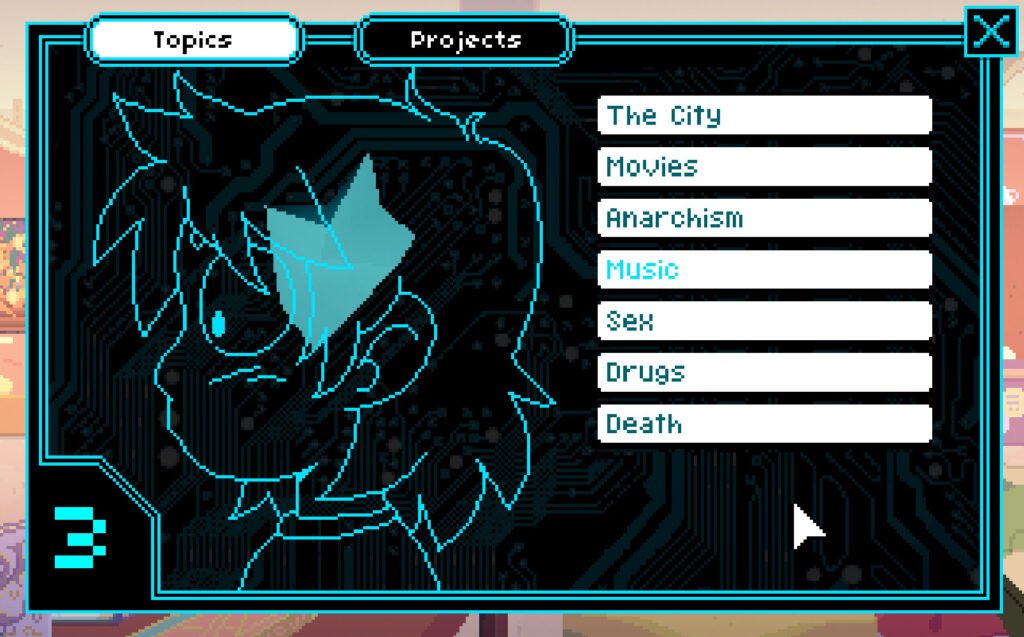
Regardless, I love how you get to understand the different objects, locations, ideas, and people seen through Mara’s eyes and consciousness. You’re equipped with a Nokia 3310-like cellphone that lets you see the different topics and people you can talk about, which becomes crucial in major sections of the game where you have to socialize at parties and gatherings.
Seeing The City Through Mara’s Eyes
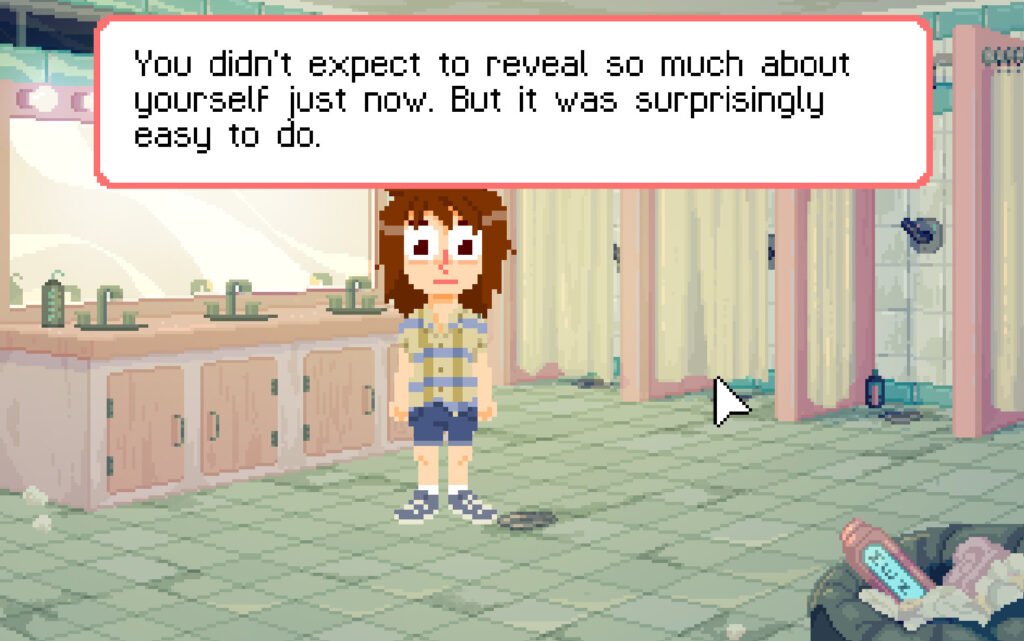
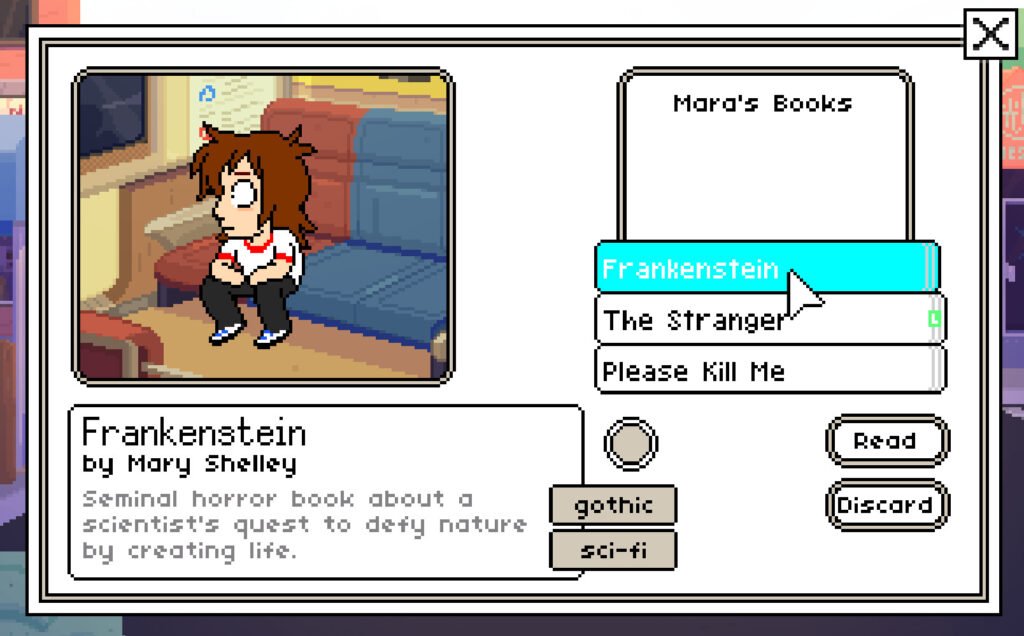
Additionally, it was interesting to see the mechanics that dictated how Mara was going to grow as a writer. You get to read one book and write one paper per day. And depending on some of your choices and what you experience, you can “upgrade” your knowledge on certain topics and see if you’ll succeed in writing a good or bad paper and hitting it off with people in social gatherings. It was hilarious to see how upgrading your knowledge on the topic of drugs doesn’t have any effect on it at all.
One of my favorite features of the game was mainly reading a book per day. While the mechanic was limited, I liked how reading a book shows Mara’s stream of consciousness, such as when it came to reading titles like The Communist Manifesto or Frankenstein. It displayed her openness to a variety of topics as a writer, her ever-changing opinions, and how they affect her works.
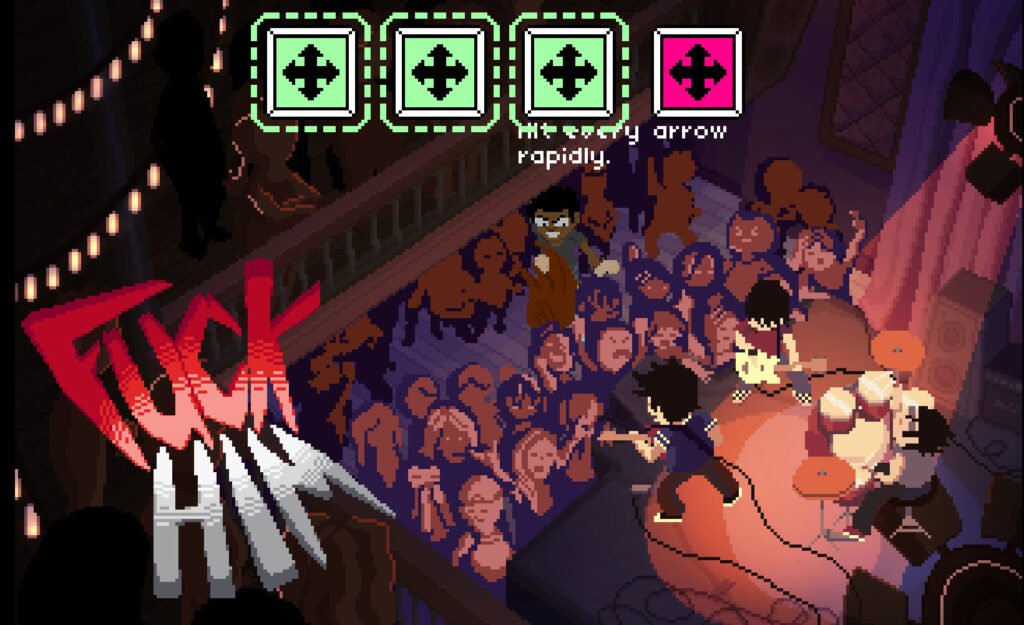
Furthermore, there are even a few mini-games that you encounter throughout Perfect Tides: Station to Station. Some will have you using dialogue choices to protect Mara’s heart-lives in a conversation, pressing arrow keys on your keyboard in a Dance Dance Revolution-like scene, and another using timing to throw darts at balloons in a carnival.
Adding Colors to Mara’s Inner Worlds
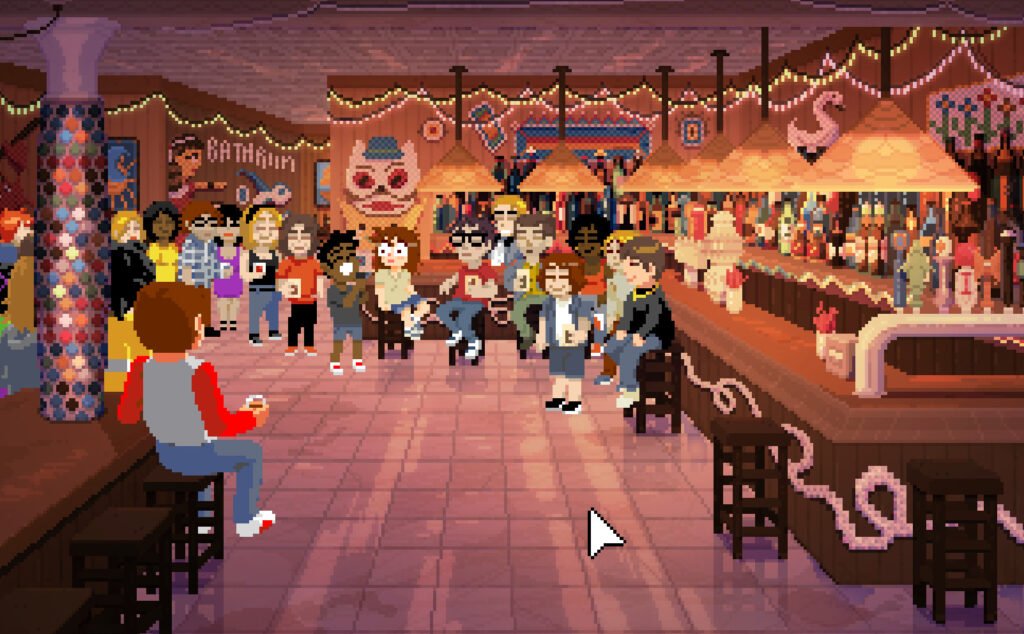
When it came to the game’s visuals, they have an almost lo-fi quality that captures the story’s introspective tone. The art relies on soft and somewhat muted color palettes, simple character designs, and minimal animations that allow emotion and atmosphere to take center stage.
A standout scene to me was when Daniel and Mara did karaoke to Queen’s “Bohemian Rhapsody,” wherein you, as the player, have to pull it up on your music-listening app and synchronize playing it to the game. It was a moment that made me fall in love with this game even more, for how it asks us players to actively participate and simply be in the moment.

There’s also the gorgeously illustrated borders for scenes like during “readings” for Mara’s writers group and when she’s on the train going back home. They feel like margins on Mara’s deeply personal spaces that allow her to breathe openly as herself.
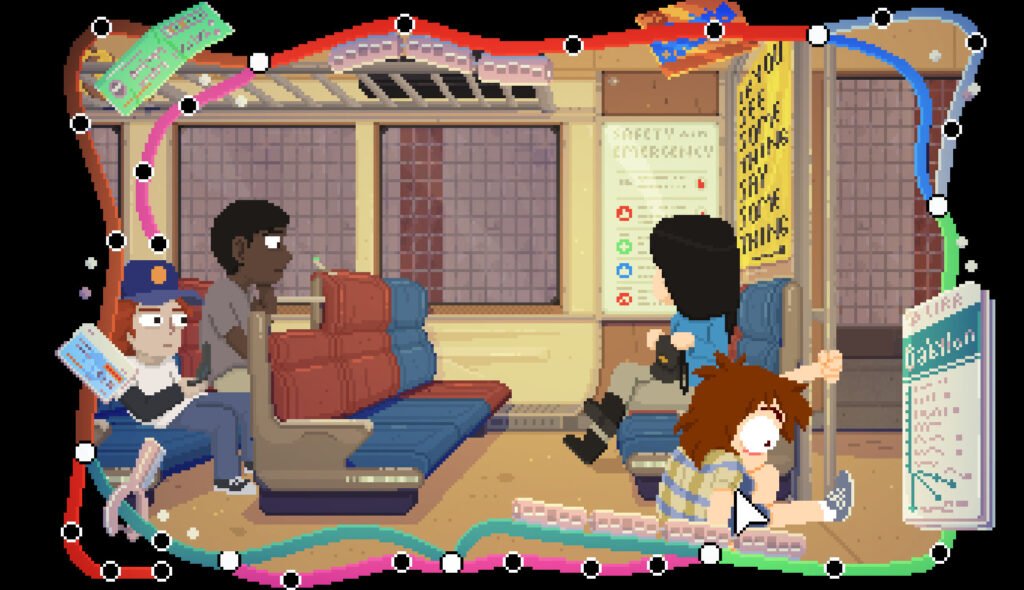
Overall, the environments feel like hazy moments that keep the focus on Mara’s inner world, making small instances linger and feel intimate for players.
Taking Life One Station at a Time
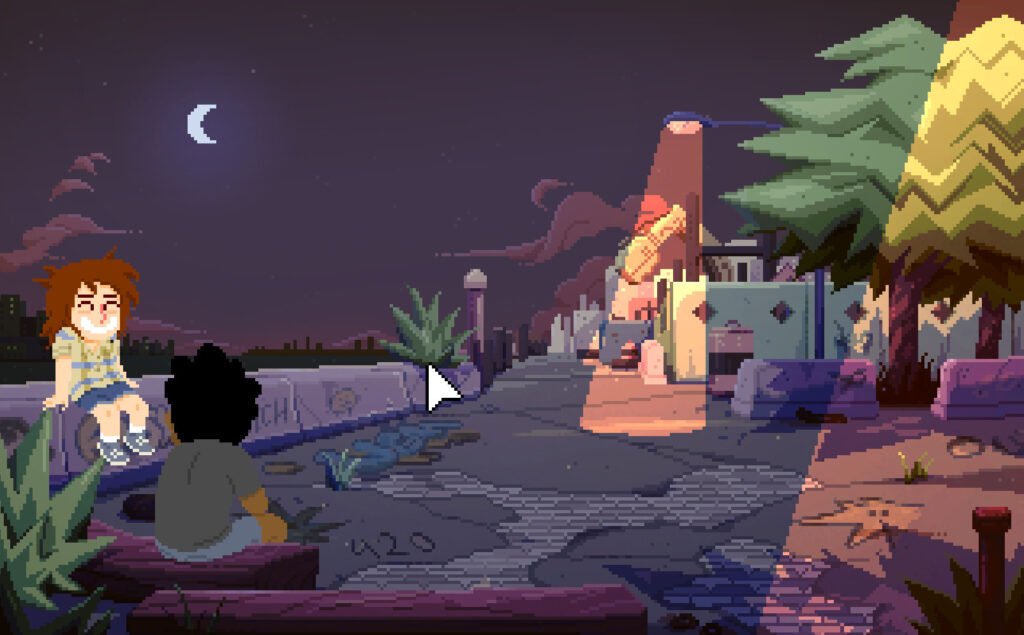
Almost everything and everyone you interact with in Mara’s world has a story to tell. This entails you to be patient with Perfect Tides: Station to Station as a game because you’ll be reading a lot of heavy dialogue and descriptions. These are honestly crucial to understanding the point of this coming-of-age tale.
It’s not a game that asks you to chase objectives or master mechanics (even if there are some cues on what you need to do for the day). Rather, it encourages you to exist within Mara’s headspace and learning to navigate and become the person she’s meant to become. You won’t find much action as the game mirrors real life. True growth happens during the pauses, conversations, and moments that seem small at first but ultimately can influence who we are and will become.
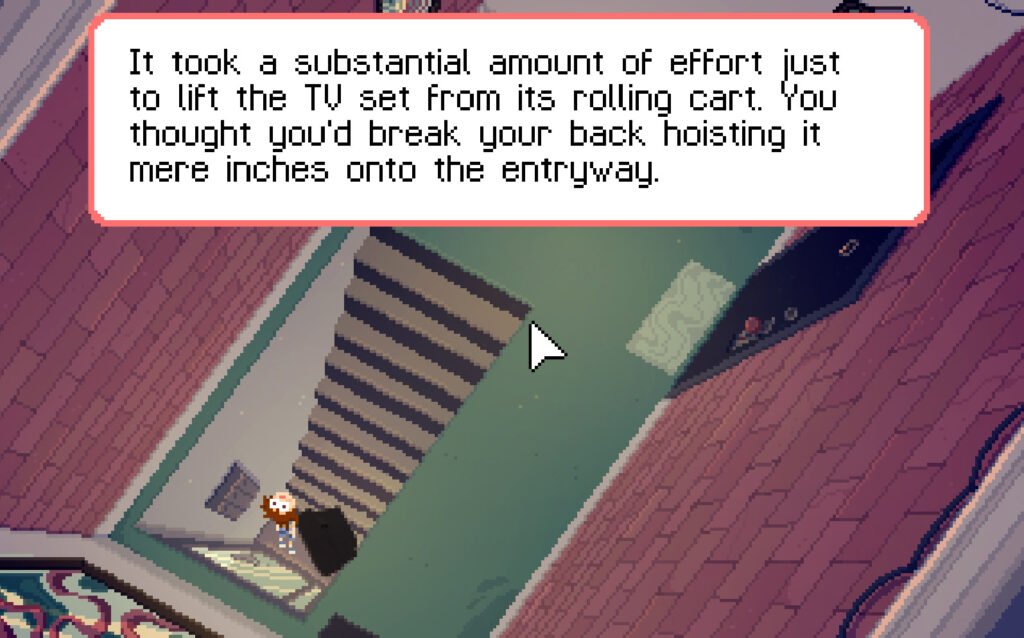
While the deliberate pacing may not appeal to everyone, especially for players looking for clear-cut goals, it’s precisely what makes this game feel so honest. It asks you to read between the lines of awkward exchanges and unfinished thoughts, and you sometimes will make decisions that seem absurd but, in actuality, are realistic. It captures that uncomfortable phase of young adulthood, where everything doesn’t make sense, yet every choice you make matters.
The game leaves you with the sense that you’ve lived alongside Mara rather than simply guided her, making Perfect Tides: Station to Station a very intimate reflection of growing up as an adult still facing so much uncertainty and finding your place in life.
Perfect Tides: Station to Station: As someone new to Mara's story, Perfect Tides: Station to Station surprised me with how deeply personal it feels. Despite seeming to be a simply point-and-click tale about college life, it becomes an intimate reflection on self-doubt, creativity, and growing up. Its unfiltered dialogue, thoughtful writing mechanics, and nostalgic visuals invites quiet and emotionally resonant moments that mirror real life, making it feel less like a game I played and more like a life I briefly lived alongside Mara. – Renee Aguila