A Journey Through the Movement’s Hidden Gems
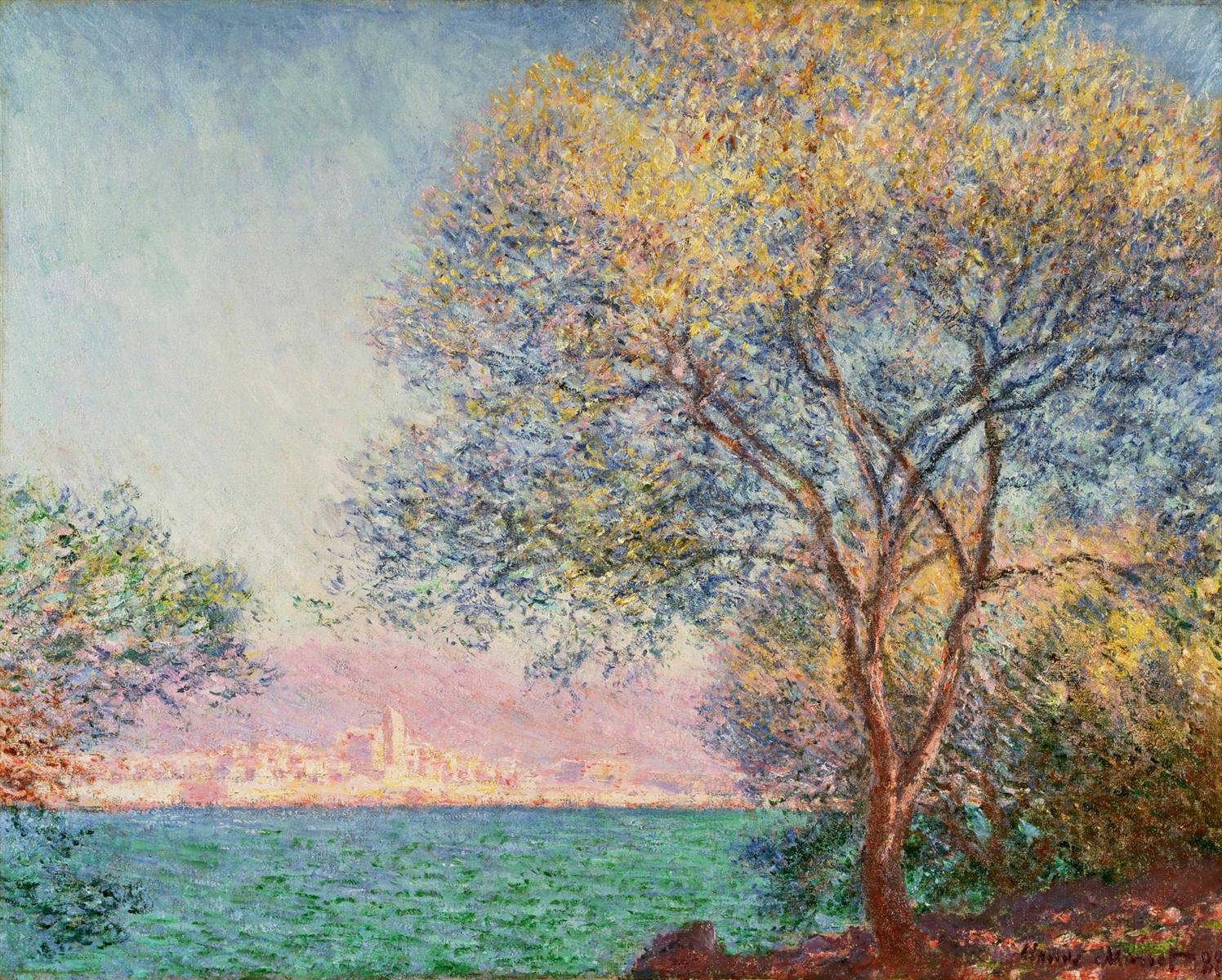
Ah, Impressionism. That great movement that inspires thoughts of sunlight dancing on the water, of fields and gardens blooming under the kiss of light, and of artists who cast aside convention in pursuit of capturing life in its purest form. Of course, when we think of Impressionism, the first name that often comes to mind is Claude Monet. His Water Lilies, his Impression, Sunrise—they’re iconic, timeless. But there’s a whole world of Impressionist painters out there, each with their own unique touch. So, why not take a leisurely stroll through this vibrant garden of artists? Along the way, you might just discover some new favorites.
Pierre-Auguste Renoir, A Master of Color and Joy
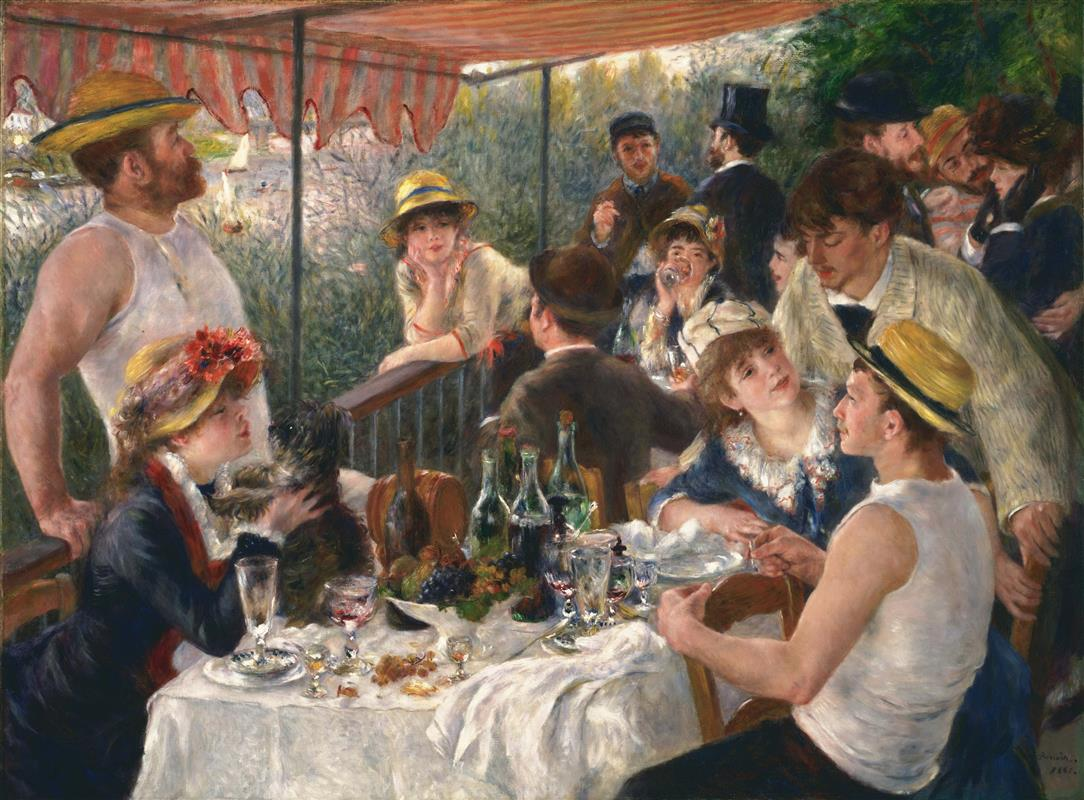
Stickers & Prints of Luncheon of the Boating Party here.
Let’s open with Pierre-Auguste Renoir, whose paintings are like a glass of chilled rosé on a warm summer afternoon. Light, vibrant, and utterly charming, Renoir could capture a joyous moment better than any wedding photographer. His painting recreate memories as you’d like to remember them. Everyone is in their right place, content, and utterly elegant. Luncheon of the Boating Party is the best of these. There’s a warmth, a glow in his paintings, like he’s not just showing you the scene but inviting you into it. Renoir’s work celebrates life’s simple pleasures, from picnics by the river to dancing at a local café. It’s no wonder he’s often associated with the carefree spirit of French society during the late 1800s.
Renoir’s Best Include:
- Luncheon of the Boating Party
- Dance at Le Moulin de la Galette
- The Swing
Edgar Degas, The Art of Motion, Frozen in Time
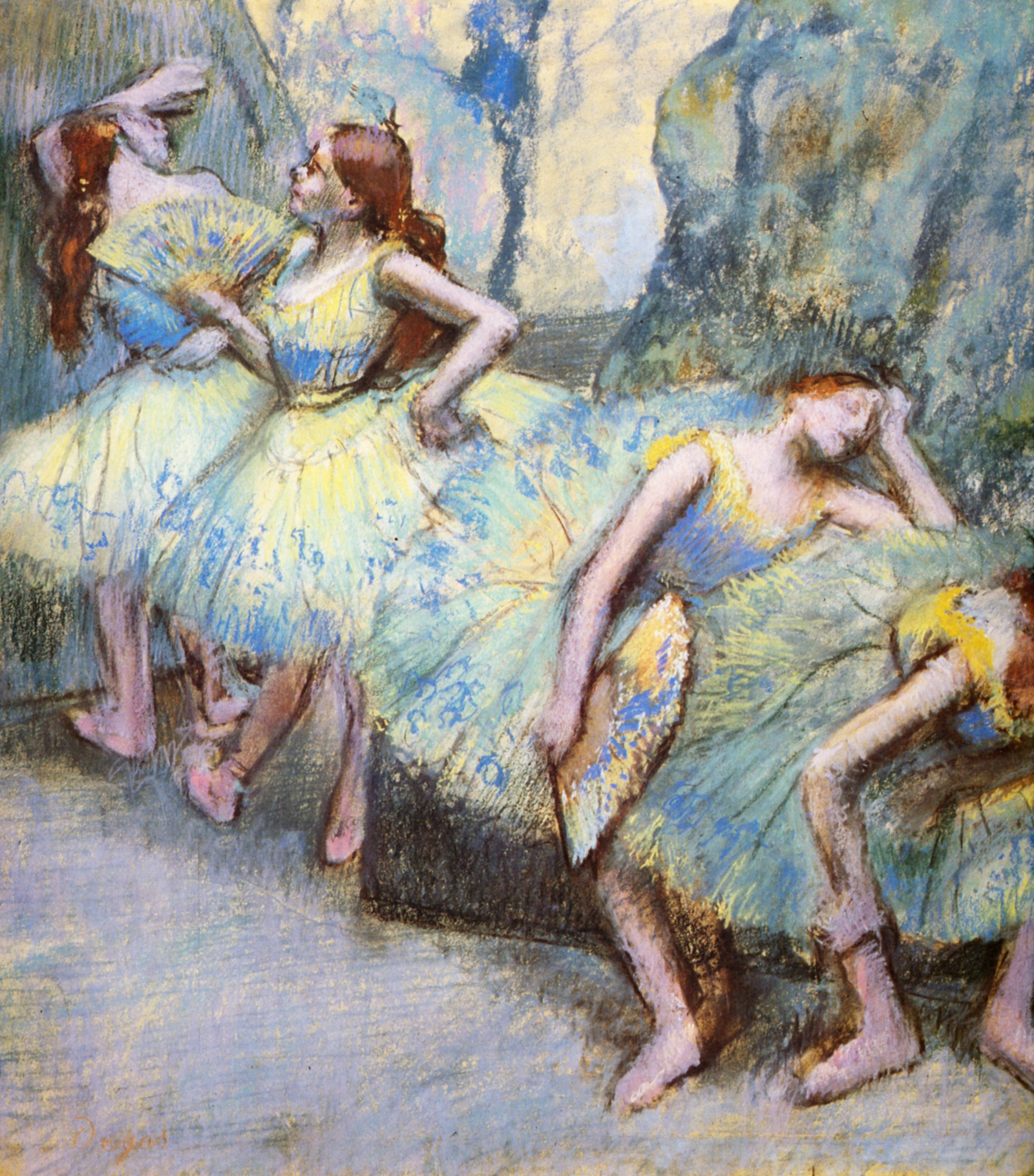
Stickers & Prints of Ballet Dancers in the Wings here.
Next, we enter the world of Edgar Degas, where elegance and movement are reign. If you’ve ever been to a ballet, you’ll recognize the ethereal grace of his dancers. But wait, Degas didn’t just paint dancers in action, the pliés and pirouettes; he also captured the quiet moments between. The dancer tying her shoes or adjusting her tutu before taking the stage. That’s the kind of detail you’ll find in Degas’ masterpieces like The Ballet Class and Dancer at the Barre. It’s almost as though he’s not just painting a dancer—he’s painting her very thought process, the calm before the storm. And let’s not forget his fondness for racehorses, which, in a way, mirrors his fascination with movement and human energy. He could take the simplest of moments and make them feel like they were full of life.
Degas’ Best Include:
- The Ballet Class
- Dancer at the Barre
- The Absinthe Drinker
Camille Pissarro, From the City to the Countryside
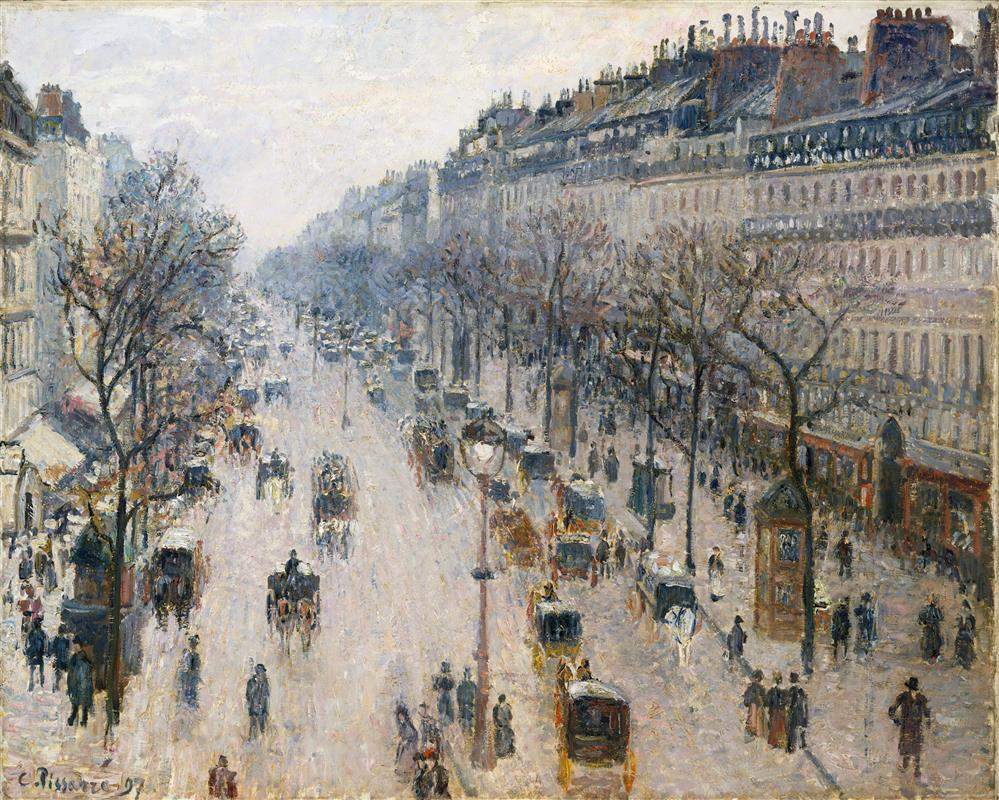
Stickers & Prints ofThe Boulevard Montmartre on a Winter Morning here.
Let’s meander through late-1800s France with Camille Pissarro. He loved wide-open fields, a gentle breeze, and a landscape that shifts and changes with the light. Pissarro was a master of these. And yet, his works, like The Boulevard Montmartre on a Winter Morning, are a glimpse into the hustle and bustle of an industrialising Paris. Throughout his career, Pissarro would flit between these loves. Capturing urban life and the quiet of the rural countryside. His paintings of farmers, haystacks, and the changing seasons are like postcards from another time, inviting us to pause and reflect on life’s simpler rhythms.
Pissarro’s Best Include:
- The Boulevard Montmartre on a Winter Morning
- The Harvest
- Red Roofs, Corner of the Village
Berthe Morisot, A Gentle Brushstroke of Feminine Elegance
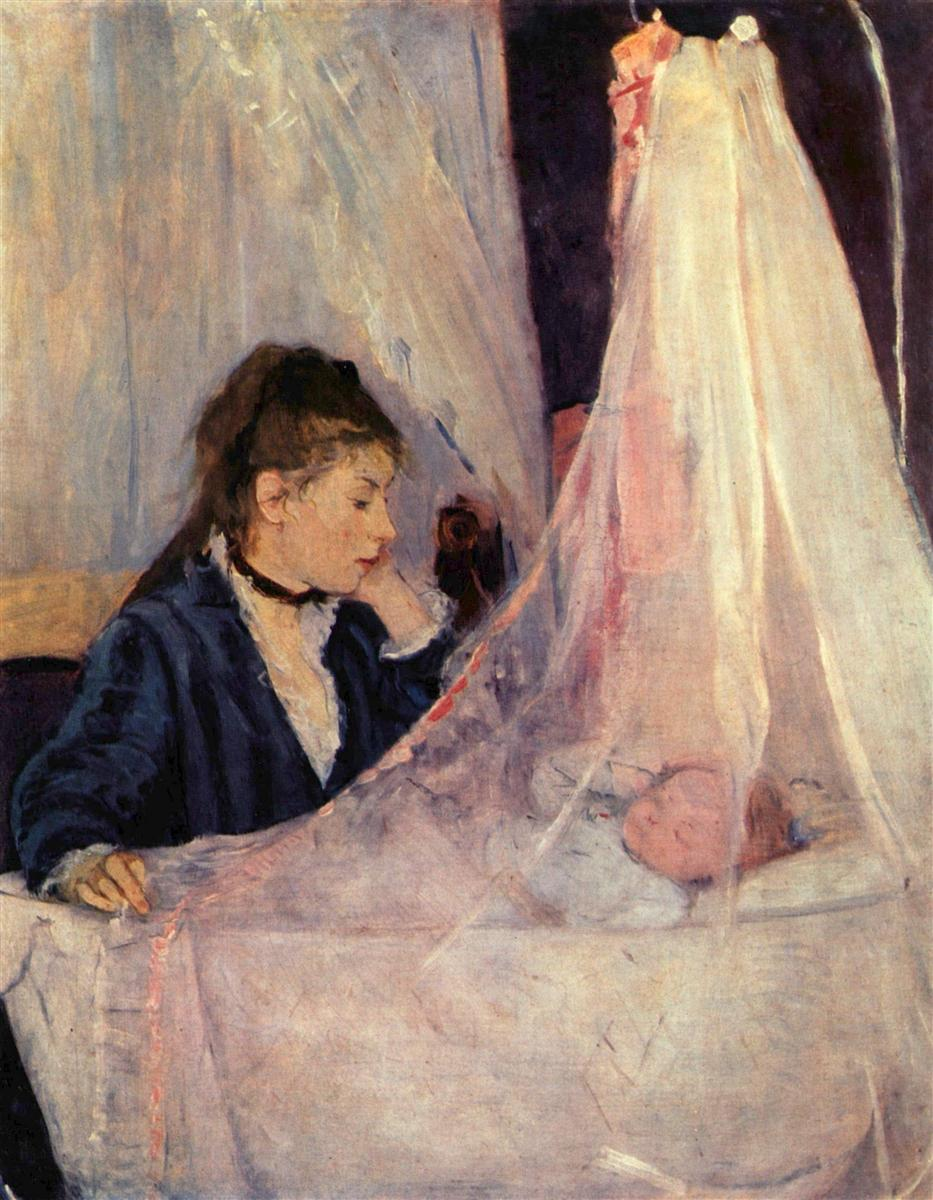
Stickers & Prints of The Cradle here.
Rarely seen and documented, life through the eyes of a woman in the 19th century is enchanting. Berthe Morisot, was one of the few women in the Impressionist circle, and painted scenes of daily life with a particular tenderness. Her work often revolves around the domestic world—mothers, children, quiet moments in the home. In pieces like The Cradle and Summer’s Day, there’s a softness, almost like a gentle sigh, in her brushstrokes. It’s the kind of art that feels like a secret, whispered among friends. Her work celebrated the quiet beauty of femininity, offering a perspective that was often left out of the traditional art world.
Morisot’s Best Include:
- The Cradle
- Summer’s Day
- The Woman in the Garden
Alfred Sisley, Calm Reflections of Nature
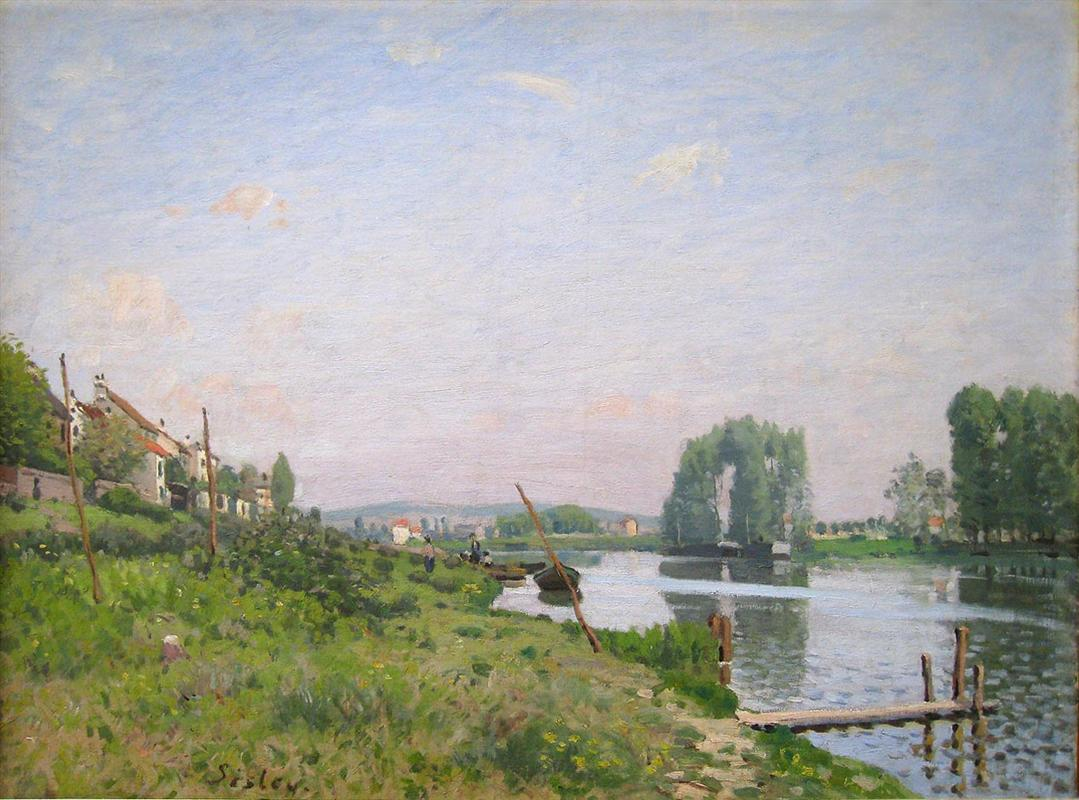
Stickers & Prints of The Island of Saint Denis here.
Let’s take a moment to pause by a quiet stream, as we stand with Alfred Sisley. Unlike some of his more flamboyant contemporaries, Sisley was the quiet observer, the one who seemed happiest to sit by a riverbank and paint an afternoon. He was drawn to the beauty of nature, capturing the stillness and quiet reflection of landscapes. His painting The Bridge at Moret-sur-Loing is like a dream—soft, muted colors blend into a peaceful scene that invites you to stop, breathe, and take in the beauty around you. Sisley’s work is the artistic equivalent of a Sunday afternoon walk in the countryside, where time slows and nature takes center stage.
Sisley’s Best Include:
- The Bridge at Moret-sur-Loing
- Flood at Port-Marly
- Snow at Louveciennes
Édouard Manet, Breaking Boundaries, Pushing Norms
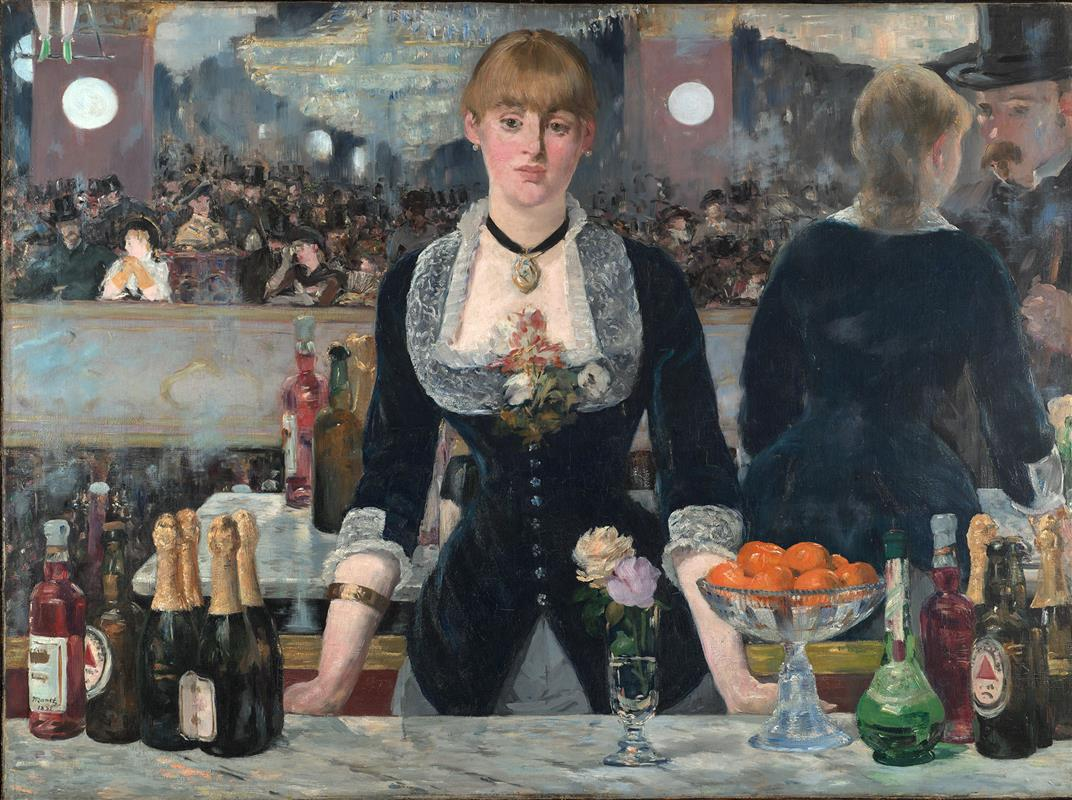
Stickers & Prints of A Bar at the Folies-Bergere here.
Édouard Manet, in many ways, acted as a bridge between the more traditional art of the past and the revolutionary techniques of the Impressionists. Manet’s work is bold and modern, not afraid to challenge social norms. His paintings like A Bar at the Folies-Bergère shocked the art world with their raw, contemporary subjects—much different from the posed, dramatic figures of the classics. Manet didn’t just capture life; he presented it in a way that demanded attention and provoked conversation. His works are like a shot of espresso—strong, direct, and unforgettable.
Manet’s Best Include:
- Olympia
- Luncheon on the Grass
- A Bar at the Folies-Bergère
Gustave Caillebotte, The Urban Visionary
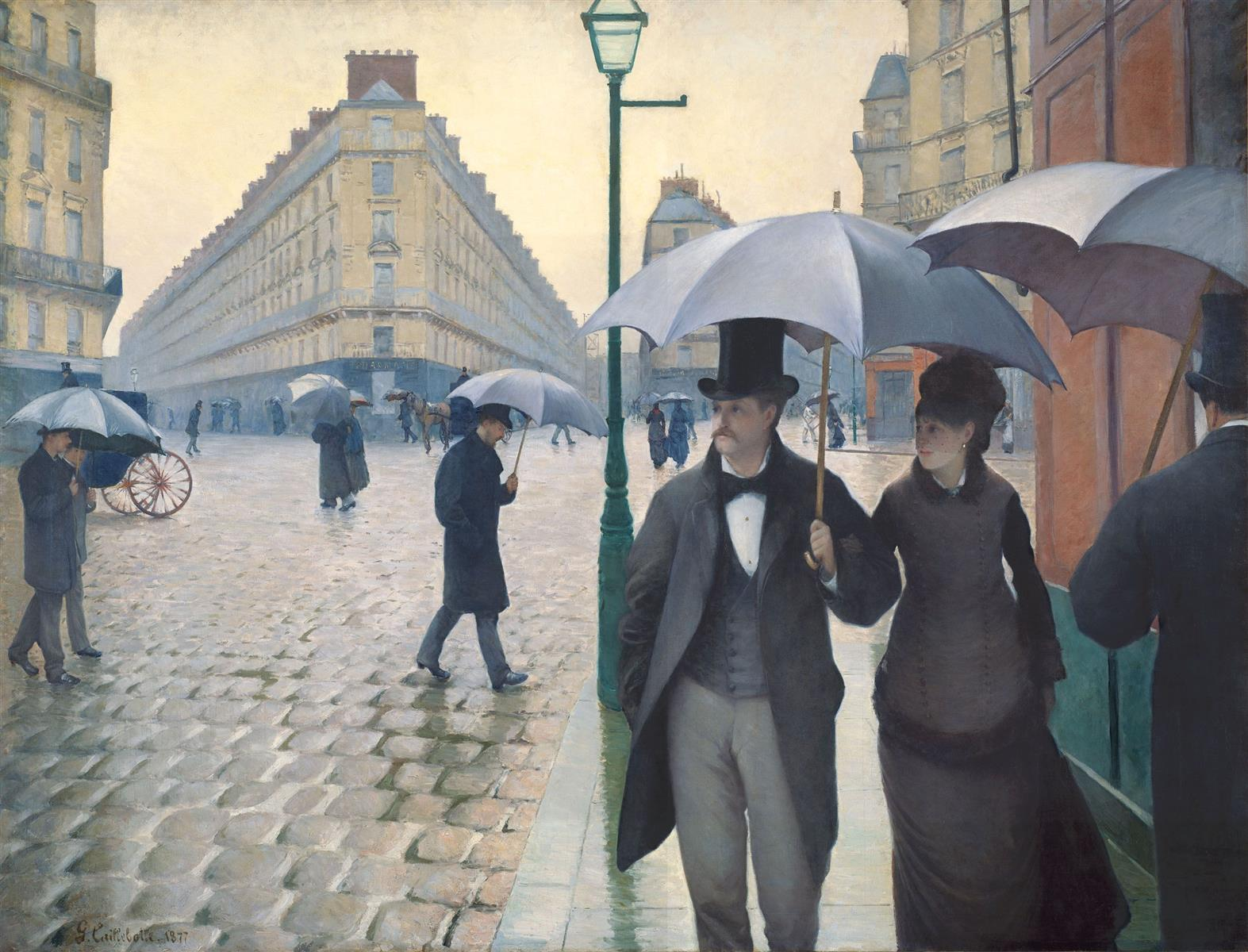
Stickers & Prints of Paris Street; Rainy Day here.
Strolling down a Parisian street, Gustave Caillebotte offers us a unique look at the urban landscape, and at impressionism. Caillebotte had an uncanny ability to depict modern life in all its architectural beauty. In his famous piece Paris Street; Rainy Day, he captures the reflections on wet streets and the bustling energy of city life. Caillebotte was fascinated by the new, rapidly changing world of Paris, and his paintings, often from unusual angles, convey a sense of being right in the middle of the action. If you’ve ever looked at a city street and wondered about the lives behind each window or doorway, Caillebotte’s work answers that question with both precision and poetic beauty.
Caillebotte’s Best Include:
- Paris Street; Rainy Day
- The Floor Scrapers
- The Rooftops of Paris
Mary Cassatt, The Tender Moments of Motherhood
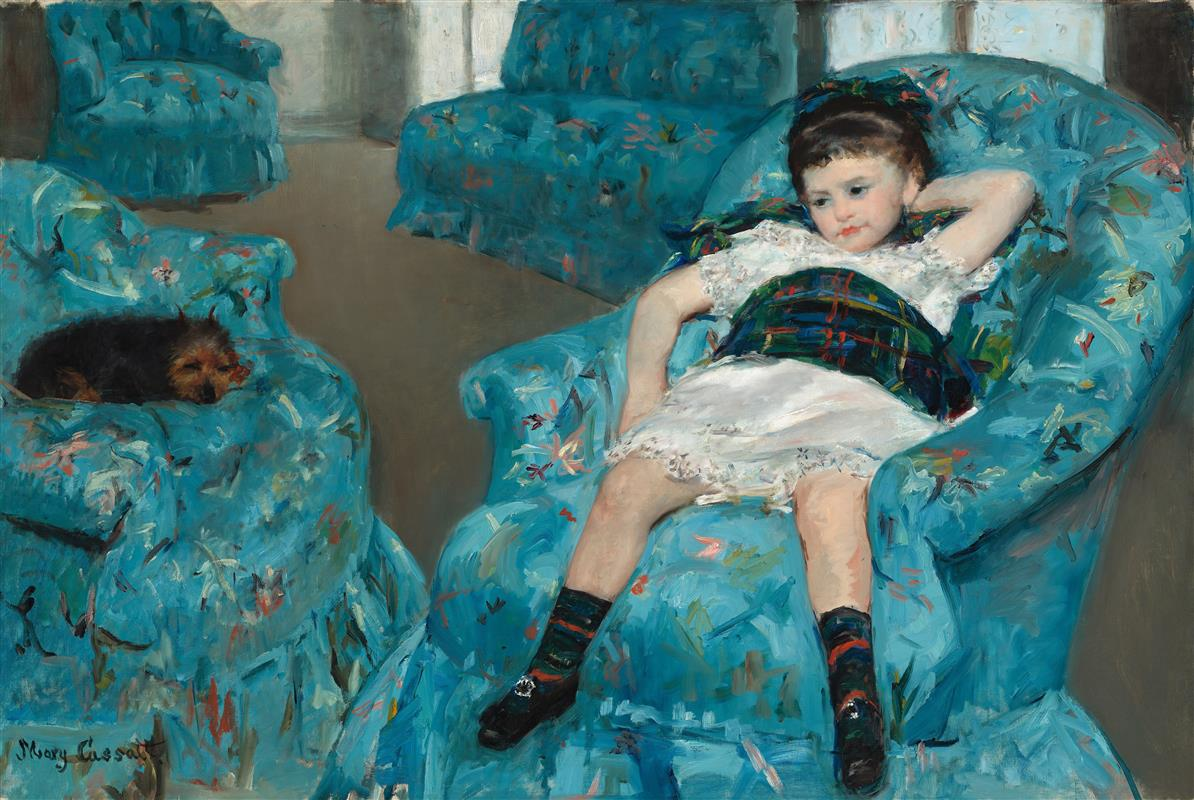
Stickers & Prints of Little Girl in a Blue Armchair here.
Mary Cassatt lived within those moments of calm, soft breaths of maternal love. Cassatt’s work focused on the intimate bond between mother and child. Her tender depictions of women in everyday moments—whether it’s a mother bathing her child or sharing a quiet moment of affection—remind us of the quiet power of love. Works like Little Girl in a Blue Armchair offer a glimpse into a world that’s both familiar and comforting, where every brushstroke seems to say, “I see you.” Cassatt’s paintings are like a warm embrace, inviting us to feel the gentle tenderness of life.
Cassatt’s Best Include:
- The Child’s Bath
- Mother and Child
- Little Girl in a Blue Armchair
The Legacy of the Impressionists
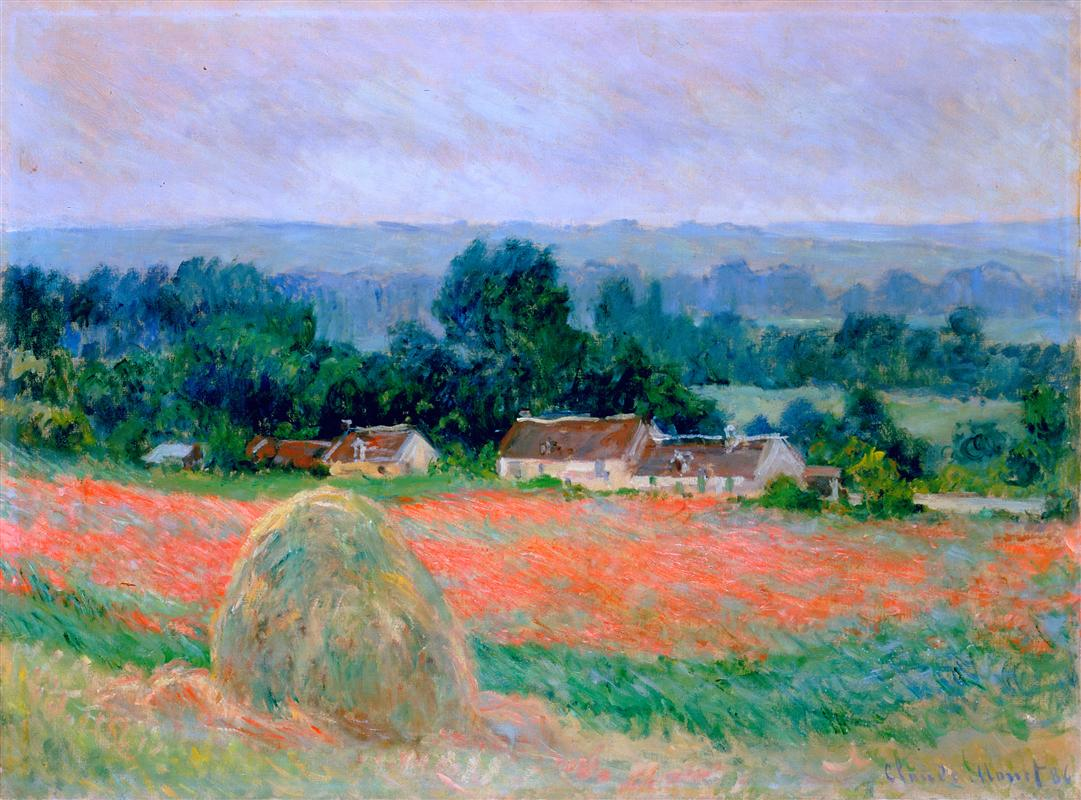
Stickers & Prints of Haystack at Giverny here.
So now that we look out in full, at the world of the impressionists, we see more than Monet’s lillied ponds and softly lapping waters. We see Renoir’s joyful gatherings, Degas’ graceful dancers, Pissarro’s changing skies, and the quiet intimacy of Cassatt’s mothers—all of these voices created a symphony of light, color, and emotion. These artists invited us to see the world in new ways, to feel the moments they captured, and to embrace the fleeting beauty of life itself. So, the next time you find yourself with a painting, take a moment to wander through the colors and the strokes, feel the direction and passion and care put into the painting itself– it’s what inspired the movements to come, like Abstract expressionism.